
Your roof starts leaking on Tuesday. By Friday, the ceiling stain has spread, the air conditioner is struggling, and every estimate feels out of reach. That is how home repair problems usually hit in Fayetteville and Cumberland County. Fast, expensive, and at the worst possible time.
Many homeowners make the same mistake first. They reach for a credit card, a high-interest loan, or retirement savings before checking whether a grant, rebate, or repair program fits their situation. That can cost you twice. You pay for the repair, then pay interest on top of it.
Some programs can cover part or all of the work without repayment. Others look like grants at first but come with occupancy rules, income caps, age limits, or long approval timelines. You need to sort those out before you spend money you may not get back.
If you live in Fayetteville or Cumberland County, broad national roundups are not enough. What matters is whether your property is inside the right service area, whether the program serves city or county residents, and whether you qualify based on income, disability status, veteran status, age, or owner-occupancy. Local contact points matter just as much as the program name.
This guide focuses on specific programs, Fayetteville and Cumberland County options, and the trade-offs that affect your decision. Some choices are grants. Some are low-cost or deferred loans. Some only help with one problem, such as heating, weatherization, or accessibility. And if the house needs work now and you cannot wait through applications, inspections, and contractor approvals, you should compare those programs against a fast cash sale instead of forcing a financing plan that does not solve the timing problem.
Grants work best for owner-occupied homes, necessary repairs, and homeowners who can wait through the approval process.
1. USDA Section 504 Single Family Housing Repair Grants
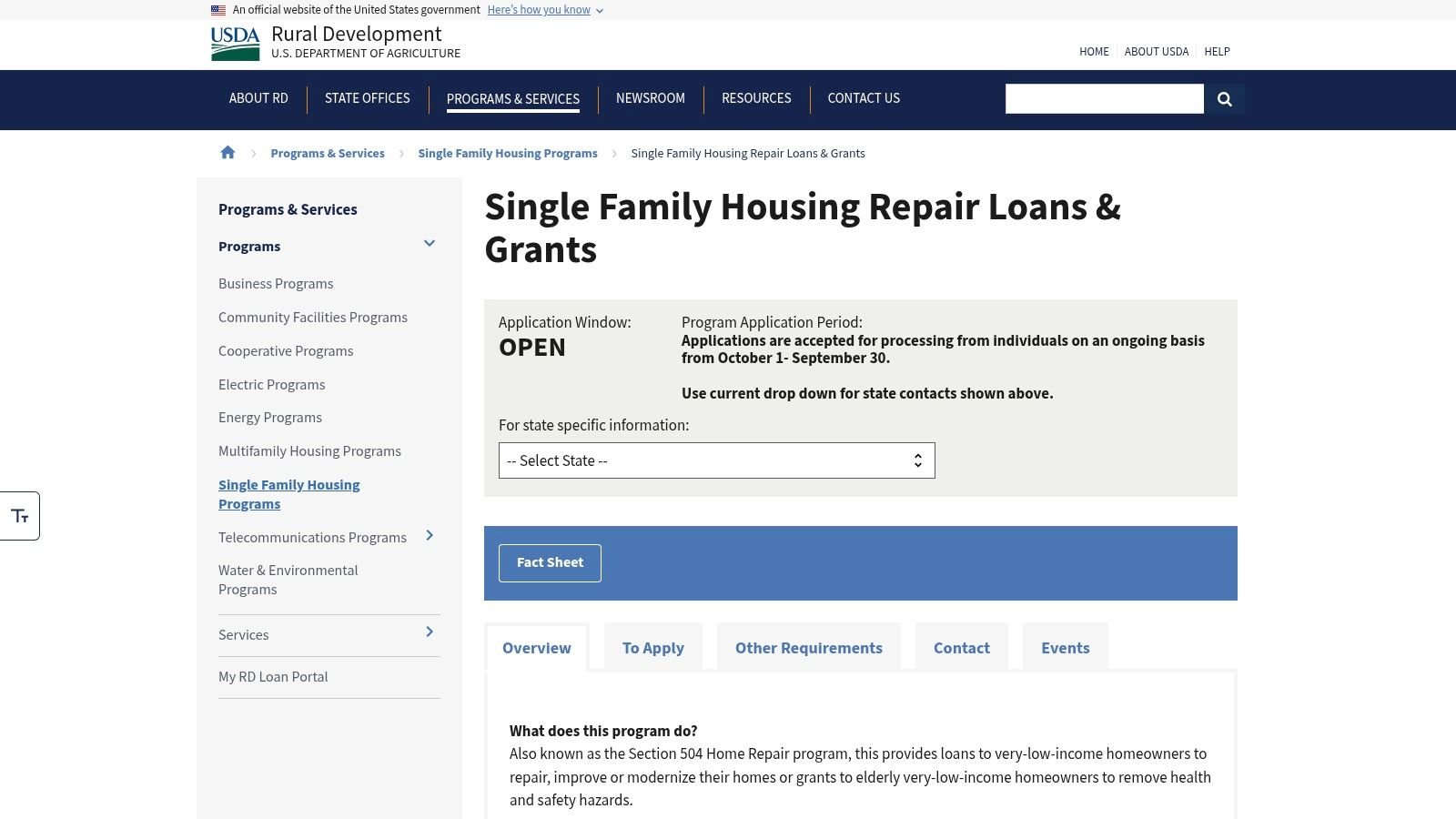
A Cumberland County homeowner with a leaking roof or unsafe wiring usually needs one answer first. Is the property in a USDA-eligible rural area? If it is, Section 504 is often one of the best places to start.
This program is aimed at owner-occupants with very low income who need repairs tied to health and safety. For homeowners age 62 and older, the grant portion can be especially valuable because it may cover hazard removal without repayment if you follow the program rules. If the repair bill is larger, USDA can also pair a grant with a low-interest loan.
The grant side is limited, and that matters. It is mainly for older homeowners. The loan side is broader within the same low-income category and may work for younger owners who still meet program income and occupancy requirements. Use the official USDA program page to review current rules, eligible uses, and local office details through the USDA Single Family Housing Repair Loans and Grants program.
Where this program fits
Section 504 makes sense when the house has a repair that affects safe occupancy. Common examples include roof failure, plumbing problems, electrical hazards, damaged flooring, or other conditions that put the home at risk.
It is a poor match for cosmetic upgrades or resale projects.
If your real problem is speed, be honest about that. USDA approval, property checks, and contractor coordination take time. Homeowners in Fayetteville and Cumberland County who need immediate money for a serious repair should compare this option against local repair programs, low-cost loan programs, and in some cases a fast cash sale. Waiting on a grant only works if the house can safely wait too.
Fayetteville and Cumberland County reality check
Attention to local details is essential. A Fayetteville mailing address does not automatically mean the property fails USDA rural eligibility, and a Cumberland County address does not automatically mean it passes. Check the exact property location before you spend time on paperwork.
Then call the local USDA Rural Development office and ask direct questions about three things. Whether the address qualifies. Whether your household income fits the program. Whether the repair you need is likely to be considered a health or safety issue.
Apply before hiring your own contractor or paying out of pocket. That mistake can shut the door on help you might have received.
Website: USDA Section 504 program
2. U.S. DOE Weatherization Assistance Program NC
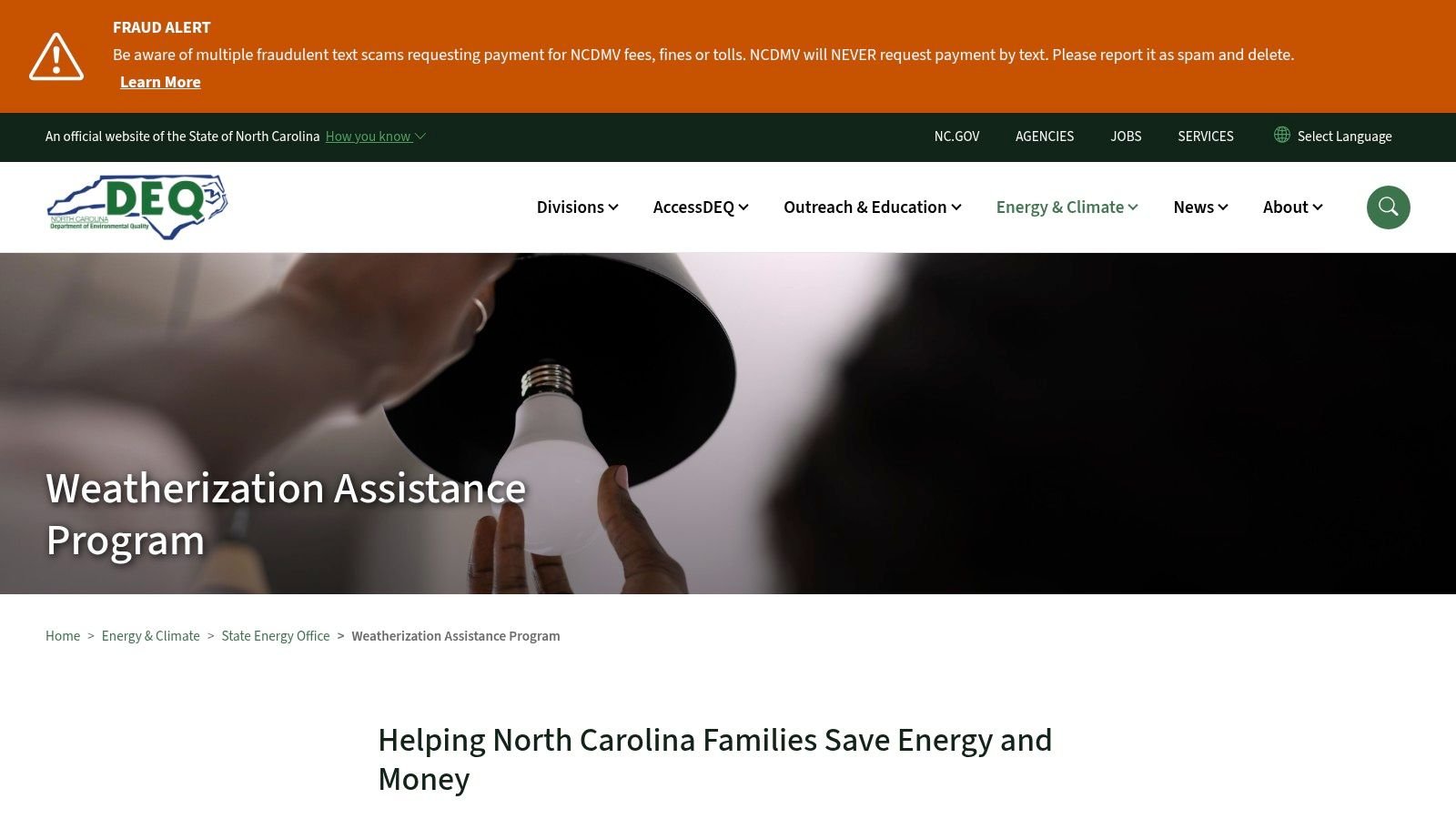
Weatherization is one of the few programs that can lower monthly costs while also improving comfort and safety. In North Carolina, this program is coordinated through the state and delivered locally through providers such as Action Pathways for households in the Fayetteville area.
This isn’t a whole-house rehab grant. It’s targeted work. Insulation, air sealing, and HVAC efficiency or safety measures are the core value. If your home is drafty, hard to cool, or expensive to heat, this is often the first practical call to make.
What you can expect
The work usually focuses on home performance. That means reducing wasted air, improving insulation, and addressing certain issues tied directly to energy use and safety. Households with older adults, disabilities, or children often get priority in many local intake systems.
That makes Weatherization useful for people who can stay in the house and want lower utility strain, but it won’t solve everything. If your house also has major structural issues, you’ll need another program layered on top.
A weatherization program is strongest when the problem is energy loss, not when the house needs major reconstruction.
Why it works well in Cumberland County
A local delivery model matters. Instead of navigating a distant federal office, you usually start through a North Carolina provider network. That makes intake easier and gives you a better shot at understanding whether you should pursue Weatherization, HARRP, or both.
- Good for: Insulation, air sealing, and HVAC-related efficiency and safety work.
- Less useful for: Foundations, full roof replacement unrelated to energy scope, or broad rehabilitation.
- Watch for: Waitlists. Demand is usually high.
Website: North Carolina Weatherization Assistance Program
3. NC Heating and Air Repair and Replacement Program
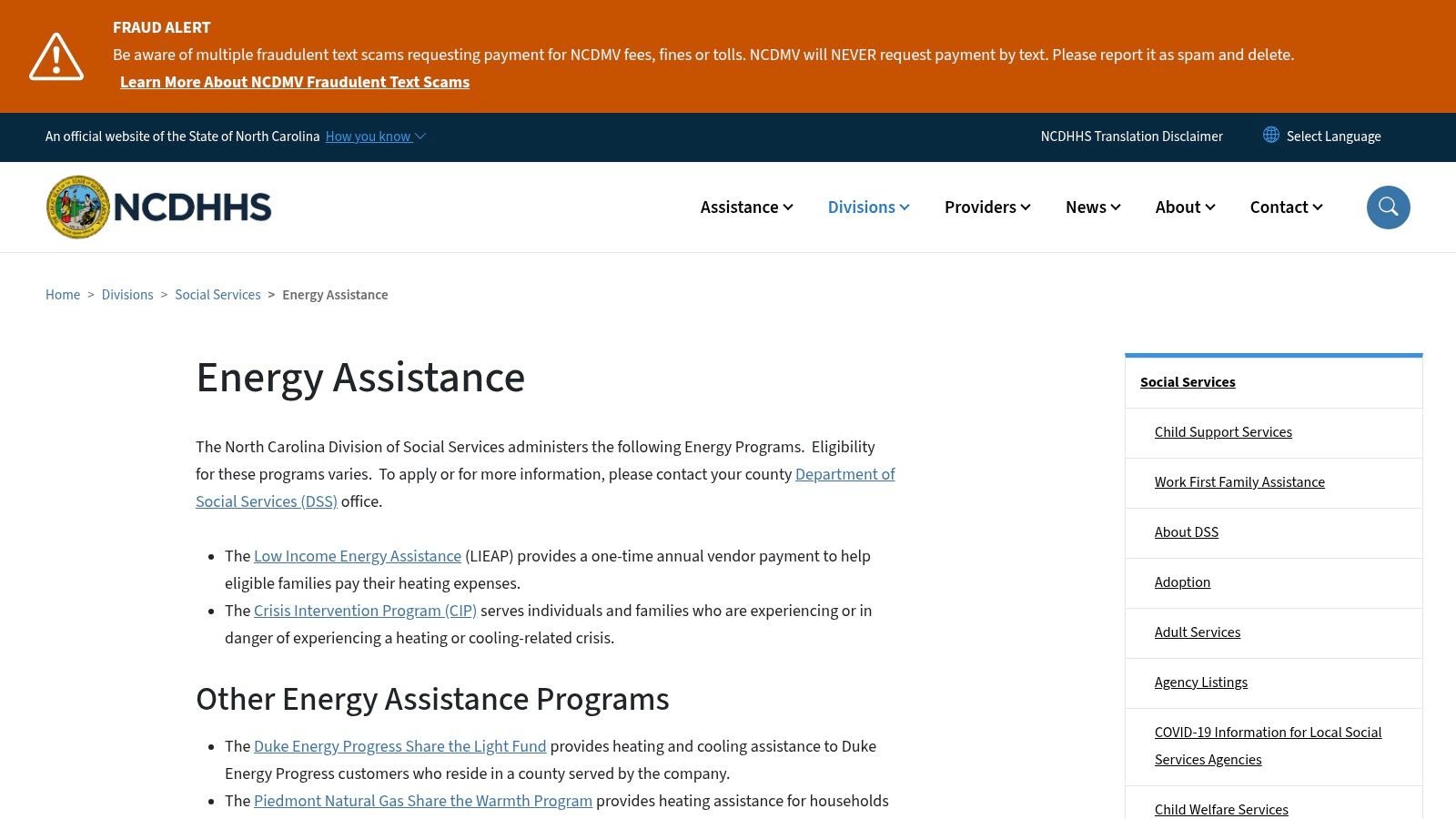
When your furnace or air conditioner stops working, broad grant lists stop being helpful. You need a program that handles one urgent problem fast. That’s where HARRP stands out.
North Carolina’s Heating and Air Repair and Replacement Program focuses on unsafe or inoperable heating and cooling systems for income-eligible households. It often works through the same community action network that supports weatherization, which makes it a practical route for Fayetteville-area owners already talking to local intake staff.
Best use of HARRP
Apply here if the HVAC problem is the main issue and the system is creating a health or safety risk. This is especially relevant for older adults, medically vulnerable occupants, and families struggling with extreme indoor temperatures.
Unlike a general rehab program, HARRP is specific. That focus is useful because it keeps the application tied to one essential system rather than forcing you into a broader and slower home rehabilitation review.
- Clear strength: It targets heating and cooling failures directly.
- Good pairing: Weatherization, if the home also has efficiency problems.
- Main downside: You’ll still need income documentation and program approval.
Practical advice for Fayetteville homeowners
Call the local provider and describe the system failure plainly. Don’t lead with “I need a grant.” Lead with “my heat doesn’t work,” “the AC is unsafe,” or “the unit failed and someone in the home is vulnerable.” That gives intake staff a cleaner path to route you correctly.
If the unit is dead and the rest of the house also has serious repair issues, keep a backup plan ready. Programs built around one system can’t fix an entire distressed property.
Website: North Carolina energy assistance programs
4. LIHEAP Crisis Intervention Program North Carolina
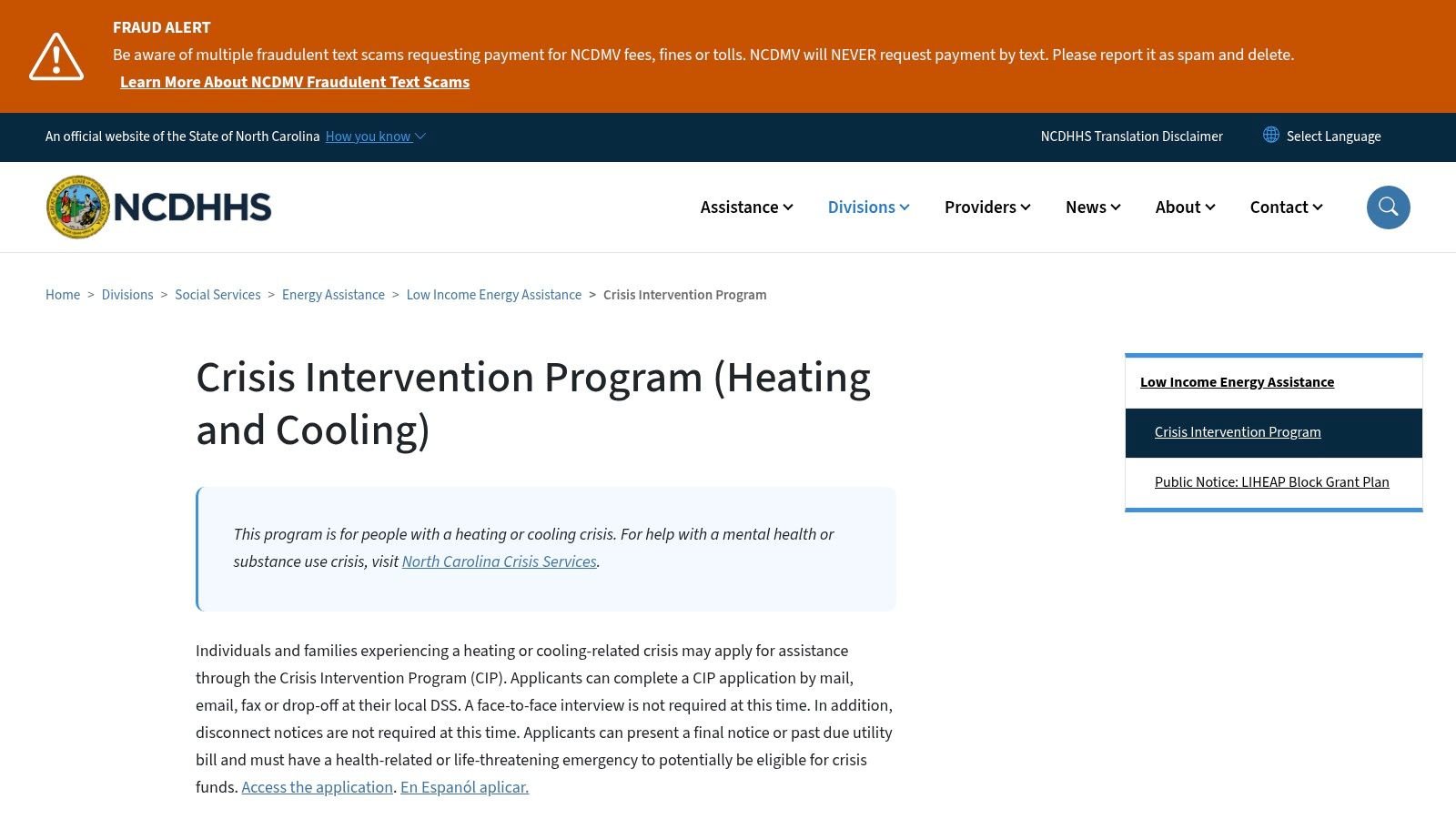
Some situations can’t wait for a standard grant cycle. If the power is at risk, the home is dangerously hot or cold, or your HVAC failure creates an immediate health issue, the Crisis Intervention Program is the right lane.
This is not a full rehab solution. It’s emergency help tied to a crisis. That makes it valuable when a homeowner in Cumberland County needs immediate stabilization before chasing a larger repair program.
Use CIP for emergencies, not wish lists
CIP can help address urgent heating or cooling issues and related utility emergencies. In practice, that means this program is best for a household in active trouble, not for someone planning a routine upgrade.
That distinction matters. Homeowners often waste time applying to emergency programs for non-emergency work, then get delayed when they need a longer-term repair program later.
Practical rule: Use CIP to stop a crisis. Use repair and rehab programs to solve the underlying house problem.
When to pivot away from grants
If you’re behind on mortgage payments and the house also needs repairs, speed matters. A pending foreclosure can erase the value of waiting for assistance. If that’s your situation, review these steps for how to avoid foreclosure in NC while you decide whether a grant timeline is realistic.
- Best fit: Active heating, cooling, or utility crisis.
- Not built for: Cosmetic work or major whole-house rehab.
- Where to start: County DSS or the state ePASS process.
Website: North Carolina Crisis Intervention Program
5. VA Disability Housing Grants for Veterans
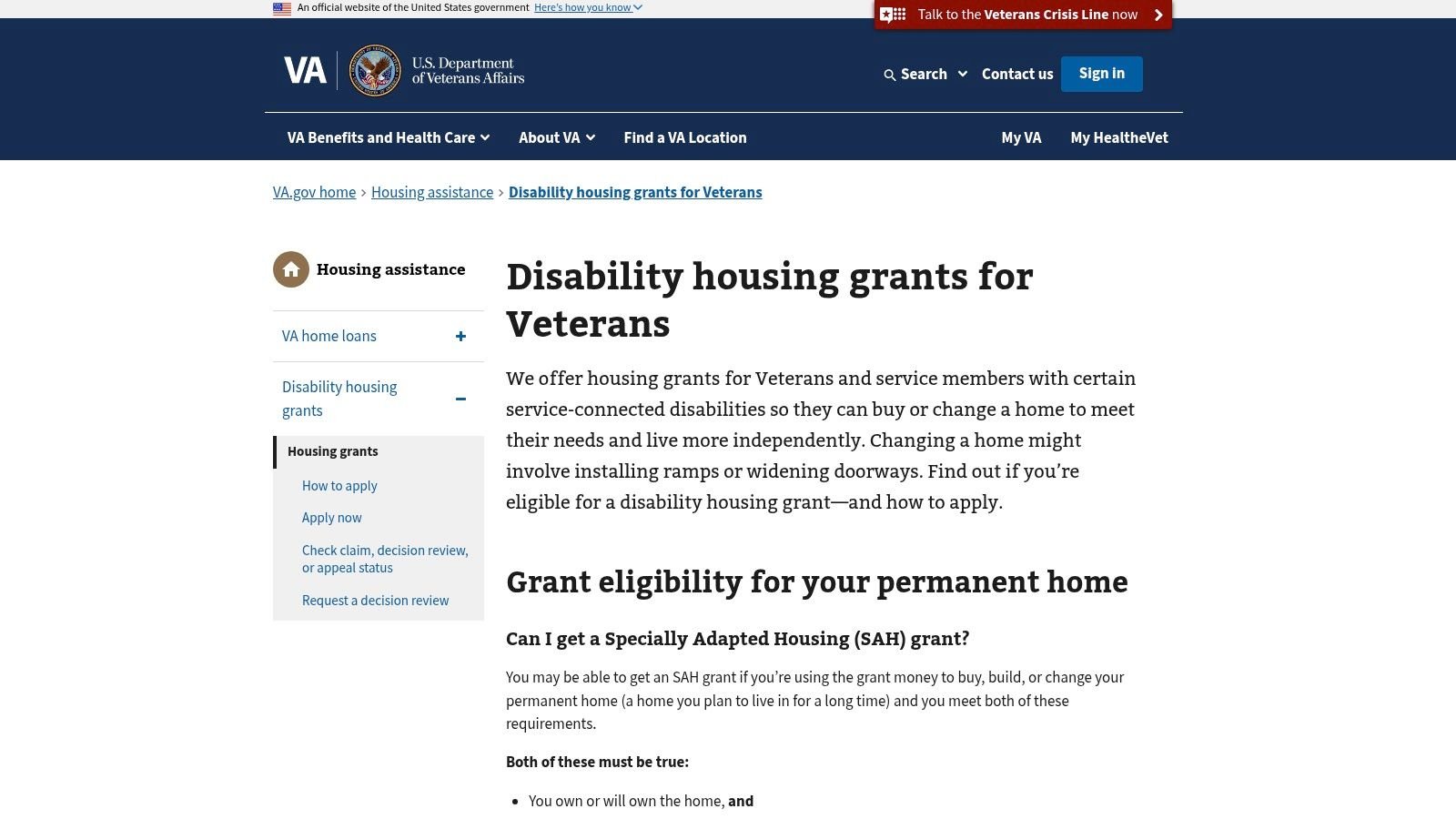
In the Fayetteville and Fort Bragg area, veteran-focused housing help deserves special attention. If you’re a qualifying veteran or service member with a service-connected disability, VA housing adaptation grants can be one of the most useful forms of grants for home improvement because they pay for changes that let you live safely and independently.
These grants are aimed at accessibility, not general remodeling. Ramps, widened doorways, bathroom modifications, and kitchen changes are the kind of work they’re meant to support.
Why this matters locally
Fayetteville has a large military and veteran population. That means many homeowners don’t need a generic repair grant first. They need a disability adaptation grant that matches a real functional need inside the home.
This can be the right move whether you already own the home or, under program rules, a family member owns the home where you live. The key is documenting disability-related housing needs clearly and following the VA approval process.
- Best for: Accessibility modifications tied to qualifying service-connected disabilities.
- Strong advantage: It’s grant funding, not a consumer loan.
- Main limit: Eligibility is narrow and requires VA documentation.
What to do before applying
Be specific about the mobility or accessibility barrier. “Need safer bathroom access” is better than “want bathroom update.” “Need ramp at main entrance” is better than “need exterior work.” Program fit improves when the housing need is directly tied to daily living.
Website: VA disability housing grants
6. NC Housing Finance Agency Urgent Repair Program
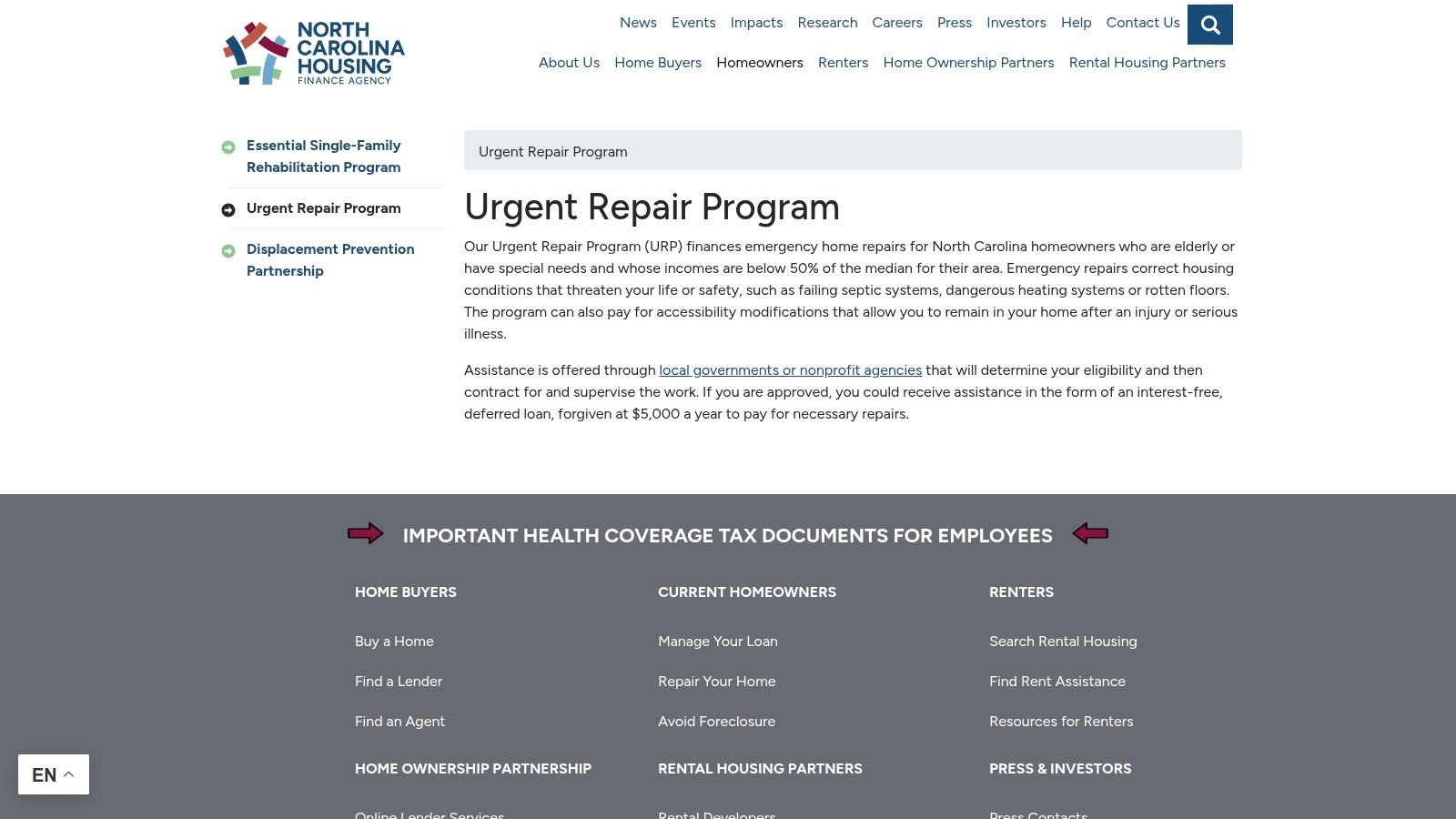
Urgent Repair Program money is for homeowners with a serious problem that threatens safety or could force them out of the house. That makes it one of the most useful state-level options when the issue is not cosmetic and not optional.
Typical uses include roof leaks, dangerous electrical problems, plumbing failures, and accessibility modifications. The program is usually administered by local governments or nonprofit partners, so access depends on who is running it in your area and when funding is available.
When URP is the right choice
Choose URP when the house is still worth saving and the repair is clear, urgent, and necessary for continued occupancy. This program makes the most sense for seniors and homeowners with disabilities who need to stay put but can’t safely do that without immediate work.
It’s less useful if the property has layered problems across several systems and the owner can’t manage a waiting period. In that case, a larger rehab program or a sale may be the cleaner answer.
If your home has a failing foundation plus other major issues, one urgent-repair grant may not be enough.
Common Fayetteville-area scenario
A homeowner has one major issue that triggers everything else. Water intrusion leads to electrical concerns. A collapsing floor makes a bathroom unusable. If the house also has structural movement, read what it means to consider selling a house with foundation problems instead of waiting on limited repair funding.
- Best fit: Immediate threats to habitability.
- Good outcome: Staying in the home safely without taking on traditional debt.
- Main downside: Scope is often limited and funding windows can be tight.
Website: NC Housing Finance Agency Urgent Repair Program
7. NC Housing Finance Agency Essential Single-Family Rehabilitation Loan Pool
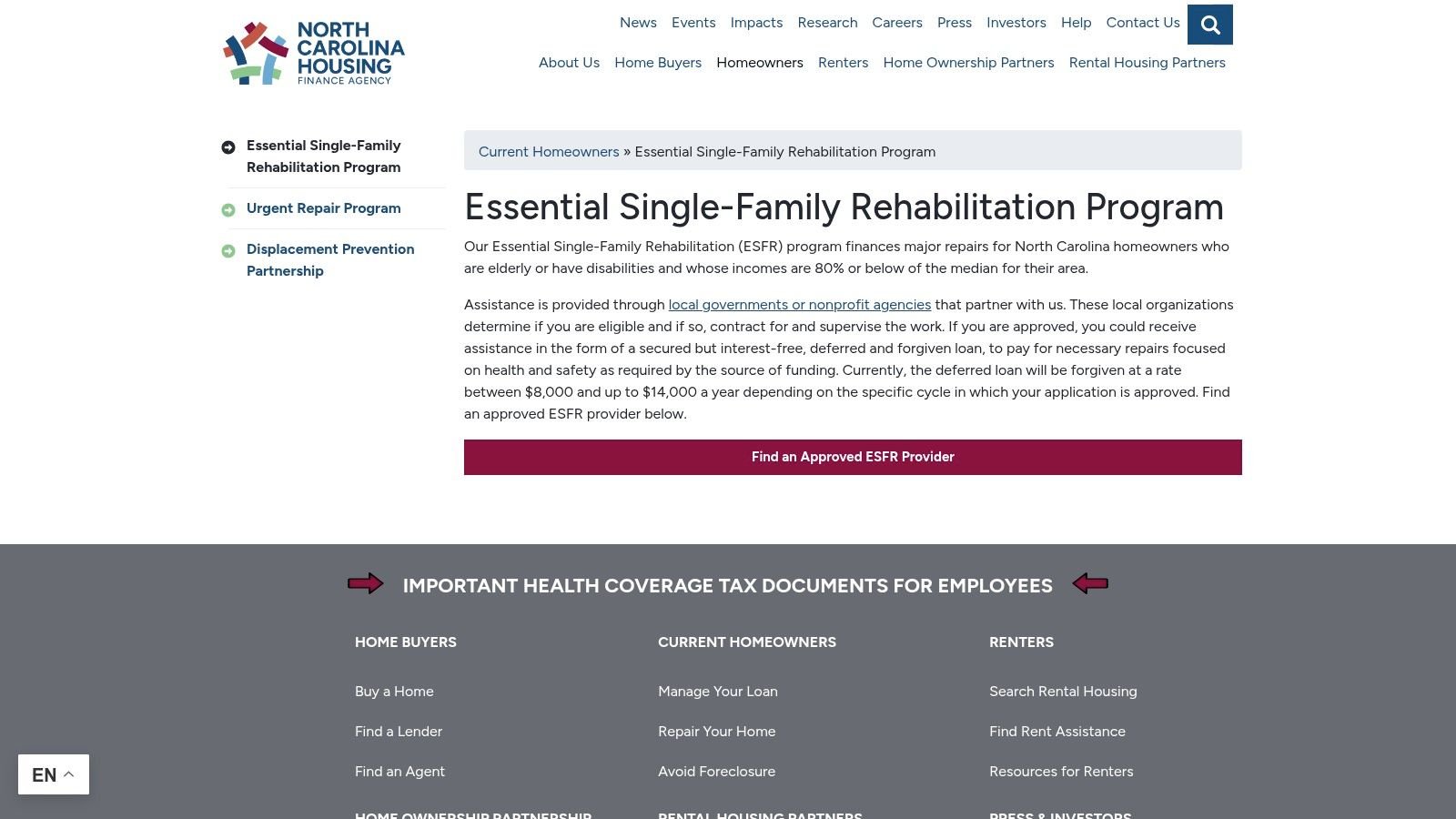
Homeowners often become confused on this point. ESFRLP often gets grouped with grants for home improvement, but it usually works as deferred or forgivable assistance rather than a simple cash grant paid to you upfront.
That doesn’t make it bad. It makes it conditional. If you qualify and stay in compliance, the cost burden can end up very low. If you move too soon or fail occupancy requirements, the picture changes.
Why ESFRLP can be better than a small grant
This program is built for broader essential rehabilitation. If your home needs roof work, plumbing, electrical repairs, structural corrections, and other habitability improvements, this can cover more ground than an emergency-only program.
That matters because many distressed homes in Cumberland County don’t have one problem. They have several. A narrow grant can patch one issue while leaving the house in trouble overall.
- Best for: Owner-occupied homes needing multi-system rehabilitation.
- Major benefit: Deferred or forgivable structure can reduce immediate out-of-pocket cost.
- Trade-off: It isn’t the same as getting an unrestricted grant with no ongoing conditions.
The occupancy question matters
If you expect to relocate soon, be careful. A forgivable program works best for homeowners who plan to remain in the home. If your timeline is uncertain because of health, family changes, or military relocation, ask about the occupancy requirement before you spend time applying.
Website: NC Housing Finance Agency single-family rehabilitation program
8. City of Fayetteville Emergency Home Repair and Housing Resources
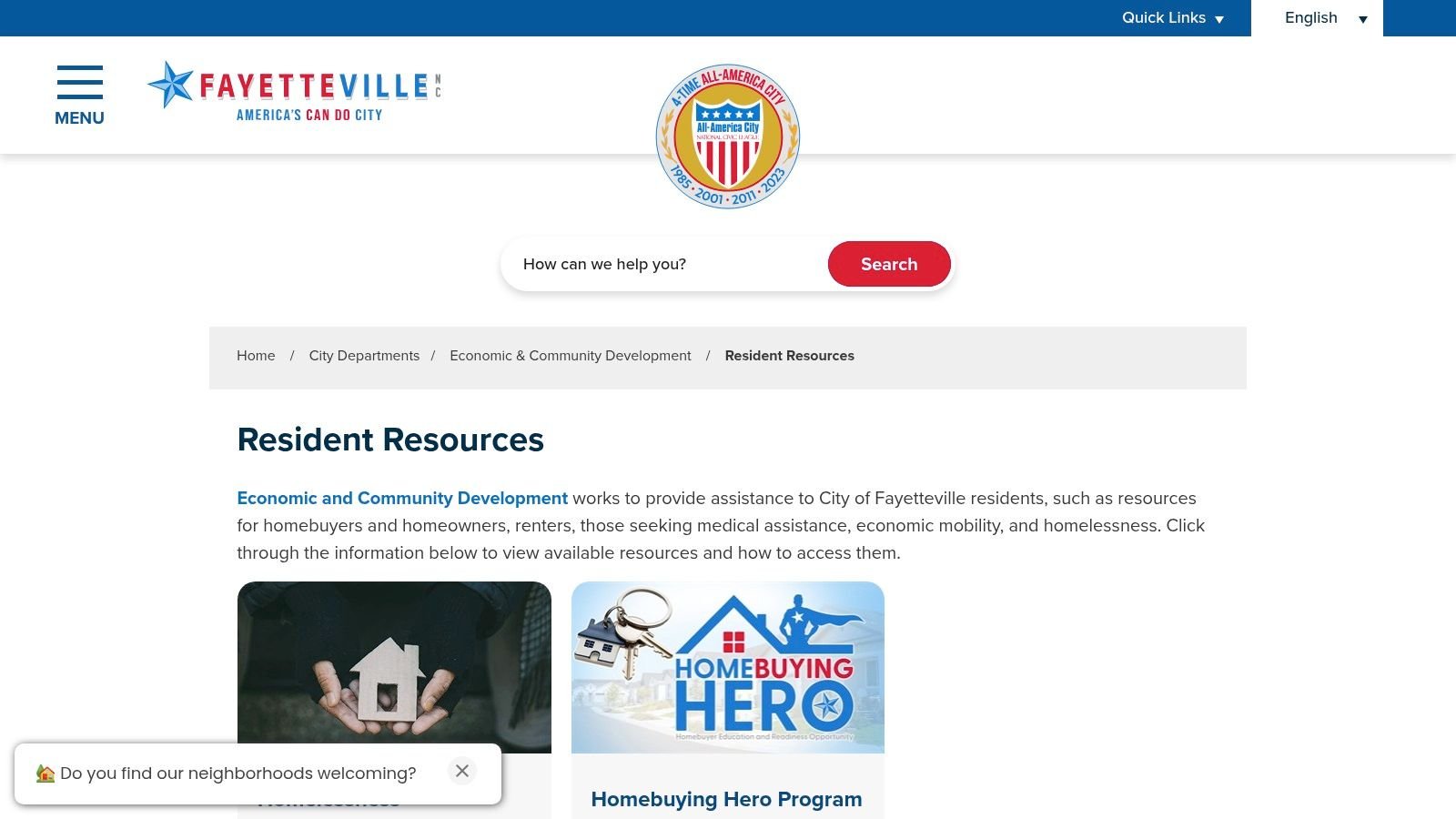
If your home is inside Fayetteville city limits, start local before you go broad. City-administered emergency repair resources can be more straightforward than a federal program because the staff already know the local housing stock, local funding sources, and local partners.
These programs typically use HUD-backed community development funding and focus on preserving owner-occupied housing. That means the work usually centers on urgent issues that threaten safe occupancy rather than elective remodeling.
Why local administration helps
A city office can often tell you quickly whether your property belongs with the city, the county, a state program, or a federal office. That alone saves time. It also helps avoid the common mistake of applying to the wrong jurisdiction.
For Fayetteville homeowners, this is especially useful if you’re not sure whether to pursue emergency repair help, a rehab program, or an energy-efficiency option.
- Best fit: Low- and moderate-income owner-occupants within Fayetteville city limits.
- Useful strength: Local staff can connect you to complementary housing resources.
- Main limit: Funding and scope vary.
A practical move
Call the city before collecting a huge paperwork file. First confirm that your address is inside the right service area and ask what type of repair they’re funding right now. That quick screening can save you weeks.
Website: City of Fayetteville resident housing resources
9. Cumberland County Owner-Occupied Housing Rehabilitation
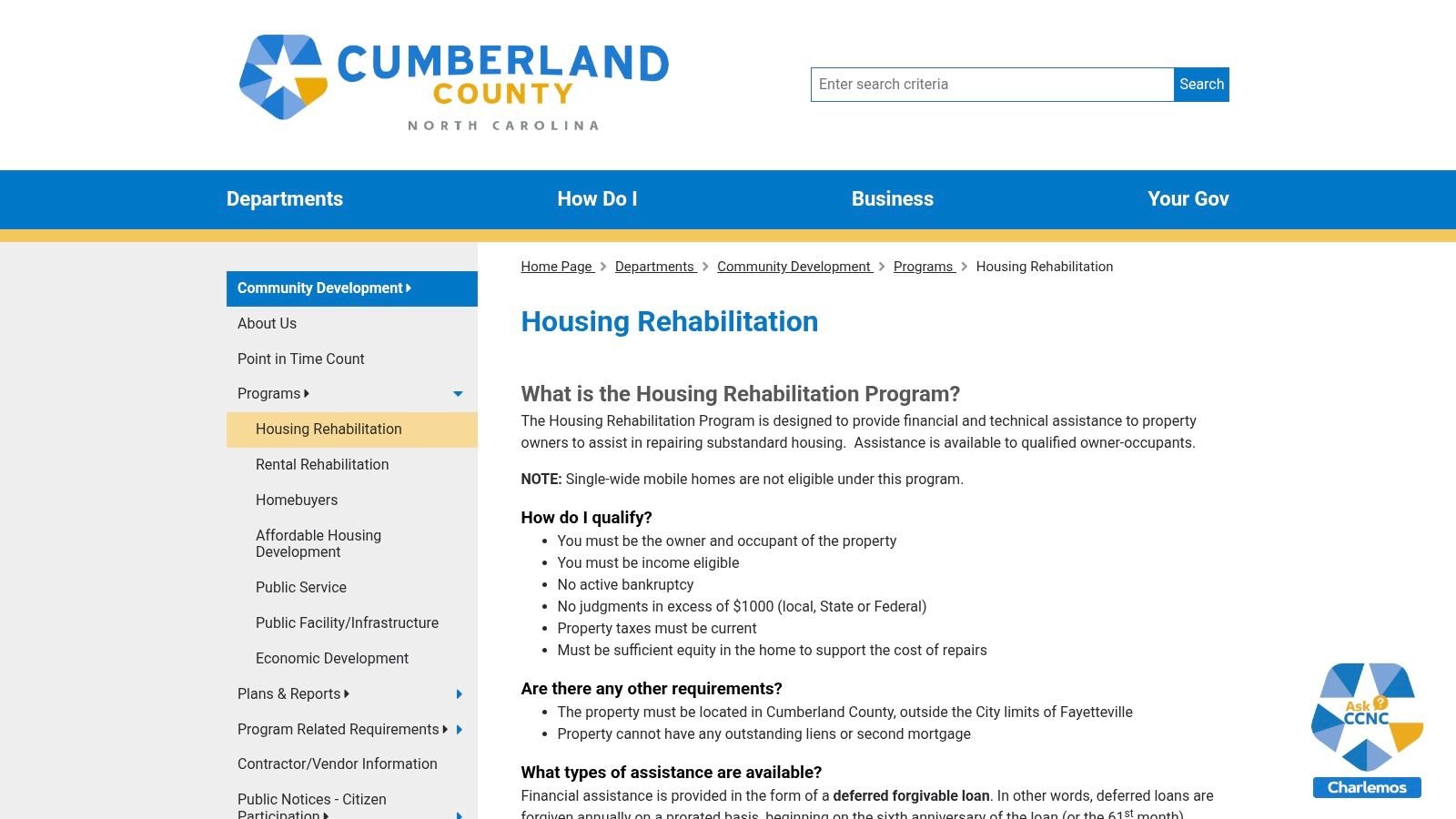
If you live outside Fayetteville city limits but still in Cumberland County, the county rehabilitation route may be the better fit. This is the kind of local program that gets missed in national articles, even though it’s often the most relevant option for owner-occupants with substandard housing conditions.
County staff typically review eligibility, inspect the home, and determine what repairs are necessary to bring the property closer to safe living standards. That makes this a practical choice for owners in unincorporated areas or participating municipalities outside the city.
Who this works for
This program is built for owner-occupants, not landlords and not absentee owners. If you inherited a house and don’t live there, or you moved out of state and kept the property, in such cases, many applications hit a wall.
That owner-occupancy rule is one of the biggest realities people miss. Many grants for home improvement are designed to preserve primary residences, not repair rental or vacant property.
Out-of-state owners usually need a different plan because most repair programs require the applicant to live in the home.
When a cash sale is cleaner
If you own a problem property outside Fayetteville, don’t live there, and can’t qualify for owner-occupied help, your realistic option may be an as-is sale. That’s especially true when code violations, liens, vacancy, or bad tenants make a rehab process hard to manage. In that case, look at selling a house in any condition for cash.
Website: Cumberland County housing rehabilitation program
10. Energy Saver North Carolina HOMES and HEAR Rebates
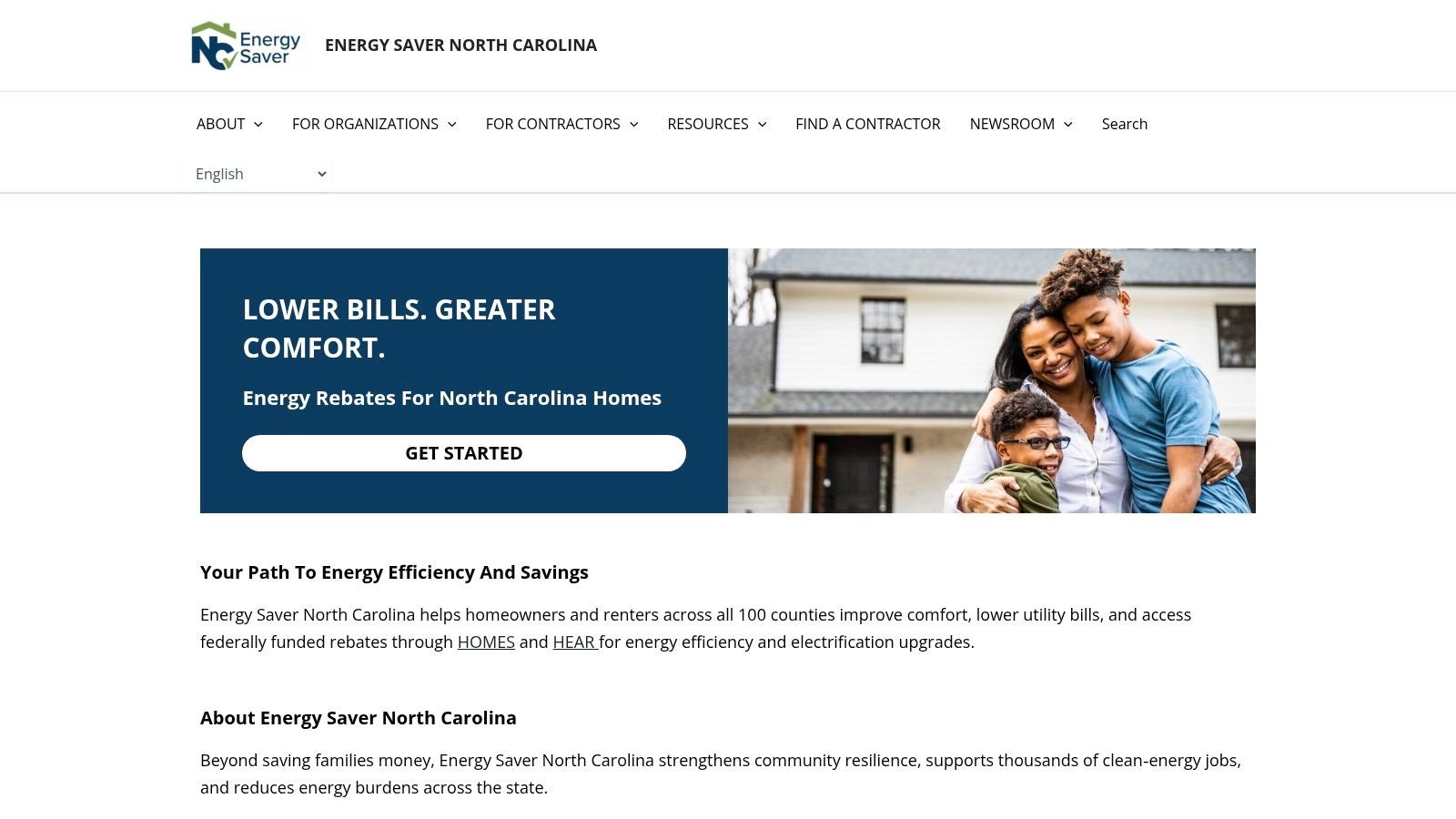
These aren’t classic grants, but they belong in the conversation because they can reduce the overall cost of major efficiency upgrades. If your main issue is outdated equipment, poor insulation, or an electrical system that needs improvement for modern energy equipment, rebates may outperform a long grant wait.
North Carolina’s HOMES and HEAR pathways are tied to approved measures and registered contractors. That structure is useful because it creates a clearer process for homeowners who don’t want to source everything on their own.
Where rebates fit in the real world
Use these programs when the house is basically salvageable and you’re trying to lower net project cost on energy-focused improvements. Heat pumps, insulation, air sealing, panel work, and related upgrades are the typical lane.
Don’t treat rebates like emergency rescue money. They’re not the answer for a collapsing porch, severe structural damage, or an inherited house you need to offload quickly.
- Best fit: Energy upgrades with verified program participation.
- Good strategy: Pair with weatherization or HVAC-focused help when allowed.
- Main limitation: It’s a rebate structure, not direct unrestricted cash.
One financing reality to remember
Homeowners often turn to loans when they can’t get a grant or rebate. HUD-backed rehab lending is one route. HUD’s Title I program can insure loans up to $25,000 for single-family property improvements through approved lenders, according to HUD home improvement loan guidance. That can work, but only if repayment fits your budget and the home is worth keeping.
Website: Energy Saver North Carolina
Top 10 Home Repair Grants Comparison
| Program | Key features ✨ | Target audience 👥 | Funding & value 💰★ | Best for / Notes 🏆 |
|---|---|---|---|---|
| USDA Section 504 Single Family Housing Repair Grants (Rural Development) | Grants for 62+ to remove hazards; 1% loans; combine options | 👥 Very-low‑income rural homeowners, seniors 62+ | 💰 Grant + 1% loan (loan caps); ★★★★ | 🏆 Strong for health/safety repairs in eligible rural areas |
| U.S. DOE Weatherization Assistance Program (WAP) – NC (Action Pathways) | Free insulation, air‑sealing, HVAC safety/efficiency measures | 👥 Low‑income households; priority: elderly, disabled, families w/ children | 💰 No‑cost to eligible households; ★★★★ | 🏆 Best for lowering bills & basic home performance |
| NC Heating and Air Repair and Replacement Program (HARRP) | HVAC repair/replacement for health & safety; coordinates w/ WAP | 👥 Income‑eligible homeowners with unsafe/inoperable HVAC | 💰 Grant/assistance via local agencies; ★★★★ | 🏆 Focused solution for urgent HVAC needs |
| LIHEAP Crisis Intervention Program (NC) | Year‑round emergency heating/cooling crisis aid; temporary fixes | 👥 Households facing life‑threatening utility/HVAC crises | 💰 Crisis payments/repairs (limited scope); ★★★ | 🏆 Fast relief during outages or emergencies |
| VA Disability Housing Grants (SAH/SHA) | Grants for accessibility adaptations (ramps, bathrooms, doorways) | 👥 Veterans/service members w/ qualifying service‑connected disabilities | 💰 True grant (no repayment); ★★★★★ | 🏆 Top choice for disability‑related home adaptations |
| NCHFA Urgent Repair Program (URP) | State grants for emergency repairs (roof, electrical, plumbing, ramps) | 👥 Very‑low‑income homeowners (typically ≤50% AMI) | 💰 Grant assistance via local admin; ★★★★ | 🏆 Good for preventing displacement & addressing urgent hazards |
| NCHFA ESFRLP (Essential Single‑Family Rehabilitation Loan Pool) | HOME‑funded rehab for essential systems; forgivable/deferred loans | 👥 Low‑income elderly or disabled owner‑occupants (≤80% AMI) | 💰 Deferred/forgivable loan (conditional); ★★★★ | 🏆 Best for multi‑system rehab with forgiveness terms |
| City of Fayetteville Emergency Home Repair (CDBG/HOME) | Local emergency repairs & referrals; HUD‑funded | 👥 Low/moderate‑income owners within Fayetteville city limits | 💰 Grant‑funded local programs; ★★★ | 🏆 Useful for city residents needing urgent fixes |
| Cumberland County Owner‑Occupied Rehab | County‑administered rehab for substandard conditions | 👥 Homeowners in unincorporated Cumberland County & outside Fayetteville | 💰 CDBG/HOME & state funds (grants/assistance); ★★★ | 🏆 Local option for county residents needing rehab |
| Energy Saver NC – HOMES & HEAR Rebates (IRA) | Instant contractor discounts & post‑project rebates for efficiency upgrades | 👥 Homeowners planning energy upgrades; income tiers affect benefits | 💰 Rebates/discounts (income‑tiered); ★★★★ | 🏆 Best to reduce upfront costs for heat pumps, insulation, panels |
| LIHEAP / WAP / HARRP Combinations (Integrated use) | Combine crisis, weatherization & HVAC repair funding for wider coverage | 👥 Vulnerable households needing both emergency and efficiency work | 💰 Mix of grants, crisis funds, and program rebates; ★★★★ | 🏆 Most comprehensive approach for layered needs |
Navigating Your Next Steps Grants Timelines and Alternatives
You find a roof leak on Monday, get an HVAC failure on Tuesday, and by Friday you are trying to figure out whether a grant, a rehab loan, or a quick sale will solve the problem before the next bill hits. That is the key decision point for Fayetteville and Cumberland County homeowners. Speed, eligibility, and the condition of the property matter more than the program name.
Start with occupancy. If you live in the house as your primary residence, you have the strongest shot at public repair help. If you do not, your options shrink fast. That catches inherited-property owners, military families transferred out of Fayetteville, and accidental landlords across Cumberland County. Public programs usually focus on owner-occupants, not absentee owners trying to stabilize a distressed house from another city or state.
Next, sort the problem by timeline.
If the house is unsafe now, call local and crisis programs first. City of Fayetteville and Cumberland County housing offices can tell you whether emergency repair help is open, what documents they require, and whether your address falls inside their service area. If the problem is heat, power, or another immediate health risk, ask about crisis aid before you spend weeks on a broader rehab application.
If the house needs several major repairs, stop chasing one small funding source at a time. A larger rehabilitation program, or a layered approach using more than one program, usually works better than trying to patch the property issue by issue. That is especially true for older homes with roofing, plumbing, electrical, and accessibility problems happening at once.
Money also runs out. Local waiting lists change. State programs pause. Contractors fill up. Homeowners who apply early and turn in complete paperwork get considered faster than owners who wait until the damage spreads.
Use this rule. Match the tool to the problem.
A grant works best when you meet strict income and occupancy rules, the repair fits the program, and you can wait through intake, inspections, and approval. A forgivable loan can be a good deal if you plan to stay in the house long enough to satisfy the terms. A standard loan only makes sense when the property is worth saving, your budget can handle the payment, and the repairs solve a stable long-term housing problem.
Do not borrow just because a lender says yes.
For some Fayetteville owners, a loan fixes the issue and preserves the home. For others, it adds debt to a house with title problems, code violations, vacant months, or deferred maintenance that keeps growing. If you are behind on taxes, facing foreclosure, managing an inherited property with multiple heirs, or trying to repair a house from outside North Carolina, the grant route may be too slow and the loan route may be too risky.
A direct cash sale is the practical option when time is short and the property no longer fits public program rules. DIL Group Home Buyers offers a clear exit for homeowners in Fayetteville and surrounding Cumberland County communities who need certainty instead of more paperwork. They buy houses in any condition for cash, without repairs, showings, or agent commissions. If you qualify for grant help and can wait, pursue it. If the house, ownership setup, or timeline does not fit, an as-is sale is often the smarter move.
If your house needs work and you don't want months of uncertainty, DIL Group Buyers offers a direct way forward. They buy houses as-is in Fayetteville, Hope Mills, Spring Lake, Grays Creek, Eastover, Stedman, Raeford, Parkton, Dunn, and nearby areas. No repairs, no listings, no hidden costs. Just a guaranteed cash offer and a closing date that works for you.