
So, you've decided to sell your rental property. Before you do anything else—before you call a realtor, before you even think about a "For Sale" sign—you need to stop and find one very important document: your lease agreement.
This isn't just a suggestion. It's the critical first step that separates a smooth sale from a legal nightmare.
Your First Move When Selling a Rented House

Selling a house with tenants is a completely different ballgame than selling a vacant one. That lease is a legally binding contract, and in North Carolina, it dictates nearly every move you can make. Skipping this step is one of the biggest—and most costly—mistakes I see landlords make.
Your first real action is to pull out that lease and read it cover to cover. I mean really read it. Don't just skim. You're hunting for specific clauses about selling the property, how the lease can be terminated, and the notice you're required to give. Think of it as your strategic roadmap for the entire process.
Key Lease Clauses to Identify
Figuring out what your lease allows is everything. For military families here in Cumberland County getting PCS orders or for landlords managing a property from out of state, knowing these details upfront is non-negotiable.
Here’s exactly what you need to look for:
- Lease Term: Is it a fixed-term lease (like for one year) or is it month-to-month? This is a huge deal. A fixed-term lease almost always transfers with the property, meaning the new owner has to honor it until the end date.
- Sale or Transfer Clause: Some leases have a section that spells out what happens if you decide to sell. It might detail how much notice you need to give for showings or even give your tenant an option to end the lease early.
- Notice Period: Your lease—and NC law—will specify how much notice you must give before entering the property for things like showings or inspections. You absolutely have to follow this to the letter.
A huge mistake landlords make is just assuming they can tell their tenant to pack up and leave. Here in North Carolina, that's not how it works. Unless your lease explicitly says otherwise, a fixed-term lease stays with the property. The buyer simply becomes the new landlord.
By digging into your lease first, you'll know exactly where you stand legally. This initial homework protects you, respects your tenant's rights, and honestly, just makes the whole selling process a lot less stressful.
What North Carolina Law Says About Tenant Rights During a Sale
Okay, so you've got the lease in hand. Now comes the part that trips up a lot of landlords: understanding exactly what North Carolina law requires of you when selling. This isn't just about being a decent person (though that helps); it's about following the rules to the letter to avoid getting bogged down in legal trouble.
The biggest rule, the one that governs everything else, is that the lease follows the land. Think of it this way: the lease is attached to the property, not to you as the owner. When you sell, that lease agreement transfers directly to the new buyer. They step into your shoes as the landlord and are legally bound to honor every single term of that existing lease until it ends. No surprise rent hikes, no changing the pet policy, and definitely no evicting the tenant without a valid, legal reason.
Your Next Move Depends Entirely on the Lease Type
The kind of lease you have with your tenant is the single most important piece of the puzzle. If you have them on a month-to-month tenancy, you've got a lot more wiggle room. In North Carolina, either you or the tenant can end this type of agreement with just seven days' written notice. This can be a huge advantage if you’re trying to attract buyers who want to move in themselves.
But a fixed-term lease is a different beast entirely. It’s a binding contract until that final date. Let’s say your tenant in Fayetteville has six months left on their one-year lease. The person who buys your property must honor those six months. For an investor, this is great news—instant cash flow. For a family looking to make your house their home, it's a deal-breaker.
Bottom line: You cannot legally force a tenant on a fixed-term lease to pack up and leave just because you want to sell. Their right to live there is protected until the very last day of their lease, unless there's a specific "early termination" clause in the agreement you both signed.
Don't Forget the Details: Security Deposits and Showings
Getting the big picture right is one thing, but fumbling the small stuff can cause just as many headaches. North Carolina law is crystal clear on these points:
- Security Deposit: You have two choices. You can either refund the deposit to your tenant, or you can transfer it to the new owner. If you transfer it, you are legally required to notify the tenant in writing within 30 days. This notice has to include the new owner's name and address. No exceptions.
- Notice for Showings: The law says you have to give "reasonable notice" before you or your agent waltzes in for a showing. While the state doesn't give an exact number of hours, the universally accepted standard—and best practice—is 24 hours' written notice. It respects your tenant’s privacy and keeps you on the right side of the law.
Getting these legal duties right is non-negotiable. It’s also worth noting the bigger market forces at play. We're seeing more landlords deciding to sell, partly because the US multifamily sector is bracing for a massive 74% drop in new construction starts by mid-2025 compared to its 2021 peak. This squeeze will likely keep the rental market tight, making occupied properties attractive to investors.
For landlords here in Cumberland County, especially military members or those of us managing a property from another state, this can all feel overwhelming. Selling to a cash buyer can be a clean, fast way to exit the market without the drama. You can read more about these global real estate market trends and see how they’re impacting landlords like you.
Alright, you've got your head wrapped around your legal duties.Alright, you've got your head wrapped around your legal duties. Now comes the big decision: how are you actually going to sell this thing?
There's no single "right" way to sell a house with tenants inside. It really boils down to what you're trying to achieve. Are you after top dollar? A quick, clean break? Or maybe just a smooth handoff with zero drama?
Let's walk through the four main playbooks we see landlords use every day.
Option 1: Sell with the Tenant in Place
This is the path of least resistance for many landlords, especially if you want to keep that rent money coming in until the day you close. You're basically selling a turnkey investment.
The new owner, who will almost certainly be another investor, steps right into your shoes. They inherit the lease, the tenant, and the security deposit. It’s a clean handoff that doesn't disrupt anyone's life or your cash flow.
The big catch? You're cutting out a huge chunk of the market. Families looking for their forever home aren't going to be interested. Your buyer pool is pretty much limited to other investors, which can sometimes impact your final sale price.
Option 2: Negotiate a Tenant Buyout
Sometimes, the most profitable thing you can sell is an empty house. This is where a "cash for keys" agreement comes into play.
It's a straightforward negotiation. You offer your tenant a financial incentive—maybe one or two months' rent plus their full security deposit back—to agree to end the lease early and move out.
If they say yes, you suddenly have a vacant property you can list on the open market. This opens the door to all buyers, including those emotional first-time homebuyers who often pay top dollar. The downside is the upfront cost, and more importantly, your tenant can just say no. If they refuse, you’re right back where you started.
Option 3: Wait for the Lease to Expire
If you're not in a hurry, patience can be your best friend. For landlords whose lease is ending in a few months anyway, simply waiting it out is often the cleanest route.
You provide the proper non-renewal notice, let the tenant finish out their lease, and then you're free to clean up, make repairs, and list a completely empty house. This avoids all the headaches of coordinating showings and negotiating with a tenant.
Of course, the biggest drawback is time. For many of our clients, especially military families at Fort Bragg getting sudden PCS orders, waiting three or four months just isn't an option.
This decision tree gives you a good visual of how the lease type really dictates your next moves.
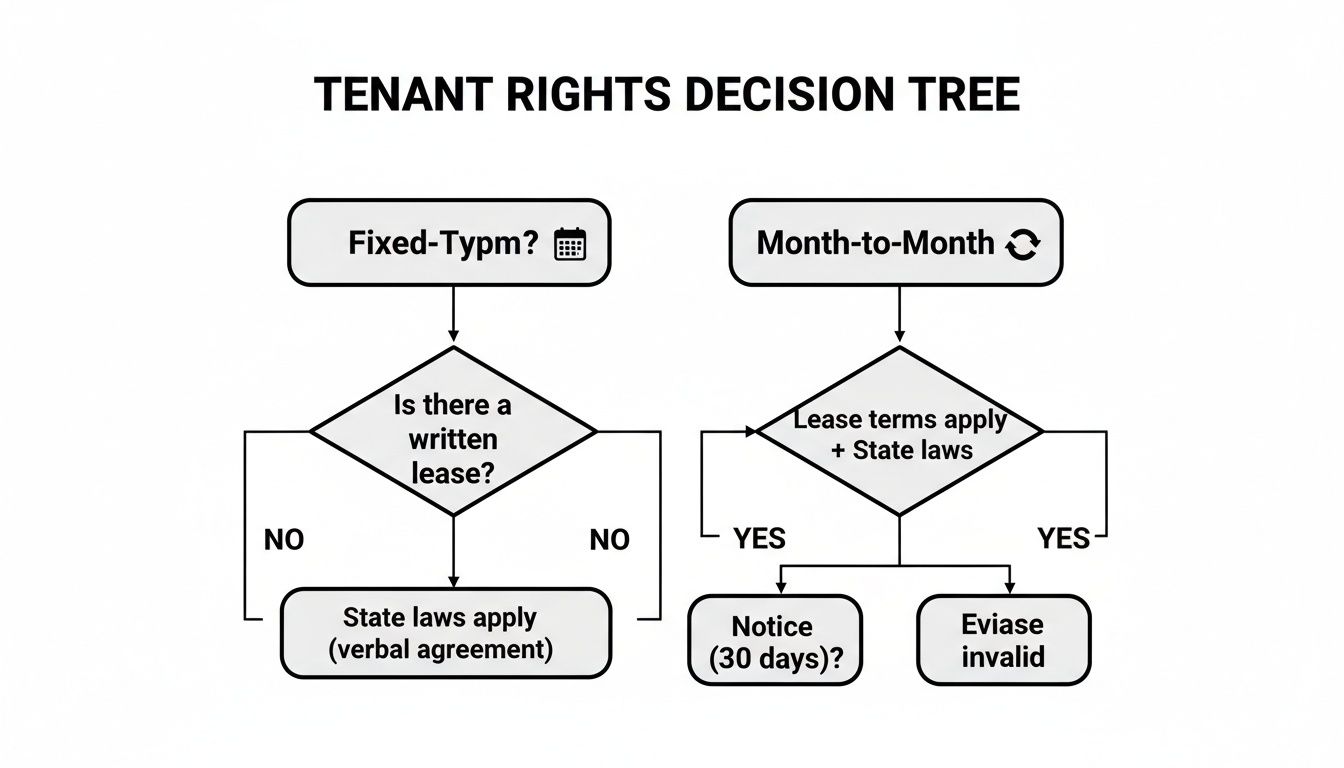
As you can see, a fixed-term lease locks you in, making a buyout or selling to an investor your primary choices. A month-to-month lease, on the other hand, gives you a lot more flexibility to give notice and clear the property.
Option 4: Sell Directly to a Cash Buyer
For landlords who value speed, certainty, and a hassle-free process above all else, this is often the golden ticket. Selling directly to a cash home buying company like ours cuts through all the usual red tape.
We buy properties "as-is," which means you don't lift a finger. No repairs, no cleaning, no staging, no showings. We handle it all.
A cash sale completely sidesteps the buyer's financing—one of the biggest reasons traditional deals fall apart. Instead of waiting months, you can close in a matter of days or weeks.
This is a game-changer for out-of-state owners, landlords with nightmare tenants, or anyone who just needs to cash out their investment fast. You can learn more about how an "as-is" home sale works and see if it’s the right call for you. It’s about getting a guaranteed sale on your timeline, minus the stress.
Comparing Your Options for Selling a Rented House
To help you see everything side-by-side, we've put together a simple table breaking down these four strategies. Consider your own priorities—speed, profit, convenience—to see which path aligns best with your goals.
| Selling Option | Best For | Typical Timeline | Key Challenge |
|---|---|---|---|
| Sell with Tenant | Landlords prioritizing steady income and avoiding tenant turnover. | 60-90 days | Smaller buyer pool (investors only), potentially lower offers. |
| Tenant Buyout | Sellers aiming for top market value by appealing to all buyer types. | 90-120 days | Upfront cost of the buyout; tenant can refuse the offer. |
| Wait for Lease to Expire | Patient sellers who want a clean slate and aren't on a tight deadline. | 3-6+ months | The long wait; not feasible for urgent situations (e.g., PCS). |
| Sell to a Cash Buyer | Sellers needing maximum speed, certainty, and a hands-off process. | 7-21 days | Offer may be less than top retail value, but with no fees or repair costs. |
Each of these options has its place. The key is to be realistic about your property's condition, your tenant's situation, and your own personal timeline and financial needs.
Juggling Showings and Inspections with a Tenant Inside

Here's where things can get really tricky. Trying to coordinate showings, appraisals, and inspections around your tenant's life takes more than just a quick heads-up—it demands real strategy and a bit of empathy.
A tenant who’s on your side can make the sale a breeze. A disgruntled one? They can actively sink it.
Your number one job is to keep communication open and respectful. Don't just fire off a text an hour before you want to show up. Legally, you must provide 24-hour written notice every single time, but the smart move is to go beyond that and actually work with them to find a schedule that isn’t a total nightmare for their family.
Creating a Win-Win Plan for Showings
Put yourself in their shoes for a second. Having strangers tramp through your home on a regular basis is stressful. It’s an invasion of privacy. To get them on your team, you need to make it worth their while.
A little incentive can go a long, long way.
- Offer a temporary rent discount for the month you plan to actively show the property.
- Hand them gift cards to a local restaurant or coffee shop for each week they cooperate.
- Offer to hire a cleaning service to get the place looking sharp before a weekend of viewings.
These small gestures show you respect their time and privacy. It shifts the dynamic from an adversarial chore to a collaborative effort. That's a game-changer when you're selling a rented house.
By the way, if a tenant moves out and leaves personal items behind, you need to know the right way to handle it. You can learn exactly what to do with abandoned tenant property in our detailed guide.
Remember, a clean and accessible home sells faster and for more money. Investing a few hundred dollars to get your tenant's cooperation can easily bring back thousands more in the final sale. It’s not just an expense; it’s a strategic investment.
The Ultimate Shortcut: The Single Walkthrough
For a lot of landlords I talk to—especially military owners who are out of state—the whole idea of juggling showings is a complete non-starter. This is where selling to a cash buyer like us completely changes the game.
Forget about an endless parade of buyers and their agents. A cash sale with us typically requires just one, single walkthrough. That's it.
We come to the property once to see its condition and figure out our offer. Your tenant is only disturbed one time, which completely eliminates the stress of constant cleaning, scheduling, and interruptions.
This single-visit approach is a massive relief. There’s no staging the home, no open houses, and no holding your breath hoping the tenant didn’t leave dirty dishes in the sink.
For military families on a tight PCS timeline or any owner who just wants to skip the logistical headache, this is hands-down the simplest and fastest way to get your property sold.
Why a Cash Offer Is Often the Smartest Move for Landlords

Let's be honest—the traditional real estate market isn't built for most landlords. Trying to juggle tenant schedules, crossing your fingers that a buyer's loan goes through, and dumping cash into pre-sale repairs can turn a good investment into a massive headache.
This is especially true for out-of-state owners or our military families at Fort Bragg who get hit with sudden PCS orders.
A cash offer cuts right through all that noise. It’s a direct, no-nonsense path for landlords who need certainty and speed more than they need to chase every last penny of a retail sale. When you sell to a cash home buying company, you're not just offloading a property; you're buying back your time and sanity.
Side-Stepping the Usual Landlord Headaches
Putting a rented house on the open market is like inviting a long list of potential problems to your doorstep. A cash sale just erases them from the board.
Think about the biggest pain points of selling a rental:
- No Repairs Needed. Forget fixing that leaky faucet or dealing with the worn-out carpet. Cash buyers purchase properties "as-is." That can save you thousands of dollars and weeks of work.
- No Showings. The nightmare of scheduling endless viewings around your tenant's life? Gone. We usually just need one quick, single walkthrough to see the property.
- No Tenant Drama. Have a difficult or uncooperative tenant? That becomes our problem, not yours. You can sell the house without having to negotiate a stressful buyout or go through an eviction.
Selling directly to a cash buyer takes the biggest unknown out of the equation: the buyer’s financing. When there are no banks involved, the risk of the deal collapsing at the eleventh hour drops to nearly zero. That kind of certainty is priceless, especially when you're on a tight clock.
Get Speed and Certainty When It Matters Most
The normal home-selling process can drag on for months, bogged down by contingencies, appraisals, and endless bank paperwork. If you're a landlord who needs to liquidate an asset quickly—maybe because of a job relocation or inheriting a property you never wanted—that timeline just doesn't work.
A cash sale shrinks that entire process down to a matter of days or weeks. You get a firm, no-obligation offer. If you accept, you pick the closing date that works for you. It’s that simple.
That level of control is a game-changer. For landlords who are just plain tired of the grind, this is the cleanest and fastest way to exit the rental business for good.
The global real estate rental market was valued at a staggering USD 2.91 trillion in 2025, and more landlords are choosing to sell. With market dynamics always shifting, property owners dealing with code violations, bad tenants, or sudden relocations are discovering that cash sales are a lifeline. This route skips the realtor fees and repair costs—it’s how we've been able to purchase over 150 properties right here in Cumberland County, often from distant owners who just need a reliable way out. You can dive deeper into the global rental market dynamics on Research and Markets.
If you’re facing these kinds of challenges, it’s worth looking at all your options. It might be time to learn how you can sell your home for cash with DIL Group and skip the hassles of the traditional market. It’s the simplest way to handle the complexity of selling a rented house.
Common Questions About Selling a Rented House in NC
When you decide to sell a property with tenants, you're bound to run into some unique "what if" scenarios. No matter how well you plan, specific questions always pop up. This is where we tackle the real-world, nitty-gritty questions we hear all the time from landlords right here in North Carolina.
Think of this as your quick-reference guide for those sticky situations. From tenants who won't cooperate to handling the security deposit at closing, getting these details right makes all the difference.
What If My Tenant Refuses Showings?
This is probably the number one fear for landlords, and for good reason. A difficult tenant can bring your sale to a screeching halt. While NC law says you can access your property with reasonable notice, a tenant can still make things a nightmare by refusing entry or making sure the house is a total mess anytime a buyer comes by.
If this happens, the first move is always to go back to communication. A calm, direct conversation can work wonders, especially if you gently remind them of their rights and your legal obligations. Sweetening the deal with an incentive, like we talked about earlier, can also completely change their attitude.
But what if they still won't budge? You've got a few options:
- Cash for Keys: This is your ace in the hole. A solid buyout offer is often the quickest path to getting an uncooperative tenant out and the property vacant.
- Get a Lawyer: If a tenant is actively blocking the sale in breach of their lease, you may need to talk to an attorney. Just know that pursuing a formal eviction is a long, expensive, and stressful process.
- Sell to a Cash Buyer: This is the ultimate workaround. A cash buyer like DIL Group Home Buyers usually only needs to see the property once. That means no endless parade of showings, open houses, or scheduling headaches.
Do I Have to Tell Prospective Buyers the House Is Rented?
Yes. 100% yes. You are legally required to disclose that the property has a tenant. This isn't just being polite—it's a material fact of the sale.
The buyer isn't just buying a house; they're inheriting a legal contract (the lease) and a tenant. They absolutely have to know what they're getting into. Trying to hide this can blow up the deal and land you in serious legal trouble down the road.
You have to be an open book here. The buyer needs to see the lease, know the tenant's payment history, and understand what's happening with the security deposit long before you get to the closing table. Anything less puts the whole sale at risk.
Can I Raise the Rent Before Selling to Make It More Attractive?
You can only raise the rent if the lease allows it or if you're on a month-to-month agreement (with proper notice). If your tenant is locked into a fixed-term lease, you can't touch the rent until it's time for renewal.
Honestly, trying to jack up the rent right before a sale to make the numbers look better usually backfires. It creates a hostile relationship with the very person you need to cooperate with you. A buyer who invests in rental properties would much rather see a stable, happy tenant paying a fair market rent than an inflated number that might cause the tenant to leave.
What Happens to the Security Deposit at Closing?
The security deposit has to be handled by the book. Here in North Carolina, you basically have two ways to do it:
- Transfer it to the New Owner: This is how it's done 99% of the time. The deposit amount is simply credited to the buyer on the final closing statement. You’ll just need to give your tenant written notice that the deposit has been transferred, along with the new owner's contact info.
- Refund it to the Tenant: You could also return the deposit to the tenant (minus any deductions for damages, of course). The new owner would then have to collect a brand new security deposit from the tenant themselves.
Selling a house with tenants can feel like a maze, but you don't have to navigate it by yourself. If you're ready for a simple, guaranteed sale without dealing with showings, repairs, or tenant drama, DIL Group Home Buyers is here. We buy houses as-is for cash, so you can close when you're ready and move on. Get your free, no-obligation cash offer today.