
You’re probably dealing with two problems at once.
First, someone close to you has died, and you’re still trying to handle the emotional side of that loss. Second, a house in Fayetteville, Hope Mills, Spring Lake, or somewhere else in Cumberland County just became your responsibility. The mail keeps coming. The utilities still need attention. The yard needs work. Family members are asking questions. And someone has now told you the house “has to go through probate.”
That phrase scares people because it sounds like a legal maze. Sometimes it is. But it’s still a process, and process can be managed when you know the order of steps and where people get stuck.
Inherited a House in Cumberland County Now What
You get the call, then the paperwork starts.
A house in Fayetteville, Hope Mills, Spring Lake, or another part of Cumberland County is now tied to an estate, and the questions hit fast. Can anyone go inside? Can you change the locks? Can you sell it if you live in another state? Who pays the bills while everything sits?
Start with one fact. The house is now a probate issue before it is a real estate issue.
In North Carolina, probate is the court process that gives someone legal authority to handle the estate and transfer property the right way. Until that authority is in place, nobody should be signing a listing agreement, accepting an offer, or promising a buyer a closing date. Families get into trouble when they treat the house like “ours” before the court has confirmed who can act for the estate.

In Cumberland County, this gets harder for out-of-state heirs. You cannot easily check on the property, meet contractors, or deal with a break-in, water leak, or city notice. Meanwhile, the house keeps creating bills and risk.
What hits first in real life
Families usually run into the same pressure points right away:
- The property starts draining money. Taxes, insurance, utilities, lawn care, and basic maintenance continue even when the house is empty.
- The condition is often worse than expected. Many inherited homes in Fayetteville have deferred maintenance, old roofs, outdated systems, or years of personal property still inside.
- Heirs rarely agree at the same speed. One person wants to keep it, one wants top dollar, and one wants it gone before another month of carrying costs hits the estate.
- Distance makes every decision slower. If you live outside North Carolina, even simple tasks become expensive and time-consuming.
Here is my advice. Do not start by cleaning out the entire house or calling the first agent who mailed you a postcard. Confirm who has authority. Then secure the property, document its condition, and build the sale plan around the probate timeline.
The first question to answer
Ask this before anything else. Who has the legal right to act for the estate?
That answer comes from the probate process, not from family opinion and not from who has the house key. Once that is clear, you can make smart decisions about repairs, pricing, timing, and whether a traditional listing even makes sense. If you need the broader overview, this guide on selling inherited property lays out the bigger picture.
Local context matters here. A vacant inherited house near Ramsey Street brings different problems than one in a stable Hope Mills neighborhood. A property near Fort Bragg may attract a different buyer pool than an older home with deferred maintenance on the edge of Cumberland County. Generic probate advice misses that.
Treat this like a legal and financial project, not a family side task. That mindset saves time, lowers conflict, and keeps you from making a sale mistake you cannot undo.
Understanding Your Role as Executor in North Carolina
If the court names you executor, you are not just the family member “helping out.” You are a fiduciary. That means you must act in the estate’s best interest, not your own convenience and not one heir’s pressure campaign.
That’s the standard. Take it seriously.
What your authority actually comes from
Your authority comes from the court, not from the will alone and not from family consensus. In practice, executors usually need the court paperwork that confirms they can act on behalf of the estate. People often refer to this authority as Letters Testamentary when there’s a will.
Once you have that authority, you can begin handling the property properly. Before that, you should be cautious about signing anything tied to a sale.
Your first job is control
Before you think about marketing, focus on securing the house and the file.
A strong executor starts by creating order:
Secure the property
Change or rekey access if needed. Confirm doors and windows lock. Make sure only authorized people can enter.Protect the paper trail
Gather the deed, mortgage statements, tax records, insurance policy, utility information, and any existing will or estate planning documents.Notify the right parties
Heirs, creditors, and the court all matter. Silence creates disputes.Document contents and condition
Take photos. Note damage, deferred maintenance, and personal property still inside.Separate family emotion from estate duty
This house may be full of memories. It’s still an asset that must be handled correctly.
If you’re the executor, you can’t afford to “wing it.” Good records protect you from family conflict later.
What fiduciary duty looks like in real life
Fiduciary duty sounds abstract until money is involved.
It means you should not sell the house to a relative on a handshake deal if the price is questionable. It means you should not let one heir remove valuable property without documentation. It means you should not ignore unpaid taxes, liens, insurance gaps, or buyer deadlines.
It also means you need to understand valuation rules tied to probate sales. In formal probate, the court-appointed executor must obtain an appraisal, and many courts enforce a rule that the house cannot be sold for less than 90% of its appraised fair market value to protect beneficiaries, as explained in this probate sale overview from DH Trust Law.
That rule tells you something important. Probate is not casual. The court expects process, not guesses.
The Cumberland County mindset you need
Locally, I’ll put it plainly. Executors get in trouble when they confuse speed with shortcut.
You can move fast in Cumberland County, but only if you’re organized. The courthouse process, title review, property condition, and family communication all need to line up. If one part breaks, the sale slows down.
Use this checklist early:
- Confirm court appointment: Make sure the estate file clearly shows who can act.
- Verify title issues: Old mortgages, liens, and ownership questions can surface late if nobody checks early.
- Maintain insurance: Vacant houses create risk. Standard coverage may need review.
- Keep heirs informed: Silence invites suspicion.
- Know your sale path: Traditional listing, probate-focused sale process, or direct sale all carry different workloads.
For a deeper look at the property-sale side of the process, this page on a probate property sale is useful if you’re comparing next steps.
Don’t confuse executor power with unlimited power
You are allowed to act. You are not allowed to act carelessly.
If the house has personal belongings, disputed ownership, unpaid debts, or family tension, slow down long enough to document everything. A clean file saves time. A messy file creates objections, delays, and legal bills.
That’s the core of how to sell a house in probate the right way in North Carolina. Get appointed. Get organized. Protect the property. Respect the process.
Valuing a Probate Property The Appraisal and As-Is Reality
You may already know who has authority to act. Now you need a number you can defend.
In Cumberland County probate sales, value is where families often get stuck. One heir remembers what the house looked like ten years ago. Another saw a neighbor’s fully updated home sell high in Haymount or Terry Sanford and assumes this property should bring the same price. That thinking causes delays, arguments, and bad decisions.
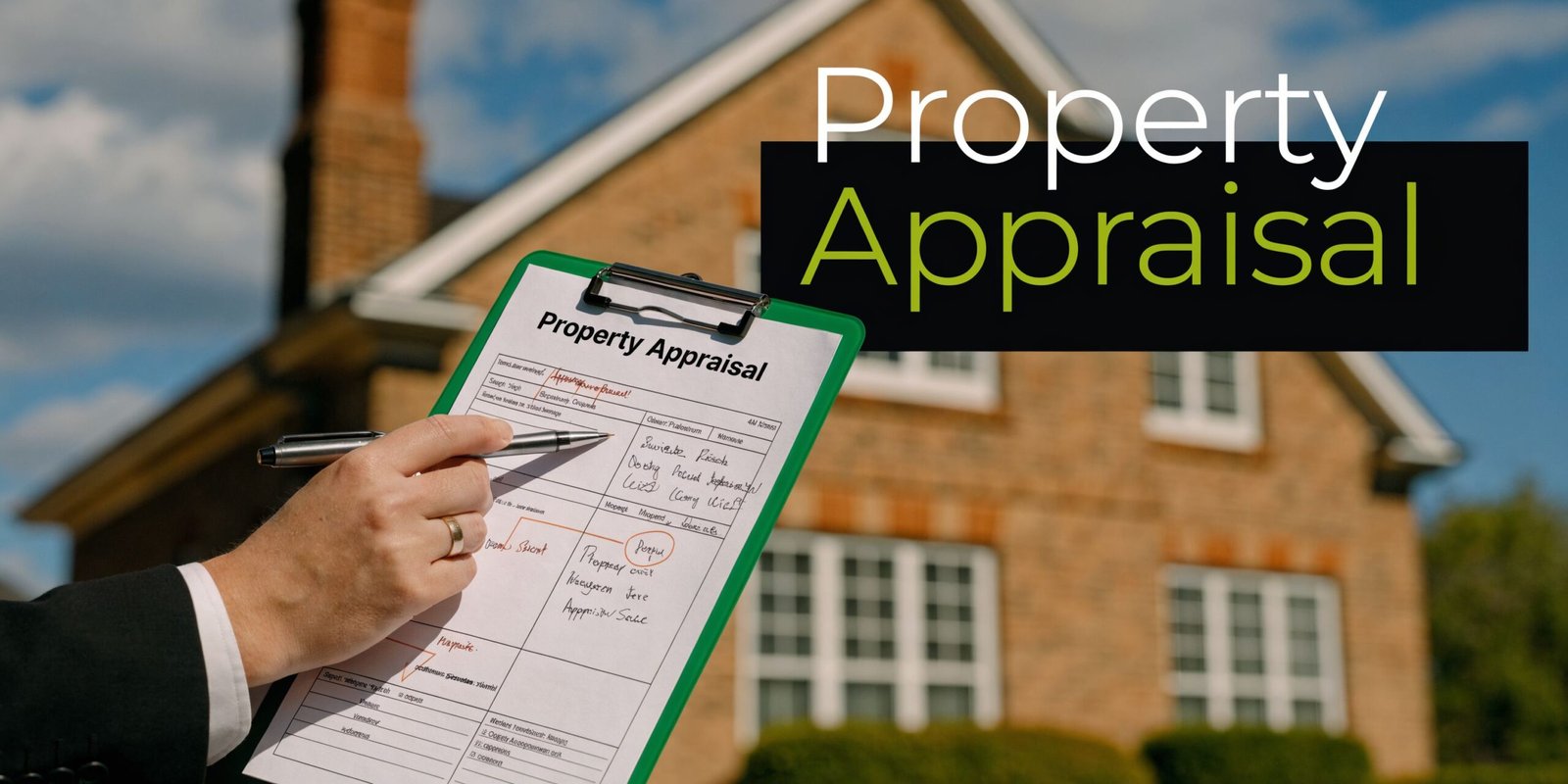
Appraisal is not the same as an agent opinion
A probate appraisal is different from an agent’s pricing opinion or an online estimate. It is meant to support estate administration with a defensible value based on the property as it sits today.
That last part matters.
If the house has roof leaks, soft floors, an old HVAC system, smoke damage, outdated wiring, or years of deferred maintenance, those issues affect value right now. The court, the heirs, and serious buyers care about present condition. They do not price the home as if repairs are already finished.
That is especially important for out-of-state executors. If you are handling a house in Fayetteville from Atlanta, Florida, or Virginia, you cannot rely on old family assumptions or a Zillow number. You need someone local to assess what buyers in this market will pay for that street, that condition, and that level of cleanup.
As-is means buyers still count every problem
Families love to say the house has good bones. Buyers still subtract for every known repair, every unknown repair, and the time it will take to sort both out.
“As-is” means the seller is not promising repairs before closing. It does not mean defects stop mattering. In probate, as-is condition usually lowers both the appraisal and the offers when the property has visible damage, outdated finishes, heavy contents, or signs of neglect. In Fayetteville, that discount gets sharper when the home cannot qualify for standard financing or looks risky to owner-occupant buyers.
What pulls value down fast
Certain problems show up again and again in Cumberland County probate properties:
- Deferred maintenance: Worn roofs, plumbing leaks, damaged subfloor, stained ceilings, and old mechanical systems.
- Functional problems: Bad layout, very small bathrooms, obsolete kitchens, or additions that do not fit the rest of the house.
- Vacancy issues: Moisture, pests, break-ins, overgrown yards, and damage that got worse while the home sat empty.
- Cleanup burden: Furniture, trash, paper files, clothing, and personal items that heirs do not want to sort before a sale.
- Financing obstacles: Peeling paint, missing appliances, foundation concerns, or other issues that can scare off financed buyers.
Online estimates are for curiosity. Probate decisions need defensible numbers.
A short explainer on valuation helps make this clearer:
Use realistic pricing, not emotional pricing
Sentimental pricing costs estates real money.
If you price a probate house based on memories instead of condition, it usually sits. Then the estate keeps paying insurance, utilities, lawn care, storage, and basic upkeep while the property gets staler. Out-of-state owners feel this pressure even more because every extra month often means more travel, more coordination, and more family frustration.
Price the house for what it is. Not for what it used to be, and not for what it could become after somebody else spends months and money fixing it.
That approach protects the executor. It also gives heirs a clear picture of what the estate can expect from a sale.
Comparing Your Three Sale Options in Fayetteville
You do not need every possible option. You need the right one for the estate, the house, and your distance from Fayetteville.
For Cumberland County executors, the choice usually comes down to three paths. List the property with an agent, sell through a court-supervised process if the estate requires it, or sell directly to a cash buyer such as DIL Group Buyers. The best answer depends less on theory and more on condition, timeline, and how much work you can realistically manage.
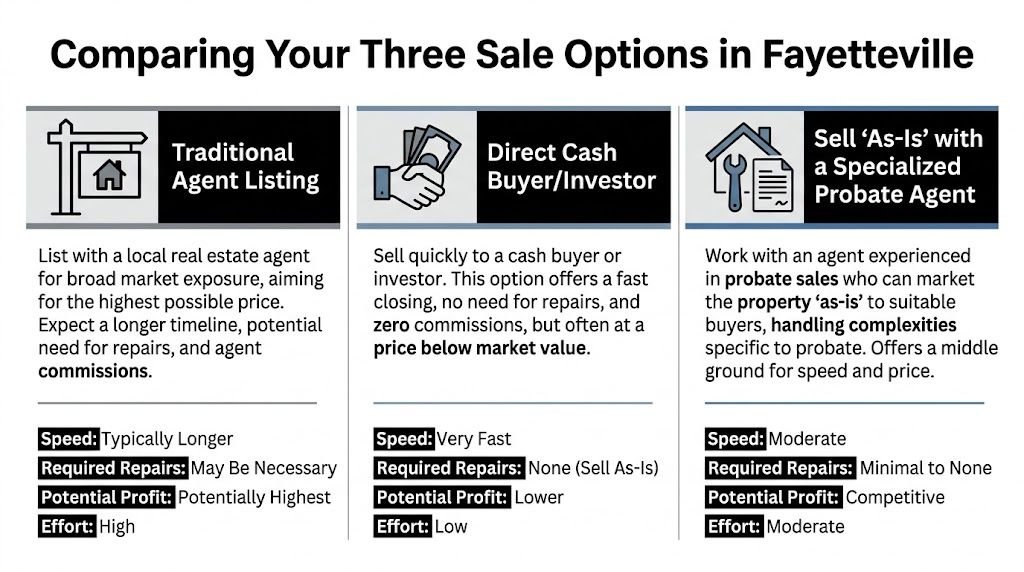
Comparing Probate Sale Options in Cumberland County
| Factor | Traditional Listing | Court-Ordered Sale | Cash Sale (DIL Group Buyers) |
|---|---|---|---|
| Speed | Usually slower because of prep, showings, buyer financing, and negotiation | Often the slowest because the court controls timing and approvals | Usually the fastest option |
| Repairs | Often expected if you want strong retail interest | Property may still sell as-is, but condition still affects interest and process | Sold as-is |
| Costs | Can include agent commissions, cleanup, carrying costs, and repair spending | Can include delay, carrying costs, and sale-related expenses | No realtor commissions through the direct-buy model |
| Certainty | Lower if buyer financing falls apart or inspection issues surface | Lower because approvals and possible overbids can disrupt a deal | Higher if you receive a real cash offer and title is clear |
| Work required from executor | High. Cleaning, access, paperwork, scheduling, buyer management | High. Court filings, hearing dates, paperwork, and buyer coordination | Lower than the other two options |
| Best fit | House is in decent shape and heirs want to test the market | Court structure or estate conditions require it | House needs work, heirs want speed, or executor is out of state |
Option one makes sense only if the house can compete
A traditional listing works best when the property is clean, empty, and financeable. In Fayetteville, that usually means the house shows well enough to attract owner-occupant buyers, not just investors looking for a discount.
Expect real work from the executor.
You may need a trash-out, basic repairs, yard cleanup, utility coordination, lockbox access, and repeated trips for showings or inspections. If you live in another state, every one of those tasks gets harder and more expensive. A retail listing can still pay off, but only if the house is in shape and the family has the patience to deal with the process.
Option two follows court rules, not your preferred timeline
Court-supervised sales are more rigid and more procedural. If the estate must use that path, treat paperwork, deadlines, and property access seriously from day one.
The accepted offer may not be the final outcome right away. Hearings, approvals, and possible overbid procedures can stretch the sale and create uncertainty for buyers and heirs. That is hard enough for local families. It is even harder for an out-of-state executor trying to coordinate signatures, court dates, and house access from afar.
Court-supervised sales reward preparation and punish delay.
Sometimes this route is required. It is rarely the easy route.
Option three is usually the cleanest answer for a stressed estate
A direct cash sale cuts out many of the failure points that slow probate deals down. That matters when the property has deferred maintenance, personal property inside, or heirs who want resolution instead of months of project management.
The practical advantages are straightforward:
- No repair work before selling
- No open houses or repeated showings
- No financing contingency
- Less back-and-forth with buyers
- Flexible closing that can line up with probate timing
For many inherited homes in Cumberland County, especially older houses or vacant properties, that simplicity has real value. Out-of-state owners feel that value fast because they are usually paying for travel, oversight, lawn care, utilities, and constant coordination while the property sits.
Choose based on burden, not wishful thinking
Ask the questions that control the result:
| Question | Why it matters |
|---|---|
| Is the house vacant? | Vacant houses require oversight and create pressure to act |
| Does it need major repair? | Heavy repair needs limit your buyer pool |
| Are the heirs cooperative? | Disagreements slow every decision |
| Do you live nearby? | Remote management changes cost, timing, and stress |
| Do you want the highest possible list price, or the cleanest net outcome? | Probate sales are about what the estate actually receives and how hard it is to get there |
My advice is simple. If the property can compete and the family can handle the work, list it. If the court requires supervision, get organized early and expect delays. If the house is a burden and you want a clear exit, a direct sale to DIL Group Buyers is often the strongest option in Fayetteville.
Navigating Common Probate Pitfalls for NC Homeowners
Most probate sales don’t go sideways because families are careless. They go sideways because people underestimate how many loose ends a house can carry after someone dies.
The house may look simple from the street. The file usually isn’t.
Liens, taxes, and old problems don’t disappear
Heirs often assume they can sell the house first and sort out the rest later. That’s backwards.
Title problems, unpaid property taxes, old mortgages, judgment liens, or estate debts can surface before closing. If nobody checks those issues early, the deal stalls right when the family thought they were done.
Then there’s insurance. Vacant property isn’t ordinary property. If the house sits empty too long and coverage isn’t handled correctly, a break-in or water loss becomes much more painful.
Vacant houses get harder every week
An inherited house in Cumberland County can decline fast if nobody is watching it.
Common trouble spots include:
- Exterior neglect: Grass, mail, and visible disrepair signal that the home is empty
- Interior damage: Small leaks, humidity, pests, and mold keep spreading when no one checks the property
- Unauthorized entry: Vacant homes attract trespassers, thieves, and opportunists
- Family removal of items: Relatives may take belongings before there’s a clear record of what belonged to the estate
A vacant probate house needs management, not hope.
Out-of-state executors have the hardest version of this job
This is the problem national articles usually miss.
A large share of probate properties are managed by people who don’t live near the house. An estimated 30% of U.S. probate properties are sold by out-of-state administrators, who face issues like coordinating virtual inspections and navigating state-specific tax laws without being physically present, according to Josh V Realty’s discussion of out-of-state probate challenges.
That challenge is very real in Fayetteville. Military families move. Adult children relocate. Siblings spread out. The person handling the estate may be in another part of North Carolina or another state entirely.
Distance doesn’t just slow things down. It turns every small task into a scheduling problem.
What remote owners get wrong
The common assumption is that you can manage a probate house from another state with a few phone calls. Sometimes you can. Often you can’t.
Remote owners run into problems with:
- Access control: Who opens the door for appraisers, cleaners, inspectors, and buyers?
- Vendor reliability: If a contractor says the trash-out is done, who verifies it?
- Document timing: Probate documents, title requests, and signatures don’t feel urgent until closing is at risk
- Family communication: Long-distance misunderstandings get personal fast
Keep the process boring
That’s my advice. Boring is good.
Use a written timeline. Keep a shared document list. Take photos before anyone removes anything. Confirm insurance. Check title issues early. Decide who speaks for the estate. Don’t let five relatives negotiate with buyers separately.
Probate gets expensive when it becomes emotional improvisation.
The Fast-Track Solution A Direct Cash Sale
You may be staring at a vacant house in Fayetteville while handling probate paperwork from Raleigh, Florida, Texas, or across the country. Meanwhile, the grass keeps growing, the insurance bill is due, and every family member wants an update. In Cumberland County, that is exactly when a direct cash sale starts to make sense.
Probate already gives the executor enough to handle. The house should not become a second full-time job.
Why cash fits probate better than families expect
A probate property usually is not a clean retail listing. It may need repairs. It may be packed with furniture, paperwork, or decades of personal belongings. It may also come with deferred maintenance, old roofing, outdated systems, or title questions that have to be addressed before closing.
A direct cash sale cuts out several of the delays that wear executors down.
You can sell the house as-is. You can skip repairs, deep cleaning, staging, and repeated showings. You also avoid the common retail problem of getting under contract with a financed buyer, only to have inspections, lender conditions, or last-minute loan issues drag the deal out.
For out-of-state owners, that matters even more. You need fewer trips to Cumberland County, fewer vendor appointments, and fewer chances for the property to sit vacant while costs keep piling up.
When a direct sale is the right call
In my view, a direct sale is the smart option when the estate needs certainty more than it needs a long marketing process.
It usually fits best when:
- The property needs work: The estate should not have to fund paint, flooring, roof repairs, or a full cleanout just to attract a retail buyer.
- The house is vacant: Empty homes in Fayetteville create risk fast. Utility bills, lawn care, insurance, and break-in concerns do not wait.
- You live out of state: Managing access, signatures, and contractors from a distance burns time and creates mistakes.
- There are problem tenants, liens, or city issues: Complicated properties scare off many traditional buyers.
- The family wants closure: A reliable sale is often better than chasing a higher number that may never reach the closing table.
What a good direct-sale process should look like
Keep this simple. The estate gives the basic property details and the current probate status. The buyer reviews the home in its current condition. You receive a written offer. Then closing is scheduled around the estate timeline and the authority required to sign.
That is the advantage. Fewer people involved. Fewer delays. Less back-and-forth for the executor.
If you want a local option, review DIL Group Buyers’ process for selling an inherited house for cash in Fayetteville. Local knowledge matters in probate. A buyer who understands Cumberland County timelines, title issues, and remote coordination is easier to work with than a national company reading from a script.
My view on price versus outcome
Executors get in trouble when they focus only on the highest possible sale price.
The better question is net result. How much time, money, and stress does each option cost the estate before closing happens? If a traditional sale demands cleanup, repairs, holding costs, inspections, buyer concessions, and two extra months of carrying the property, that higher contract price can shrink quickly.
A direct cash offer may come in lower on paper. It can still be the better decision.
If the goal is to settle the estate cleanly, protect the property, and stop the monthly drain, certainty wins. In many Cumberland County probate cases, especially when the executor lives out of state, speed and simplicity are not shortcuts. They are the responsible choice.
Frequently Asked Questions About Probate Sales
Can I sell the house before probate is finished
Usually, the key issue is authority. The estate needs the proper court-backed authority for the person signing the sale documents. If you try to move before that is clear, you risk delay or rejection later.
The better approach is to confirm authority first, then line up title work, valuation, and your sale strategy.
What if the heirs disagree about selling
This is common.
The executor’s duty is to the estate, not to whoever is loudest. If heirs disagree, document everything, communicate in writing, and avoid side promises. Major conflict usually gets worse when people speak casually and assume everyone heard the same thing.
Put updates in writing. Probate disputes grow in the gaps between conversations.
Do I have to clean out the house before selling
Not always.
A traditional listing usually demands more cleanup because buyers expect the home to show well. An as-is or direct sale may allow you to leave behind unwanted items, depending on the buyer and contract terms. The key is to ask early and get the arrangement in writing.
What happens if the house has a mortgage
The mortgage doesn’t vanish because the owner died. It remains part of the estate picture and usually must be addressed through the sale or payoff process.
Pull the latest mortgage information early. Waiting until closing to figure out payoff numbers is a bad habit.
What if the property has personal belongings nobody wants to deal with
That’s one of the most common probate headaches.
Start by separating clearly valuable items, family keepsakes, financial documents, and obvious trash. Don’t let relatives remove things informally without a record. If the house is full, create a written plan for pickup, donation, disposal, or sale.
Messy houses can still sell. Chaotic families are the bigger problem.
Can I sell a probate house as-is
Yes, in many situations you can. “As-is” just means the condition is part of the deal rather than something the seller promises to fix.
That does not mean condition stops mattering. It affects value, buyer interest, and the type of sale that makes sense.
How do I handle the sale if I live in another state
Start by assuming every in-person task will become more complicated than you think.
You’ll need reliable local help for access, photos, inspections, and property checks. You also need a tight document trail. Remote probate sales succeed when the executor centralizes communication and doesn’t rely on relatives to improvise.
Should I use a real estate agent or sell directly
Use an agent when the house is clean, financeable, and likely to attract strong retail demand. Sell directly when the property is distressed, the estate wants speed, or distance makes the traditional process too heavy.
The right answer depends less on theory and more on condition, location, family cooperation, and how much work you’re willing to manage.
What’s the biggest mistake executors make
They wait too long to get organized.
They assume family members are on the same page. They assume the house will be easy to sell. They assume title, insurance, and contents can be sorted out later. Those assumptions are what create delay.
Start with authority. Secure the property. Document everything. Choose the sale path that matches the burden in front of you, not the one that sounds best in casual conversation.
If you need to sell a probate house in Fayetteville, Hope Mills, Spring Lake, or anywhere around Cumberland County, DIL Group Buyers is a local option worth contacting. They buy houses as-is, work with inherited and probate properties, and understand the problems that hit out-of-state owners, military families, and executors who need a clean sale without repairs, showings, or commissions. If the goal is to settle the estate and move forward, reach out for a straightforward cash offer and a closing timeline that fits your situation.