
You hear dripping, step into the hallway, and your sock lands in cold water. Then you spot the ceiling stain, the cabinet puddle, or the spray coming off a copper line. That moment scrambles people fast. They start grabbing towels, searching videos, calling whoever picks up first, and losing time.
Take a breath and get ruthless about priorities. With water pipes leaking, the first job isn’t diagnosing the perfect repair. It’s stopping the flow, limiting damage, and deciding whether this is a quick fix, a plumber job, or a bigger house problem that isn’t worth pouring money into.
What to Do When You First Find Leaking Water Pipes
If you found water pipes leaking, shut off the water supply first. Don’t stand there studying the leak. Don’t start unscrewing fittings with water still running. Go to the main shut-off valve and turn it off.
Most homeowners waste the first few minutes on cleanup. That’s backwards. Every minute the water stays on, it spreads into drywall, insulation, cabinets, flooring, and framing.
Your first three moves
- Turn off the main water line. If the leak is isolated under a sink or behind a toilet and you can safely reach the local shut-off valve, use that. If you’re not sure, shut off the whole house.
- Cut power to the affected area if water is near outlets, appliances, or wiring. If the breaker panel is in a wet area, don’t touch it until you can do so safely.
- Start containment, not cleanup. Use buckets, towels, a wet/dry vac, and anything else that keeps water from spreading.
Practical rule: Stop active water first. Save belongings second. Worry about the repair method third.
This isn’t a rare household annoyance. Leaks are part of a much bigger infrastructure problem. In the U.S., nearly 6 billion gallons of treated drinking water are lost every day due to leaking pipes, and a water main breaks every two minutes, according to this water main break study.
That bigger picture matters because it explains something homeowners already know from experience. Old pipes fail. Hidden leaks stay hidden too long. Small drips turn into ugly repairs fast.
If you’re dealing with water pipes leaking right now, treat it like a property-protection problem, not just a plumbing annoyance.
Immediate Actions to Contain the Water Damage
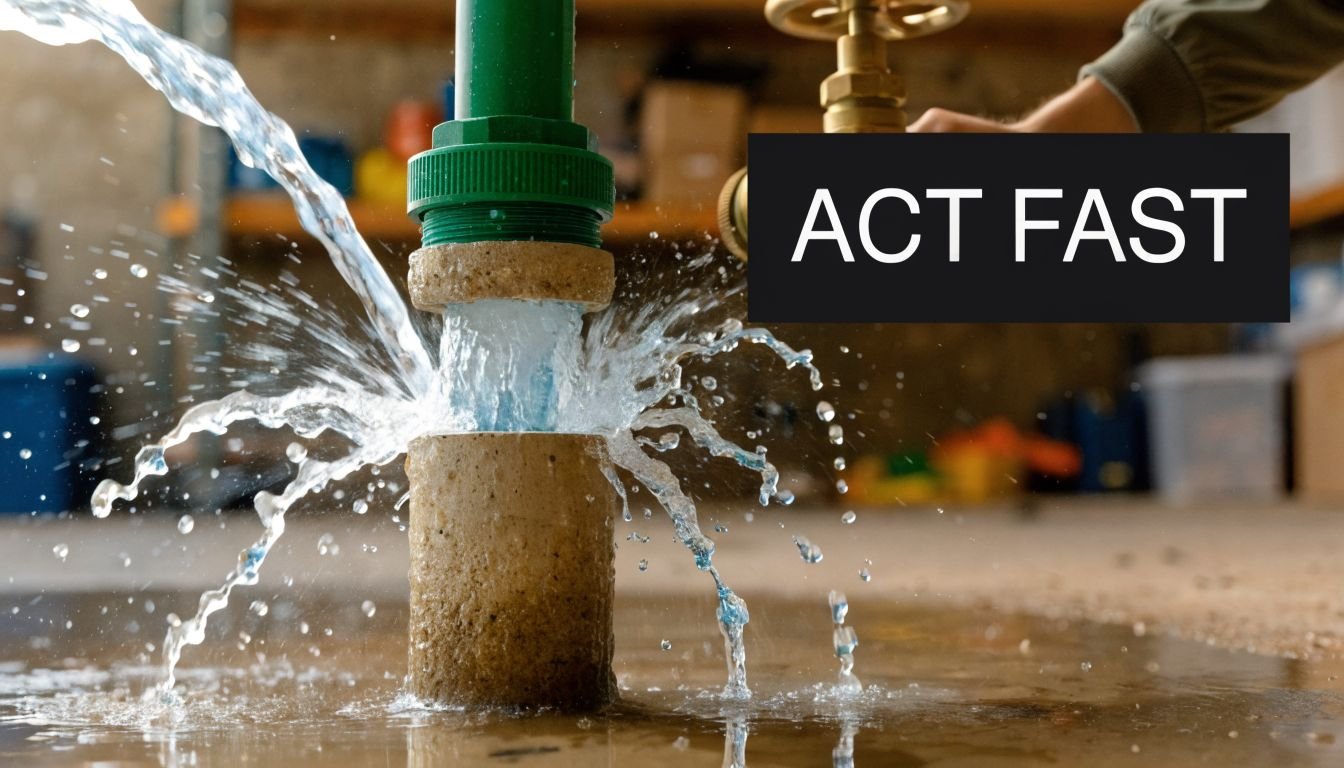
The first half hour matters most. During that time, you either keep a bad leak manageable or let it become a demolition project.
Shut off the right valve
Use the main shut-off if you see active spraying, a broken pipe, water inside a wall, or a leak you can’t identify quickly. In many homes, it’s near the water heater, basement wall, crawl space entry, garage, or outside near the meter.
If the leak is isolated, use the local valve instead:
- Under a sink: Look for oval or lever-style shut-offs on the supply lines.
- Behind a toilet: Turn the valve clockwise until it stops.
- At the water heater: Shut off the cold-water inlet if the issue is tied to that unit.
If a valve is stuck, don’t force it hard enough to break it. Go straight to the main shut-off.
Protect people before property
Water and electricity are a dangerous mix. If water is moving toward outlets, power strips, appliances, or your HVAC equipment, shut power off to that area if you can do it without stepping into standing water.
Then move fast on what can be saved:
- Electronics first: Unplug only if the area is dry and safe.
- Furniture legs: Lift them onto wood blocks, foil, or plastic.
- Rugs and boxes: Get them off wet floors immediately.
- Paper items: Move documents, photos, and mail before they wick up moisture.
Don’t waste energy mopping a floor while water is still dripping from above.
Contain the spread
Use what you have. This isn’t the time to be elegant.
- Buckets and pans: Catch active drips.
- Towels and old sheets: Build barriers at doorway thresholds.
- Wet/dry vac: Pull standing water from hard floors and low spots.
- Plastic bins: Relocate items from under sinks and inside wet cabinets.
If water is bulging inside a ceiling, don’t ignore it. That water can bring down drywall. Put a bucket underneath and proceed carefully.
A quick visual can help if you’re in panic mode and need to see the basics in action:
If you can’t stop the leak, can’t identify the source, or see water entering walls or ceilings, stop troubleshooting and call a plumber right away.
Document before you disturb too much
Take photos and short videos before you tear out soaked items or move everything around. Capture the source, the wet materials, and the path the water took.
That documentation helps with insurance, with plumbers, and with any later decision about repair versus sale.
Temporary Fixes to Patch a Leaking Pipe Yourself
Once the water is off and things are stable, you can buy yourself time with a temporary patch. Temporary means exactly that. It’s there to hold the situation together until you can make a proper repair or replace the damaged section.
Some leaks are decent DIY candidates. Others aren’t.
Match the fix to the leak
A pinhole leak in a straight section of pipe is different from a cracked fitting, a loose compression joint, or a split pipe caused by freezing. You need to know what you’re looking at before you grab a repair kit.
Here’s the quick read:
- Pinhole in copper or metal pipe: Usually responds best to epoxy putty or a repair clamp.
- Hairline crack on a straight run: A clamp often works better than tape.
- Loose threaded connection: Tightening may solve it, but don’t overdo it.
- Leaking joint under a sink: You may need to replace a washer, ferrule, or supply line rather than patching the pipe itself.
- Multiple wet spots or corrosion: Don’t patch all over the place. That usually means the pipe is failing.
Comparing Temporary DIY Pipe Patches
| Fix Type | Best For | Pressure Tolerance | Cure Time |
|---|---|---|---|
| Epoxy putty | Pinhole leaks and small cracks on rigid pipe | Moderate | Usually needs time to harden before restoring water |
| Pipe repair clamp | Split sections and stronger active leaks on straight pipe | Higher than tape or putty in many short-term situations | Immediate once tightened |
| Silicone repair tape | Minor seepage and added wrap over another patch | Lower, best for light leaks | No cure time, but needs tight wrapping |
| Rubber patch with hose clamps | Rough temporary stop on accessible straight pipe | Moderate | Immediate once secured |
What I’d use first
If the pipe is accessible and straight, I’d usually choose a pipe repair clamp over tape. It gives you compression, structure, and a better shot at holding while you line up a permanent repair.
If it’s a tiny pinhole and the surface can be dried fully, epoxy putty is a reasonable stopgap. Knead it, press it hard into the leak, and extend beyond the damaged spot.
Silicone tape has its place, but don’t kid yourself. It’s a short-term helper, not a heroic solution.
A temporary patch that buys you a day is useful. A temporary patch you trust for six months is how hidden damage gets worse.
Don’t patch over these situations
Skip DIY patching and call a pro if you see any of the following:
- Water inside a wall cavity
- A burst pipe with a long split
- Signs of movement at the foundation or slab
- Rust, scale, or corrosion across multiple sections
- Recurring leaks in different areas of the house
Temporary fixes work best when the problem is isolated, visible, and easy to monitor. If you can’t check it easily, don’t rely on it.
Hiring a Plumber Process Costs and Insurance Claims
Some leaks are no longer DIY problems the second you find them. If water pipes leaking has moved from nuisance to structural risk, bring in a plumber and treat the job like a business decision.
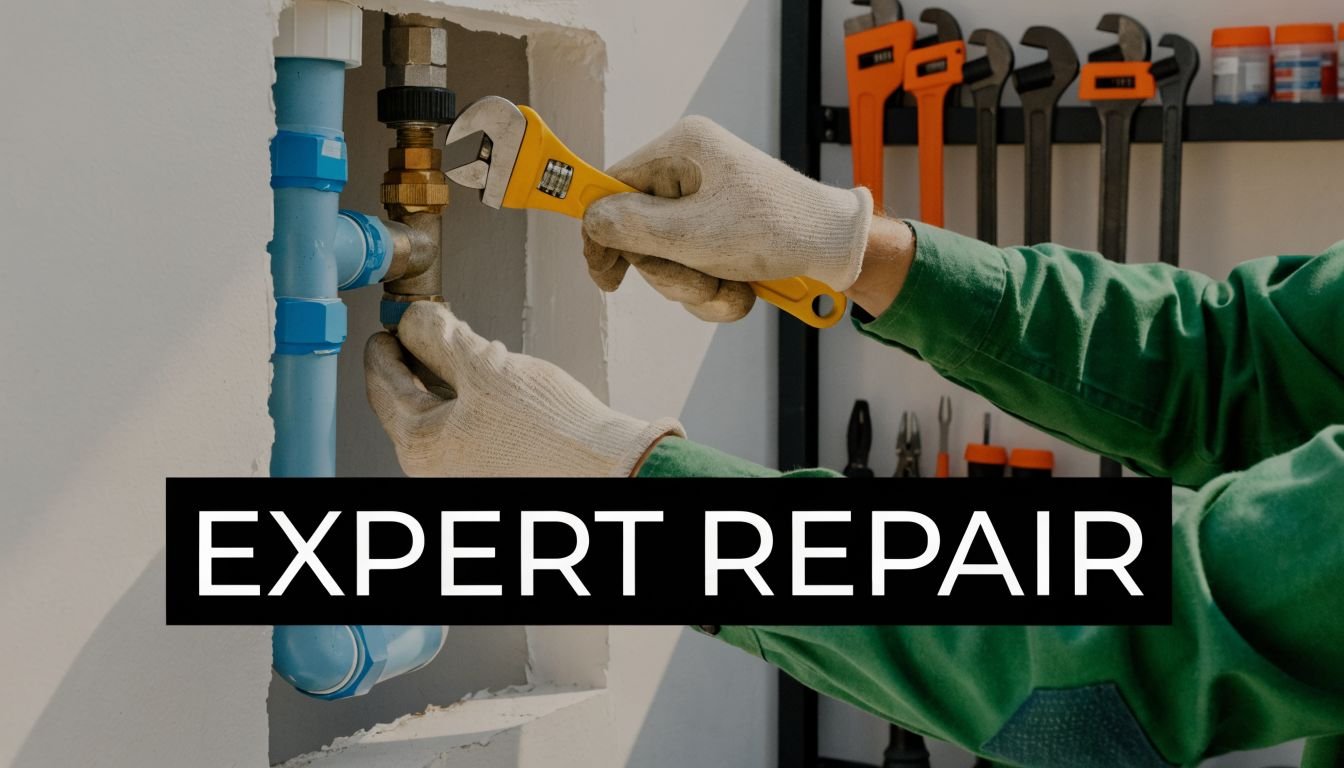
When a plumber is non-negotiable
Call a licensed plumber if the leak is:
- Behind walls or under floors
- Tied to a slab, crawl space, or underground line
- Part of a burst section
- Showing up with low pressure throughout the house
- Connected to repeated failures in older piping
This is also the point to be honest about your own skill level. If you’re guessing, stop. A bad repair can turn a controlled leak into a full break.
What to ask before hiring
Don’t just ask, “How much?” Ask better questions.
- What’s the likely source based on the symptoms?
- Will you repair the section or recommend replacement?
- Are you checking for secondary damage behind walls or cabinets?
- Can you provide a written scope before starting?
- What should I document for insurance?
Nationally, the scale of failing water infrastructure is massive. Water main breaks across the U.S. and Canada account for about $2.6 billion annually in repair and maintenance costs, as noted earlier in the same water infrastructure research cited above. That doesn’t tell you what your repair will cost, but it does make one thing clear. Plumbing failures are expensive enough that you should demand clarity before authorizing work.
If your leak points to older, widespread pipe deterioration, it’s smart to understand the bigger picture before committing. This breakdown of the cost of replumbing a house helps frame when a targeted repair starts turning into a whole-system decision.
Handle the insurance side correctly
Insurance claims get messy when homeowners wait too long or document poorly. Make it easy on yourself.
Take these steps:
- Photograph the source leak clearly
- Capture all damaged areas before cleanup
- Save plumber invoices, emergency supply receipts, and drying equipment receipts
- Write down when you discovered the leak and what you did next
- Notify your insurer promptly if there’s meaningful interior damage
Important: Insurance adjusters care about evidence. Clean up what you must, but don’t erase the story of the damage before you record it.
If a plumber tells you the issue has likely been leaking for a long time, ask them to put their observations in writing. That kind of note can matter later.
Proactive Maintenance to Prevent Future Leaks
Most plumbing disasters give warnings before they blow up. Homeowners miss them because they’re busy, not because they’re careless. If you don’t want to deal with water pipes leaking again, start treating your plumbing like a system that needs routine attention.
Replace risk before risk replaces your plans
The strongest prevention move is simple. Replace weak materials before they fail. Benchmark data from over 800 utilities showed water main failures decreased by 20% from 2018 to 2023, largely because utilities proactively replaced high-failure materials like cast iron and asbestos cement, according to the machine learning and utility benchmark research.
That same logic applies at the house level. If your home still has aging, failure-prone piping, postponing replacement isn’t saving money. It’s delaying a more expensive moment.
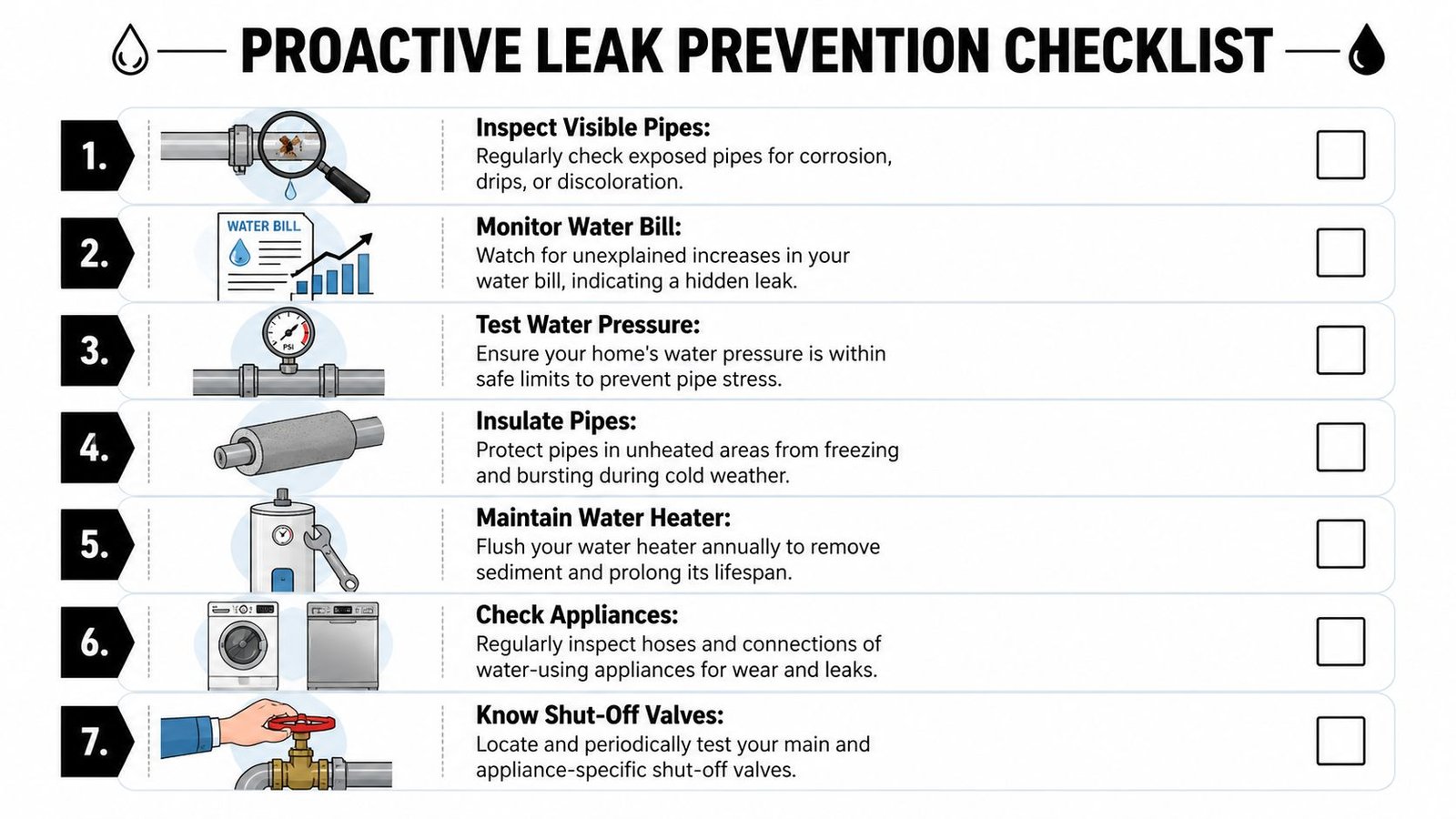
The practical checklist that matters
Don’t build an elaborate maintenance plan you’ll never follow. Do these instead:
- Inspect exposed pipe runs: Check basements, crawl spaces, garages, utility rooms, and under sinks for corrosion, green staining, mineral buildup, or slow drips.
- Watch your water bill: A higher bill without a clear reason can signal a hidden leak.
- Control pressure: If your house pressure feels aggressive, ask a plumber about a pressure regulator.
- Insulate vulnerable lines: Pipes in unheated areas need protection before cold weather shows up.
- Check appliance hoses: Washing machines, dishwashers, and ice makers leak more often than people think.
- Test shut-off valves: A valve you can’t turn during an emergency isn’t helping you.
If repair costs are piling up elsewhere too, homeowners sometimes look for programs or funding help before taking on upgrades. It’s worth reviewing local and broader options for grants for home improvement.
Old plumbing doesn’t become safer because it stayed quiet for another year.
Know when maintenance is no longer enough
Maintenance works when the system is mostly sound. It doesn’t solve widespread corrosion, recurring leaks, or hidden water damage that’s already reached walls, subfloors, or foundations.
That’s when the decision changes from “How do I maintain this house?” to “How much more do I want to sink into it?”
When Major Repairs Aren't Worth It The As-Is Option
A lot of homeowners assume the responsible choice is always to repair everything first, then sell later. I don’t agree. Sometimes that’s smart. Sometimes it’s just expensive denial.
If you’ve got one isolated leak and the rest of the house is solid, fix it. If you’re staring at repeated plumbing failures, soaked materials, suspected foundation trouble, or a property you can’t manage from out of town, the better move may be to stop chasing repairs.
The situations where fixing first can backfire
Often, people get trapped:
- The leak wasn’t caught early
- Water got under flooring or into walls
- The plumber finds more than one failing section
- The house already has deferred maintenance in other systems
- You’re an absentee owner trying to manage contractors remotely
Undetected underground leaks can weaken a home’s foundation over time, creating structural damage and seller liability, especially for out-of-state or absentee owners, as explained in this discussion of underground leak risks.
That’s the part many owners underestimate. The leak itself is one problem. The knock-on issues are the major threat. Foundation movement, disclosure questions, ruined finishes, contractor delays, insurance friction, and buyer pushback all stack up fast.
Why selling as-is can be the smarter play
Selling as-is isn’t quitting. It’s choosing certainty over a repair spiral.
That option makes sense when:
- You don’t want to fund invasive repairs
- You inherited the property and don’t live nearby
- The house has water damage plus other problems
- You need out quickly because of divorce, job loss, foreclosure pressure, or relocation
- You don’t want listings, showings, and buyers demanding credits
If the damage has spread and you’re weighing whether repair even makes financial sense, this guide on selling a house with water damage can help you think through the tradeoffs.
The right question isn’t always “How do I fix this?” Sometimes it’s “What exit protects me best from spending more time and money on a house that keeps asking for both?”
In Fayetteville and nearby Cumberland County communities, that matters even more for military families relocating, landlords with vacant rentals, and owners living in another state. If the property has become a burden, a direct as-is sale can be a disciplined decision.
If you’re done dealing with plumbers, delays, cleanup, and uncertainty, DIL Group Buyers offers a straightforward as-is option for homeowners in Fayetteville, Hope Mills, Spring Lake, Raeford, Dunn, and nearby North Carolina communities. They buy houses in any condition, including properties with leaks, water damage, old plumbing, code issues, inherited complications, and major repair needs. You can request a cash offer, skip repairs and showings, and choose a closing date that fits your timeline.