
You notice it when you're getting ready to sell. One bedroom door starts rubbing at the top. A crack shows up above the hallway window. The floor in the living room feels a little off, like something shifted under it. You tell yourself it might be settling, then you crawl under the house or stare at the brick line outside and your stomach drops.
If you're in Fayetteville, Hope Mills, Spring Lake, or anywhere around Cumberland County, this problem hits harder than most. A normal cosmetic issue is annoying. A foundation issue can knock buyers out fast, scare lenders, and wreck your timeline when you're already trying to handle a move, a divorce, an inherited property, or PCS orders. That's why people freeze. They don't know if they should repair it, disclose it, list it, or dump it.
You need a plan, not panic. Selling a house with foundation problems is absolutely possible. But you need to make the right call early, because the wrong path costs time, money, and peace of mind.
That Sinking Feeling Discovering a Foundation Problem
A lot of sellers reach this point by accident. They aren't out hunting for structural trouble. They're cleaning up the house, patching paint, thinking about photos, and then they spot something that doesn't look normal. A diagonal crack over a door. Trim separating from the wall. Water hanging around one side of the house after rain. Suddenly the whole sale feels shaky.
I've seen homeowners go straight to the worst-case scenario. They assume the house is unsellable, or they think they have to pour money into repairs before anybody will even look at it. That's usually the wrong first move. The first move is to slow down and figure out what you're dealing with.
What usually triggers the panic
Some warning signs are minor. Some aren't. What matters is whether the issue points to movement, moisture, or structural stress.
- Interior clues: drywall cracks, sticking doors, windows that won't open cleanly, or sloping floors
- Exterior clues: stair-step cracks in brick, gaps around frames, or sections of the house that appear to settle unevenly
- Crawl space or basement clues: moisture, shifting piers, or visible cracking in block or concrete
One ugly truth is that people often ignore these signs for months because life gets in the way. Then selling day comes, and now the issue matters. A lot.
A foundation problem feels like a deal killer because it hits the two things sellers care about most. Price and certainty.
If your house has bigger structural trouble, you may also worry about whether it could slide into a more serious condition. If that's on your mind, it's worth understanding what happens when a house is condemned so you know the difference between a hard problem and a catastrophic one.
The decision that matters
Most sellers with foundation trouble end up facing the same fork in the road. Repair it first, or sell it as-is. Everything else hangs off that choice.
That choice isn't about pride. It isn't about what the neighbor says. It's about your budget, your deadline, and how much chaos you're willing to absorb before closing.
Understanding the True Cost of Foundation Damage
The repair bill is only one part of the damage. The true cost is reflected in value, financing, negotiation position, and buyer behavior. That's why homeowners get blindsided. They think, "I'll just fix it or credit it," but the market doesn't always work that cleanly.
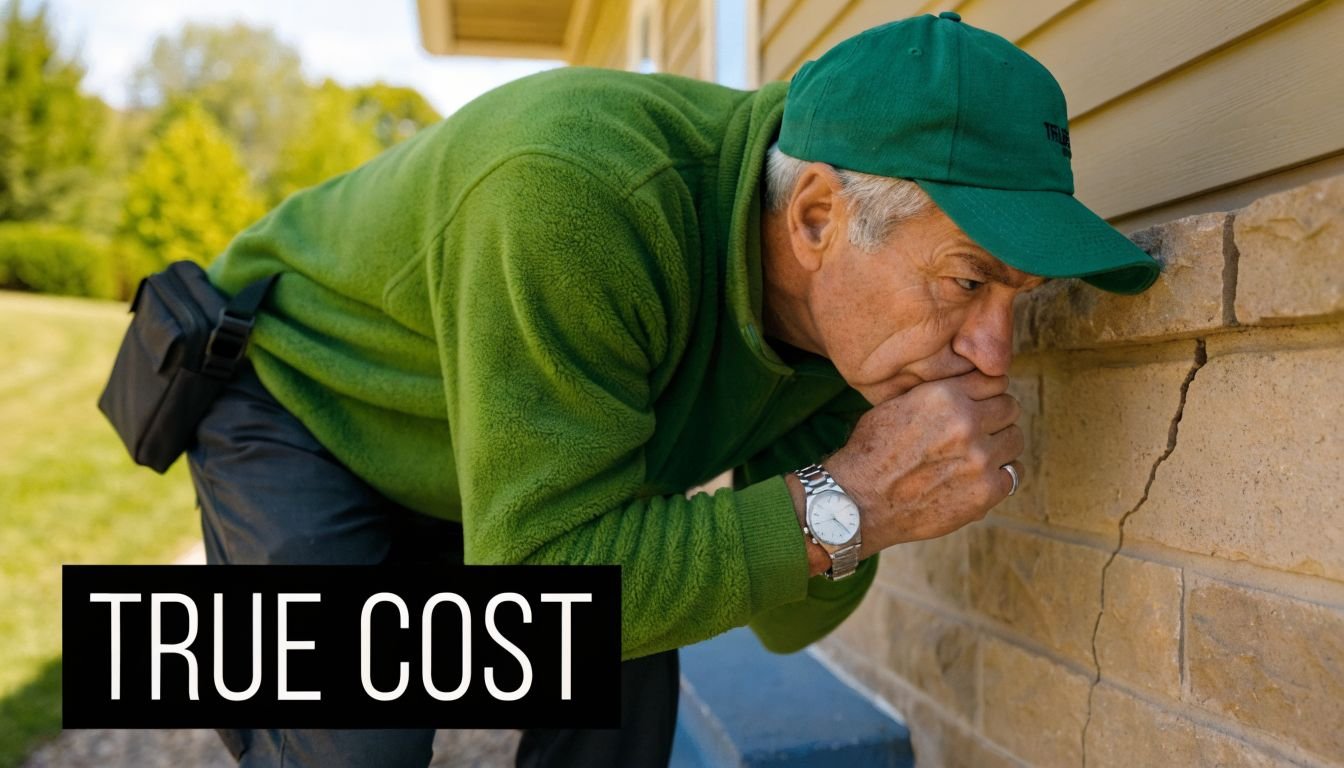
According to this analysis of homes with foundation damage, homes with foundation problems typically sell for 10-20% less than similar properties in good condition, and 78% of traditional buyers walk away instead of negotiating. For severe issues, the discount can exceed 25% because lenders often won't approve standard financing.
Why buyers react so strongly
Buyers don't see a crack and think rationally. They see uncertainty. They start imagining hidden water problems, structural movement, future repairs, and endless contractor headaches. Even if your issue is manageable, they expect the worst.
Traditional buyers also have agents, inspectors, lenders, and appraisers in their ear. Every one of those people adds friction. A buyer who loved your kitchen yesterday can disappear after one inspection report.
Here are the main reasons foundation trouble hits the sale so hard:
- Financing gets harder: many lenders won't touch a house with documented structural concerns
- Appraisal problems show up: appraisers may flag the issue, and that can stop the loan
- The buyer pool shrinks: fewer financed buyers means fewer offers and less bargaining power
- Negotiations turn ugly: buyers often ask for more than the actual repair cost because they expect surprises
What the market is really pricing
A foundation issue isn't priced like a broken dishwasher. Buyers aren't just discounting the repair itself. They're discounting risk, delay, hassle, and fear.
That matters in Fayetteville because a lot of sellers aren't sitting on unlimited time. If you're trying to relocate, catch up on payments, settle an estate, or unload a rental, a long listing with repeated failed contracts can cost more than a direct discount up front.
Practical rule: If the house has a foundation issue and you need a normal financed buyer, expect the process to get slower, more fragile, and more expensive than you want.
Signs that suggest a deeper problem
Not every crack means the foundation is failing. But some signs deserve immediate attention because they point to movement that buyers and inspectors won't ignore.
- Bowing walls: this gets attention fast because it suggests pressure or structural stress
- Settlement patterns: one area sinking more than another can throw doors, floors, and frames out of line
- Moisture paired with cracking: when water and movement show up together, buyers assume the root cause isn't solved
- Repeated cosmetic patching: if cracks were repaired and came back, trust drops
The mistake I see most often is sellers trying to "clean up" the evidence before they understand the cause. Cosmetic patching without real documentation can make a buyer more suspicious, not less.
The Critical Decision Repair or Sell As-Is
It's time to stop thinking emotionally and start making a clean business decision. Some houses should be repaired before they hit the market. Some should be sold as-is immediately. The trick is knowing which one you're holding.
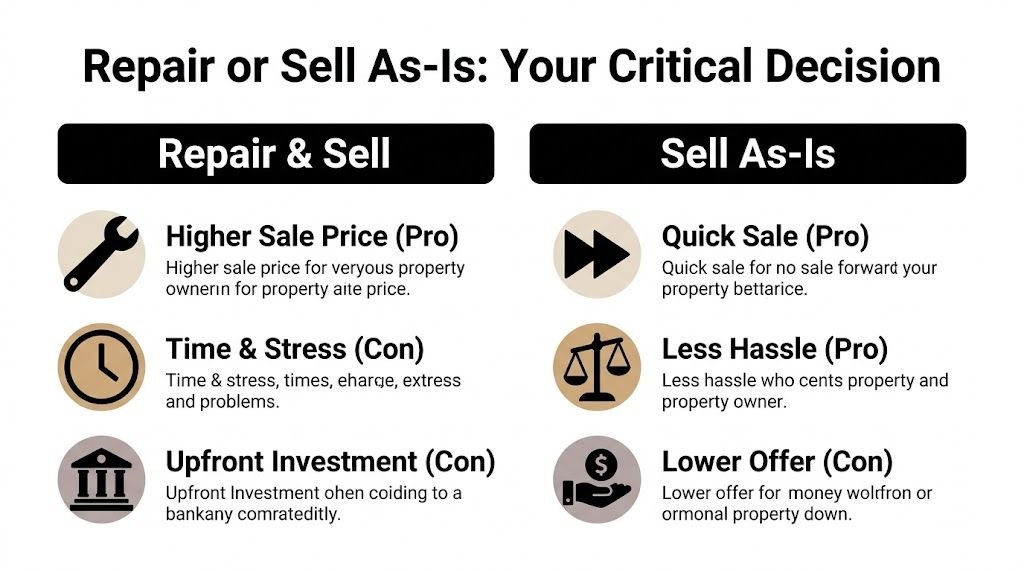
According to this breakdown of pricing and buyer behavior around foundation-damaged properties, foundation issues often create a 20-25% discount from market value, while average repair costs are only about 10% of the property's value. That gap is why cash buyers stay active in this space. The same source notes that these buyers can often close in 7-30 days because they bypass financing hurdles.
When repairing first makes sense
Repair first if you have money, time, and a house that's otherwise a strong retail property. If the neighborhood is solid, the home is updated, and the repair scope is manageable, fixing the problem may open the door to normal buyers and normal financing.
Repairs can also make sense when the issue is small enough that it doesn't drag the whole project into months of contractor coordination. If your timeline is flexible and you're not under pressure, this route can work.
But don't fool yourself about the upside. Big foundation repairs usually don't create a premium. They often just bring the property back to baseline. You're spending money to remove a penalty, not to create magic.
When selling as-is is the better move
Sell as-is if the timeline is tight, cash is limited, or you don't want to manage a structural project. That's especially true if you're already handling another life event. Foundation work is not a side errand. It becomes the center of your life for a while.
If you're behind on payments, moving out of state, dealing with inherited property, or trying to exit a rental with deferred maintenance, as-is is often the smarter move. You accept a lower price, but you cut off the bleeding and get certainty.
A lot of people need a plain-English explanation of what selling a house as-is means before they can make peace with that option. It doesn't mean you're hiding anything. It means you're selling in current condition and pricing accordingly.
Decision Framework Repairing vs. Selling As-Is
| Factor | Repair Before Selling | Sell 'As-Is' to a Cash Buyer |
|---|---|---|
| Upfront cash | You pay for inspections, estimates, repairs, and likely follow-up cosmetic work | You usually avoid repair spending before closing |
| Timeline | Longer and less predictable because contractors, permits, and lender standards can slow everything down | Faster and simpler when the buyer isn't using traditional financing |
| Buyer pool | Broader if repairs are done properly and documented | Narrower, mostly investors and cash buyers |
| Sale price | Potentially higher gross price | Lower offer, but fewer deductions for repair risk and hassle |
| Stress level | Higher, because you manage the project and then still manage the sale | Lower, because you skip project management |
| Best fit | Sellers with equity, time, and tolerance for uncertainty | Sellers who value speed, certainty, and a clean exit |
Questions that decide the path fast
Ask yourself these five questions and answer them truthfully.
Do you have money available right now?
If paying for engineering, repair work, and touch-up work would strain you, don't force the repair path.Can you absorb delays?
A traditional sale with structural history can drag. If you have a PCS date, a court deadline, or a vacant house eating cash every month, time matters more than squeezing out the last dollar.Is the rest of the house retail-ready?
If the property also needs roof work, HVAC, flooring, or major updates, foundation repair may not be enough to make it shine.Do you trust yourself to manage contractors?
If you've never coordinated structural work, don't underestimate the friction. Scheduling, access, inspections, and follow-up all take energy.What happens if the repair doesn't solve everything?
Foundation trouble rarely shows up alone. Moisture, grading, drainage, crawl space conditions, and settlement patterns can all be tied together.
Fix first only if the repair solves a clear problem, fits your timeline, and positions the house for a stable retail sale. Otherwise, you're just spending money to stay stuck longer.
My blunt advice for Fayetteville-area sellers
If you're a local homeowner with time, cash, and a solid house, get the issue diagnosed and price your options carefully. Repairing may be worth it.
If you're under pressure, don't turn this into a pride project. Sell it as-is and move on. A lower but certain outcome beats a higher maybe when the house is dragging your life sideways.
Legal Duties and Negotiation Tactics
You can't finesse your way around a known foundation problem. You need to disclose it, document it, and negotiate from facts instead of fear. That's how you protect yourself and keep a bad situation from turning into a legal one.
According to guidance on selling a home with foundation issues and disclosure obligations, sellers in most states are legally required to disclose all known material defects, including foundation issues. The same guidance says best practice is to get a professional structural inspection and repair estimate up front so you can create precise negotiation anchors and reduce post-closing liability.
What you should do before talking price
Do these steps before you start arguing over value.
- Get a structural opinion: not a buddy, not a handyman, not a guess. You need a professional assessment.
- Get a repair estimate: buyers negotiate harder when the scope is vague
- Gather any prior records: drainage work, crawl space work, previous stabilization attempts, anything relevant
- Write down what you know: dates, symptoms, changes over time, and any repairs already made
This paperwork does two things. It protects you legally, and it keeps buyers from acting like the problem is unknowable.
Three negotiation paths that actually work
Once the issue is documented, most deals go one of three ways.
Repair credit at closing
This works when the buyer wants control over the contractor and timing. Instead of doing the repair yourself, you agree to a credit.
The benefit is simplicity. You avoid running the job before closing. The downside is buyers may ask for a larger credit than the estimate because they assume the actual cost will grow.
Price reduction
This is the cleaner option when both sides accept the current condition and just need a number that reflects it. If the estimate is credible, the discussion stays grounded.
This route works best with buyers who aren't trying to create drama. It also helps if the house has enough positives elsewhere that the issue doesn't dominate every conversation.
Sell to a buyer who takes full responsibility
This is often the easiest path when the house has significant structural concerns or the seller needs speed. The buyer knows what they're buying and takes on the repair burden.
The more transparent you are, the less room the buyer has to invent worst-case stories during negotiation.
What not to do
A short list of mistakes causes most of the trouble.
- Don't hide fresh patchwork: cosmetic cover-ups invite distrust
- Don't rely on verbal disclosure: if it matters, put it in writing
- Don't get only one opinion when the issue seems serious: that leaves too much room for argument
- Don't promise repairs you can't manage: missed promises kill deals faster than bad news does
Selling a house with foundation problems is manageable if you're clean and organized. It's a mess when the seller tries to get cute.
How to Find the Right Buyer for Your Damaged Home
If you've decided not to repair first, stop marketing the house like a polished retail listing. You're not looking for a buyer who wants granite counters and a cute front porch. You're looking for a buyer who understands risk, values speed, and can close without lender drama.

The wrong buyer wastes your time. They'll ask for access, bring in inspectors, act shocked by things you already disclosed, and then disappear. The right buyer looks at the facts, prices the risk, and either makes an offer or doesn't.
What a serious cash buyer should look like
A legitimate cash buyer is straightforward. They don't need you to spend money first. They don't ask you to stage the house. They don't treat every repair item like a crisis.
Look for these signs:
- Local presence: they know Fayetteville, Fort Bragg, Hope Mills, Spring Lake, and the surrounding areas
- Clear process: they can explain how they evaluate the property and what happens next
- No financing dependence: if they need a bank to save the deal, the deal isn't really simple
- Willingness to buy in current condition: that includes structural trouble, deferred maintenance, and ugly paperwork
Why this buyer type exists
A lot of homeowners think cash buyers are only looking to steal houses. Some are bad actors, no question. But the model itself is legitimate. They buy what traditional buyers and lenders won't touch easily.
That business exists because the pricing spread is real. The earlier-cited repair and discount dynamic is what lets these buyers absorb the problem, handle the work, and still make the deal pencil out. For the seller, the value isn't top-dollar retail pricing. The value is speed, certainty, and no repair management.
Here's a quick explainer if you want to see how that process is typically framed:
Red flags you should take seriously
Not every "we buy houses" operation is professional. Some tie properties up under contract and then try to assign the deal. Others make a flashy verbal offer and retrade later when they think you're desperate.
Watch for this:
- They won't explain the closing process clearly
- They avoid discussing title issues, liens, or occupancy
- They pressure you to sign before you've read anything
- They change the number late without a real reason
- They sound local but can't speak intelligently about the area
If the buyer can't explain how they'll close, assume they can't.
A practical vetting checklist
Before you sign anything, ask direct questions.
| Question | Why it matters |
|---|---|
| Are you buying directly or assigning the contract? | You need to know who will actually close |
| Are there any commissions, fees, or repair requirements? | Hidden deductions kill weak offers |
| Can I pick the closing date? | Timing is often the whole point of an as-is sale |
| Have you bought houses with structural issues before? | Experience matters when the house is complicated |
| What happens if title issues or old liens show up? | Serious buyers already have a process for this |
For a damaged house, the best buyer is usually the one who creates the fewest moving parts. That's especially true when the property is vacant, inherited, tenant-damaged, or draining you every month.
Selling Strategies for Military and Out-of-State Owners
Foundation problems hit military families and absentee owners differently. The issue isn't just the damage. It's the timing and the distance.
In Fayetteville, military sellers often get trapped by the calendar. PCS orders don't care that your crawl space needs work. If you're trying to line up movers, school changes, housing at the next duty station, and a closing date, you don't need a structural repair project eating up the weeks before departure.
The military seller's reality
A Fort Bragg family might discover foundation trouble right when they thought they were ready to list. The photos are scheduled. The house is mostly packed. Then the agent notices cracking, or the buyer's pre-listing walkthrough raises concerns.
At that point, repairing first can turn into a bad gamble. You may not be in town long enough to oversee the work. You may not want to carry the house after you've already moved. And you definitely don't want a financed buyer backing out while you're trying to settle into a new assignment.
For that seller, speed beats perfection. A clean as-is sale can be the difference between moving forward and dragging one Fayetteville property problem across state lines.
The out-of-state owner's headache
An absentee owner has a different problem. You're trying to manage a structural issue from somewhere else, and every task gets harder because you're remote.
According to this discussion of remote-owner pain points with foundation issues, out-of-state owners face special challenges like coordinating inspections remotely, vetting local contractors without market knowledge, and verifying repair quality from afar. Those logistical hurdles make as-is cash sales more attractive because they remove the need for remote project management.
That lines up with what happens in real life. An inherited house in Fayetteville sounds manageable until you need access arranged, photos sent, estimates compared, paperwork signed, and work checked. Then one contractor ghosts you, another says the problem is bigger than expected, and you're trying to make decisions from another state.
A direct local sale is often the most practical answer for these owners. If you want to see how that works in this market, sell to a local Fayetteville house buyer and skip the long-distance circus.
What these sellers should prioritize
- Control your timeline: don't let the repair process decide your move date
- Reduce moving parts: the more vendors involved, the more chances the deal stalls
- Choose certainty over theory: remote owners and military families rarely benefit from complicated sale plans
For these two groups, selling a house with foundation problems isn't just a pricing question. It's a life logistics problem. Solve that first.
Common Questions When Selling a House with Foundation Issues
A few questions always come up at the end, usually after the seller understands the basics but still wants the practical details. Here are the straight answers.
Frequently Asked Questions
| Question | Answer |
|---|---|
| Can I sell my house before fixing the foundation? | Yes. You can sell in current condition as long as you disclose known issues properly. |
| Should I use a real estate agent for a house with foundation problems? | Sometimes. An agent can help if the house is still a strong retail property after repair or with solid documentation. If speed and simplicity matter more, a direct buyer may fit better. |
| Will buyers still order inspections if I disclose everything up front? | Usually, yes. Disclosure helps, but many buyers still want their own inspection or estimate. |
| Can a buyer ask for repairs even if I list it as-is? | Yes. "As-is" doesn't stop a buyer from asking. It just means you aren't promising to make repairs. You can accept, reject, or counter. |
| Does homeowners insurance cover foundation problems? | Sometimes, but don't assume it will. Coverage depends on the cause and the policy. Review your policy and ask your carrier directly before counting on insurance money. |
| Do I need multiple estimates? | If the issue appears serious, yes. One opinion can leave too much room for dispute. More than one professional view helps you price and negotiate from a stronger position. |
| Will I still pay closing costs? | It depends on the deal terms. In an as-is direct sale, many of those details are negotiated up front instead of being layered in later. |
| What if the house also has other problems? | That usually pushes the decision further toward an as-is sale. When foundation issues come with old roofs, bad HVAC, code problems, or tenant damage, the retail path gets much harder. |
| Can I sell an inherited house with foundation damage if I don't live in North Carolina? | Yes. Remote sales happen all the time, but they go smoother when you simplify the process and avoid trying to manage repairs from afar. |
| What's the biggest mistake sellers make? | Waiting too long to make a decision. Delay costs money, and uncertainty gets more expensive the longer you carry the property. |
A final piece of advice. Don't let embarrassment make this harder. Houses have problems. Foundations fail. People relocate, inherit messy properties, and run out of patience. None of that is rare.
What matters is choosing a path that fits your life right now, not chasing the ideal sale you wish you had.
If you need a straightforward option, DIL Group Buyers buys houses in Fayetteville and nearby North Carolina communities in any condition, including homes with foundation problems, inherited properties, foreclosure issues, and military PCS timelines. You can contact them for a guaranteed all-cash offer, skip repairs, avoid commissions and hidden costs, and choose a closing date that works for your situation.