
So you have a signed quitclaim deed in your hands. Now what? The most common question I hear is, "Where do I file this thing?"
The answer is simple: you file it at the Register of Deeds office in the county where the property is located. For anyone with property in Fayetteville, Hope Mills, or Spring Lake, that means you're heading to the Cumberland County Register of Deeds.
Your Final Stop: The County Register of Deeds
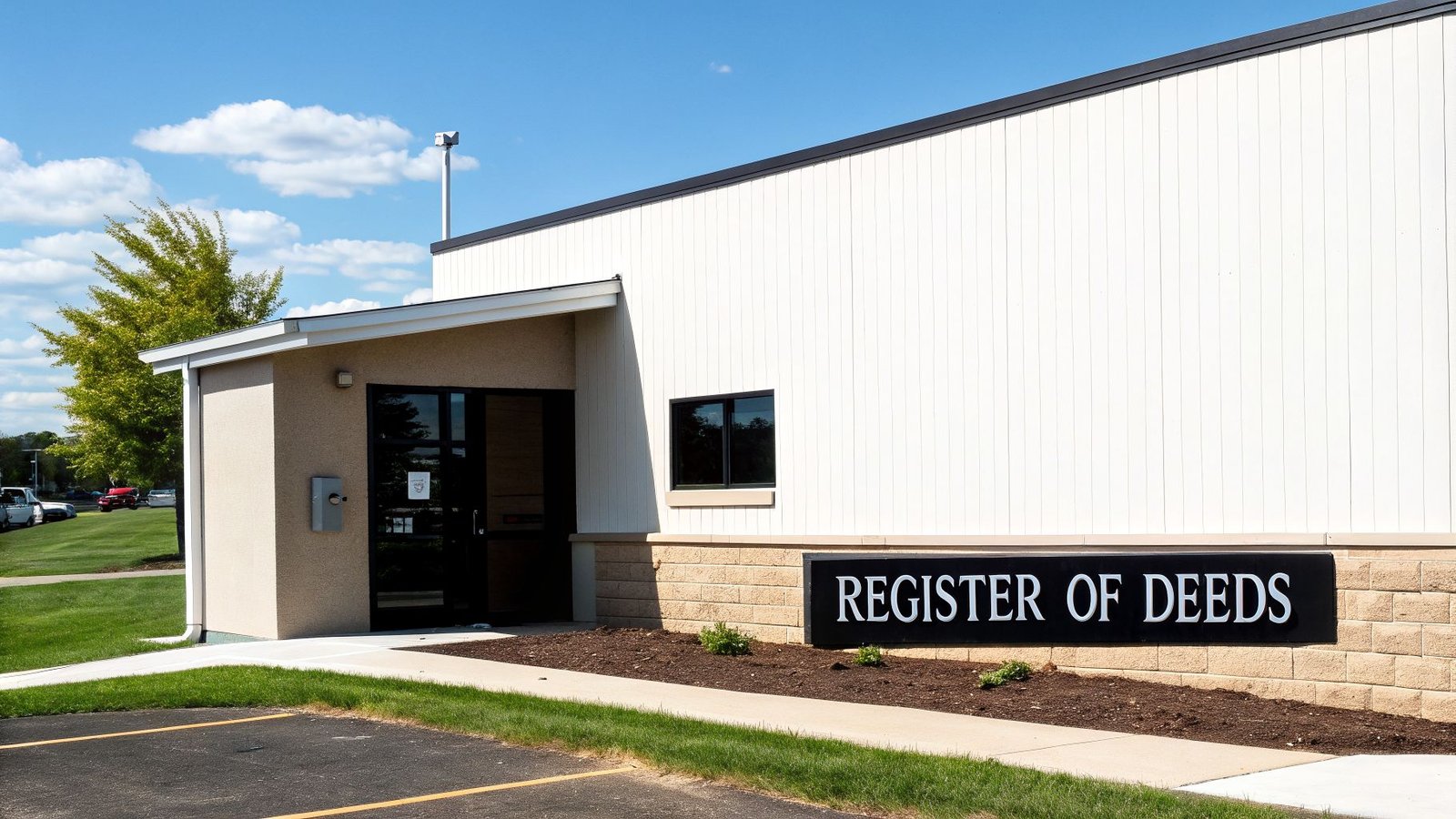
A quitclaim deed is your go-to document for moving property between people without a traditional sale. I see them used constantly for life's big changes.
- Finalizing a divorce: One spouse needs to sign their interest in the home over to the other. A quitclaim deed handles this cleanly.
- Estate planning: Parents often use them to transfer property to their kids, which can make inheritance much simpler down the road.
- Adding a spouse to the title: Just got married? A quitclaim is the easiest way to add your new spouse's name to your property deed.
This isn’t just a local quirk; it’s how property transfers are made official everywhere. Here in Cumberland County, we see these documents filed every single day for all sorts of reasons—from military families managing a quick PCS to folks dealing with foreclosure or an unexpected inheritance.
Filing that deed is the final, critical step.
Key Takeaway: A signed and notarized quitclaim deed is just a piece of paper until it's officially recorded at the county office. Recording is what makes the transfer legally binding and puts the world on notice about the new ownership.
To get your deed filed correctly, a little preparation goes a long way. This quick checklist breaks down exactly what you need to do to get it recorded without any hiccups.
Quick Filing Checklist for Your Quitclaim Deed
| Action | Why It's Essential | Local Pro-Tip |
|---|---|---|
| Verify Property County | You MUST file in the county where the property is. A deed for a Fayetteville home goes to Cumberland County, not Moore or Harnett. | For towns on the county line like Spring Lake, double-check your property records to confirm you're in the right place before you go. |
| Get It Notarized | North Carolina law requires the grantor's (seller's) signature to be notarized. Without a notary seal, the office will reject your deed. | Banks, shipping centers (like UPS stores), and law offices usually have a notary on staff. Call ahead to confirm they're available. |
| Check Recording Fees | The county charges a fee to record the deed. It’s typically a flat fee for the first few pages and a smaller fee for each additional page. | The Cumberland County Register of Deeds fee is $26.00 for the first 15 pages. Most quitclaim deeds are well under this limit. |
| Prepare Excise Tax Form | If money was exchanged, you'll likely need to pay an excise tax (also called a "revenue stamp"). The rate is $2 per $1,000 of the sale price. | Many quitclaim transfers (like gifts or divorce settlements) are exempt from excise tax. You'll still need to note the exemption on the deed. |
Following this checklist helps ensure that when you walk into the Register of Deeds office—or mail in your document—it gets processed smoothly. Knowing exactly where to file your quitclaim deed and what to bring is half the battle. Now, let’s get into the step-by-step process.
Preparing an Error-Free Quit Claim Deed Document

Before you even think about where to file your quitclaim deed, you need to make absolutely sure the document itself is perfect. I’ve seen it happen time and again: a simple typo or one missing detail gets the whole thing rejected at the county office.
This forces you to start the entire process over. It's a frustrating and common delay, especially when you need a fast transfer because you’re selling to avoid foreclosure or dealing with an inherited property.
Getting the details right isn't just a suggestion—it's essential for a valid transfer. Pay close attention to the names of everyone involved and the property's legal description. These are the two biggest trouble spots.
Identifying the Grantor and Grantee
First things first, you need the full, correct legal names for both the grantor (the one transferring the property) and the grantee (the one receiving it). No nicknames. No abbreviations.
If his government ID says "William David Johnson," you can't put "Bill Johnson" on the deed. It won't fly. Simple mistakes like this are one of the top reasons for a deed to be kicked back. Always, always double-check the spellings against a driver's license or passport.
Finding the Property's Legal Description
This is where most people get tripped up. The legal description is not the same thing as the street address you'd plug into Google Maps. It's a very specific, formal description that lays out the property's exact boundaries, usually with lot numbers, block numbers, and subdivision names.
The best place to find this is on the property’s current deed. If you don't have a copy handy, you can get one from the Cumberland County Register of Deeds, often right through their online records portal.
Pro Tip: Never, ever try to write a legal description yourself or paraphrase it. You must copy it word-for-word, comma-for-comma from a previously recorded deed. Even a tiny error can create a "cloud" on the title, leading to major legal headaches and financial problems down the road.
A quitclaim deed doesn't give you title guarantees, but you can control the accuracy of the document. For anyone in a tough spot—maybe dealing with family matters or needing to sell a distressed property fast—getting this document right the first time prevents a whole lot of unnecessary stress and delay.
How to Notarize and Record Your Deed Correctly
You've got the quit claim deed drafted and ready to go. Great. But a piece of paper isn't enough—you need to make it official. This means getting it notarized and then recorded with the county.
Don't skip the notary. In North Carolina, a quit claim deed is worthless without a proper notarization. This is a hard-and-fast legal requirement, not a suggestion. The grantor (that’s the person transferring the property) absolutely must sign the document in front of a licensed notary public.
Finding a notary is usually the easy part. Most banks, credit unions, and even shipping places like The UPS Store have one on staff. Just give them a quick call first to make sure they’re available and to ask about any fees.
Your Options for Filing the Deed
Once the ink is dry and the notary stamp is on, it's time for the final step: filing the deed. For properties in Fayetteville and the surrounding area, this happens at the Cumberland County Register of Deeds office. You've got a few ways to get it done.
Go In-Person: This is the quickest, most direct route. You walk into the county office with the original, notarized deed, pay the fees, and they'll record it right then and there. Make sure to bring a government-issued photo ID.
File by Mail: Can't make it to the office? No problem. You can mail the original document, a check or money order for the fees, and a self-addressed, stamped envelope. They'll record it and mail the original back to you.
Some counties are also starting to offer e-recording through approved third-party services. It’s always a good idea to check the Cumberland County Register of Deeds website to see if this is an option for you.
My Pro Tip: Whether you file in person or by mail, always include a self-addressed stamped envelope. This is how you get a "conformed copy" back—your original deed, stamped with the official recording date and book/page number. It’s the proof you need for your records, and it saves you a follow-up trip or call.
Understanding the Costs Involved
Filing a deed isn't free, and you need to get the payment right or the county will send it right back to you. There are two main costs to plan for.
First is the recording fee. Here in Cumberland County, that's a flat $26.00 for the first 15 pages. Just about every quit claim deed will fall under this price.
Second is the excise tax, which you'll sometimes hear called "revenue stamps." This tax only applies if money changed hands. The rate is $2.00 per $1,000 of the property's value. But here’s the good news: many quit claim deeds are exempt from this tax, especially when transferring property between family as a gift or as part of a divorce settlement.
If you want to dive deeper into the process, you can learn more about how to file a quit claim deed and all the details involved in our complete guide.
Confirming the Right County Office for Your Property

I've seen it happen more times than I can count. A simple mistake that creates a massive legal headache: filing a deed in the wrong county.
Don't let this be you. If you file in the wrong place, the property transfer is not legally recorded. It’s like it never happened. This can cause huge problems if ownership is ever challenged down the road.
Remember, you file the deed where the property is physically located. It has nothing to do with where you live.
For any property inside Fayetteville, Hope Mills, Spring Lake, or Stedman, you have to file with the Cumberland County Register of Deeds. But county lines get blurry. If your property is in Raeford, you're going to the Hoke County Register of Deeds. If it's in Dunn, you need the Harnett County office.
How to Quickly Verify Your Property's County
Don't guess. Ever. Here’s how you confirm the correct county in a few minutes.
- GIS Mapping Tools: This is the fastest way. Search for "[County Name] NC GIS map" online and punch in the property address. The map will show you the exact parcel and all the jurisdictional details. It’s a lifesaver.
- Check Your Property Tax Bill: Pull out your most recent property tax statement. It will clearly name the county that’s taxing you. That’s your answer.
Key Insight: Verifying the county takes less than five minutes. It can save you from weeks of delays and the cost of having to re-file everything from scratch. An incorrectly filed deed is worthless until it’s recorded in the right jurisdiction.
This simple check is a critical first step. It's the kind of due diligence that's also part of a formal title search. If you want to learn more, check out our guide on what a title search for property involves and why it's so important.
Filing Solutions for Out-of-State and Distressed Owners
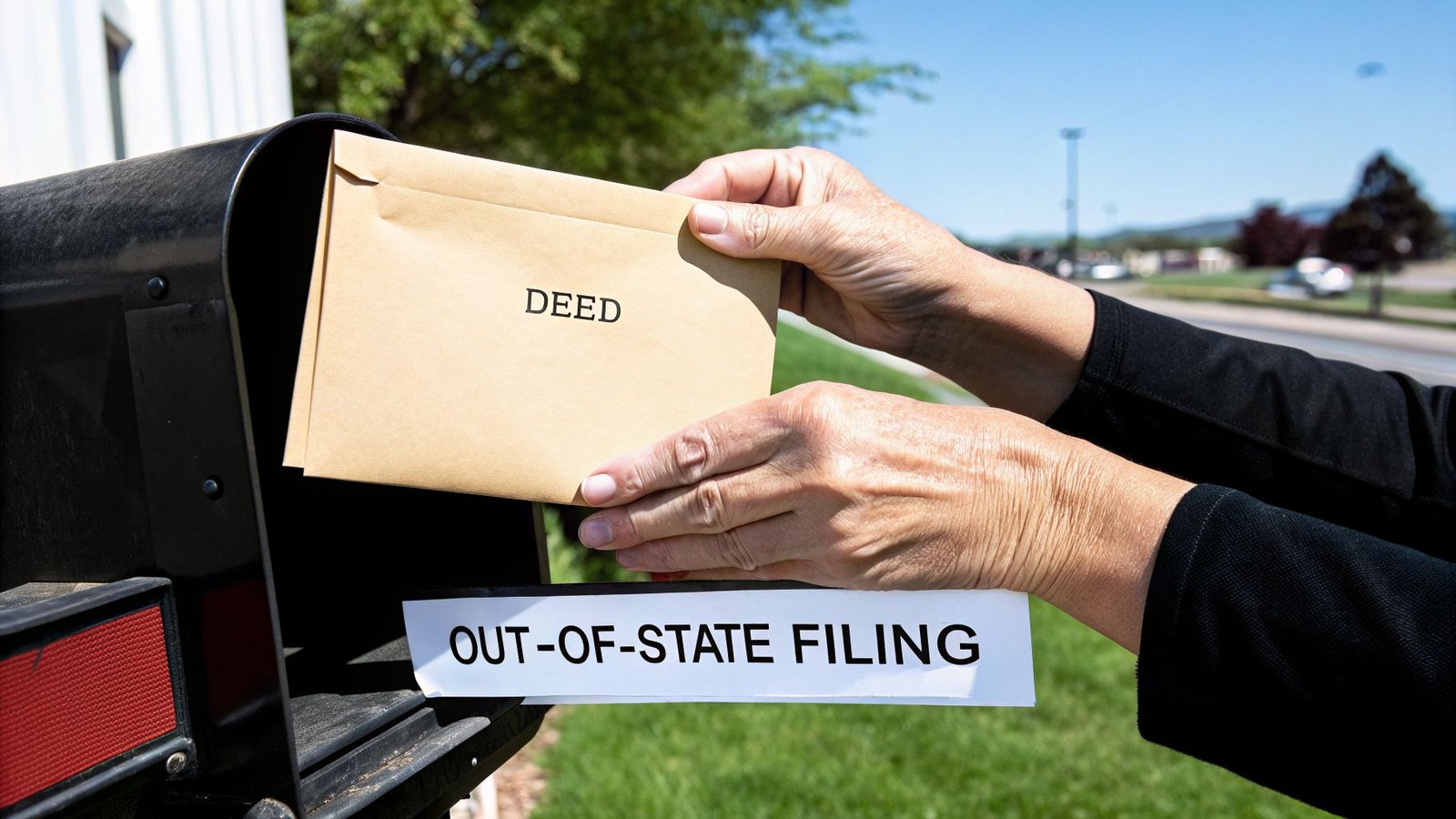
What happens when you can't just walk into the Cumberland County Register of Deeds office? We see it all the time. You might be an absentee landlord, an heir living across the country, or military personnel who just got PCS orders.
Good news: you don't have to be in North Carolina to file a deed. The key is knowing how to handle the notarization and filing from a distance.
You can get a document notarized in any state, as long as it's by a licensed notary. After signing, you'll have to mail everything in—the original deed, a check for the fees, and a self-addressed stamped envelope.
The Headaches for Remote and Distressed Owners
Sounds simple, right? It rarely is. The process gets messy fast when you're dealing with a problem property from another state. Trying to coordinate with a co-owner in a different city, or worse, finding out there’s a lien on the title, can turn a straightforward filing into a complete logistical nightmare.
Quitclaim deeds are useful for things like divorce or estate planning. But because they don't guarantee a clear title, they're a perfect fit for our "we buy houses cash" model—especially for inherited properties or homeowners falling behind on payments. It’s a fast track out of a complicated situation.
Instead of juggling remote paperwork, chasing down notaries, and trying to figure out how to clear title issues from afar, you can sell directly to a professional home buyer. That's us.
We work with out-of-state owners constantly. When you sell your house to us, we handle 100% of the title work, legal documents, and filing procedures as part of the sale. It takes the entire burden off your shoulders.
This is the simplest, most direct path forward, especially if your property has liens or other complications. If you're worried about existing claims, you should check out our guide on how to remove a lien from a property. It's the most direct solution for a stress-free sale.
Frequently Asked Questions About Filing Quit Claim Deeds
Dealing with property paperwork can be a headache, and quit claim deeds are no exception. We get these questions all the time from folks in Fayetteville, so here are the straight answers you need to get it done right.
Can I File a Quit Claim Deed Online in Cumberland County?
The short answer is no, not directly. As of right now, Cumberland County doesn't have a public online portal for individuals to e-file their own deeds.
While some attorneys use special e-recording services, your best options are the old-school ones: filing in-person or by mail. If you want it done fast, going in person is always your best bet.
What Happens if I Make a Mistake on the Deed?
It happens. If you catch a mistake before you’ve filed the deed, just shred the bad one and fill out a new, correct version. Simple.
But if the deed is already on record with the county, you've got to file a new "corrective deed." This new document has to specifically reference the original deed's recording info (book and page number) and state exactly what you’re fixing.
Is Hiring a Lawyer Necessary for a Quitclaim Deed?
You aren't legally required to hire one, but it can be a very smart move, especially if things get complicated. Think about it—are there tax issues? Potential problems with the property's title? A lawyer is crucial then.
Filing a quitclaim deed is a standard process at the county recorder's office, but a small mistake can create a massive headache down the road. States have seen a rise in property fraud from fake filings, and bad estate planning can leave your family with a huge tax bill. You can learn more about the risks and rewards of quitclaim deeds from LegalZoom to help decide what's right for you.
From Our Experience: For simple transfers between family or people you trust completely, plenty of folks handle the filing themselves without a problem. But if you’re dealing with an inherited house that has liens, or the title history is messy, getting professional help is worth every penny. It’s cheap insurance against a costly legal fight later.