
When a homeowner passes away, their property doesn't just automatically go to their family. Instead, it often enters a court-supervised process called probate. A probate property sale is simply the sale of that real estate, but it requires a judge's green light to make sure every debt is settled and the money goes to the right heirs. It can feel like a maze, but getting a handle on the basics is the first step to a much smoother journey.
What Happens When a Property Enters Probate

Think of probate as a formal, court-managed checklist for wrapping up someone’s final affairs. The court steps in to make sure everything is done by the book, especially for a major asset like a house.
The main point of probate is to create an orderly transition. The court will validate the will (if there is one), appoint someone to be in charge of the estate, and confirm all financial loose ends are tied up before any inheritance is handed out.
Why Probate Is Necessary for Real Estate
A house is usually the biggest asset someone leaves behind, and its ownership is legally tied to the deceased's name on the deed. Probate is the official legal process needed to transfer that ownership. Without it, there would be no clear authority to sell the property, pay off the mortgage, or give the remaining equity to the heirs.
This court oversight is there to protect everyone involved:
- Creditors: It ensures any outstanding bills—like a mortgage, taxes, or medical debts—are paid first from the estate's assets.
- Heirs: It confirms that the remaining assets are given to the correct beneficiaries, either according to the will or North Carolina state law.
- The Buyer: It provides a clean and legal title for the property, which prevents any ownership headaches down the road.
The executor or administrator is the estate's legal representative, sort of like a ship's captain. Their job is to follow the court's requirements—the map—to safely guide the estate's assets to their final destination.
The Two Paths for Selling a Probate Property
Once the court gives the go-ahead to sell, the executor has a big decision to make. They need to pick the best route to turn the property into cash to settle the estate. Here in North Carolina, that usually means choosing between two very different options.
You can go the traditional route and list with a real estate agent, which means prepping the home, holding showings, and dealing with negotiations. Or, you can choose a direct sale to a cash buyer, which is all about speed and simplicity.
Let’s quickly break down the key differences.
Two Paths for Selling a Probate Property
| Factor | Traditional Real Estate Listing | Direct Cash Sale (Like DIL Group Buyers) |
|---|---|---|
| Speed | Slow; can take 3-6+ months on average | Fast; can close in as little as 7-14 days |
| Repairs | Usually required; buyer expectations are high | Not needed; you sell the house "as-is" |
| Showings | Multiple showings and open houses are common | Usually just one quick walkthrough |
| Fees | 5-6% in agent commissions, plus closing costs | No commissions or hidden fees |
| Certainty | Sale can fall through (financing, inspections) | High certainty; cash offers are more reliable |
| Effort | High; requires cleaning, staging, and managing | Low; a straightforward, simple process |
Understanding these two paths is the key to making an informed choice that best serves the estate's needs and timeline. Each approach has its place, but the right one for you depends entirely on your specific situation.
The Executor's Role and Key Responsibilities
Finding out you’ve been named the executor of an estate is a heavy moment. It often happens right when you're grieving, and suddenly you're handed a huge stack of legal and financial duties. Your job, plain and simple, is to honor the final wishes of the person who passed away while acting in the best interests of the estate and its beneficiaries.
You are now the estate's legal point person. That means you're in charge of rounding up all the assets, paying off any debts, and then making sure what's left gets to the right people. Think of yourself as the captain of a ship—it's your job to guide it safely to its final destination.
Your First Moves as Executor
What you do first sets the tone for the entire probate process. The initial steps are all about getting the official green light to manage the estate's business. Without it, you’re stuck—no accessing bank accounts, no paying bills, and definitely no selling the house.
Here are your immediate priorities:
- Find the Will: This is your roadmap. It confirms you as the executor and spells out who gets what.
- File with the Court: You'll need to take the will to the Clerk of Superior Court in the county where the deceased lived. This officially kicks off the probate process.
- Get "Letters Testamentary": This is the golden ticket. It's the official court document that gives you the legal authority to act for the estate.
Once you have these letters in hand, it's time to dig in and get a crystal-clear picture of the estate's finances. This part requires careful organization to make sure nothing falls through the cracks.
As the executor, your mantra should be diligence and transparency. You have to document every single financial move because you're accountable to both the court and the beneficiaries for how you handle things.
Managing and Protecting the Estate's Assets
With your legal authority established, the real work begins: managing the estate's assets and debts. This is often where the reality of selling a probate property really hits home. You'll need to secure and appraise everything, from the house and the car to bank accounts and personal belongings.
At the same time, you have to track down and formally notify anyone the deceased owed money to. This isn't just a casual phone call; it involves publishing a notice in a local paper to give creditors a set amount of time to make a claim. It’s critical to uncover every single debt, because they all have to be paid before the heirs see a dime. Sometimes you'll uncover unexpected issues, like liens on the property, which adds a whole new challenge. For a deeper dive, check out our guide on how to handle selling a house with a lien on it.
This stage can be a real grind, especially if you're an out-of-state executor trying to manage a property in Fayetteville or Spring Lake. The probate process nationally already takes an average of 12-16 months and can eat up 3-7% of the estate's value in costs. Since 2020, probate property sales have shot up, with some areas seeing 14.5% annual growth. In the first quarter of 2025 alone, over 41,000 such homes were sold. That's where selling the property becomes a smart move—a quick, clean sale can generate the cash needed to settle debts and make the whole process a lot simpler.
Navigating the North Carolina Probate Timeline
Let's be clear: the North Carolina probate process isn’t a sprint. It's a marathon, complete with legal hurdles and mandatory waiting periods. Understanding this from the get-go is the key to managing expectations and keeping stress at bay. For most estates, the journey from filing that first piece of paper to finally distributing assets takes anywhere from nine months to well over a year. If complications pop up, it can take even longer.
Think of it like building a house. You can't start putting up walls before the foundation is properly poured and inspected. Probate works the same way. Each step has to be completed in the right order, and some phases have waiting periods you just can't get around.
This visual gives you a bird's-eye view of an executor's core duties, from starting the process to settling the estate for good.
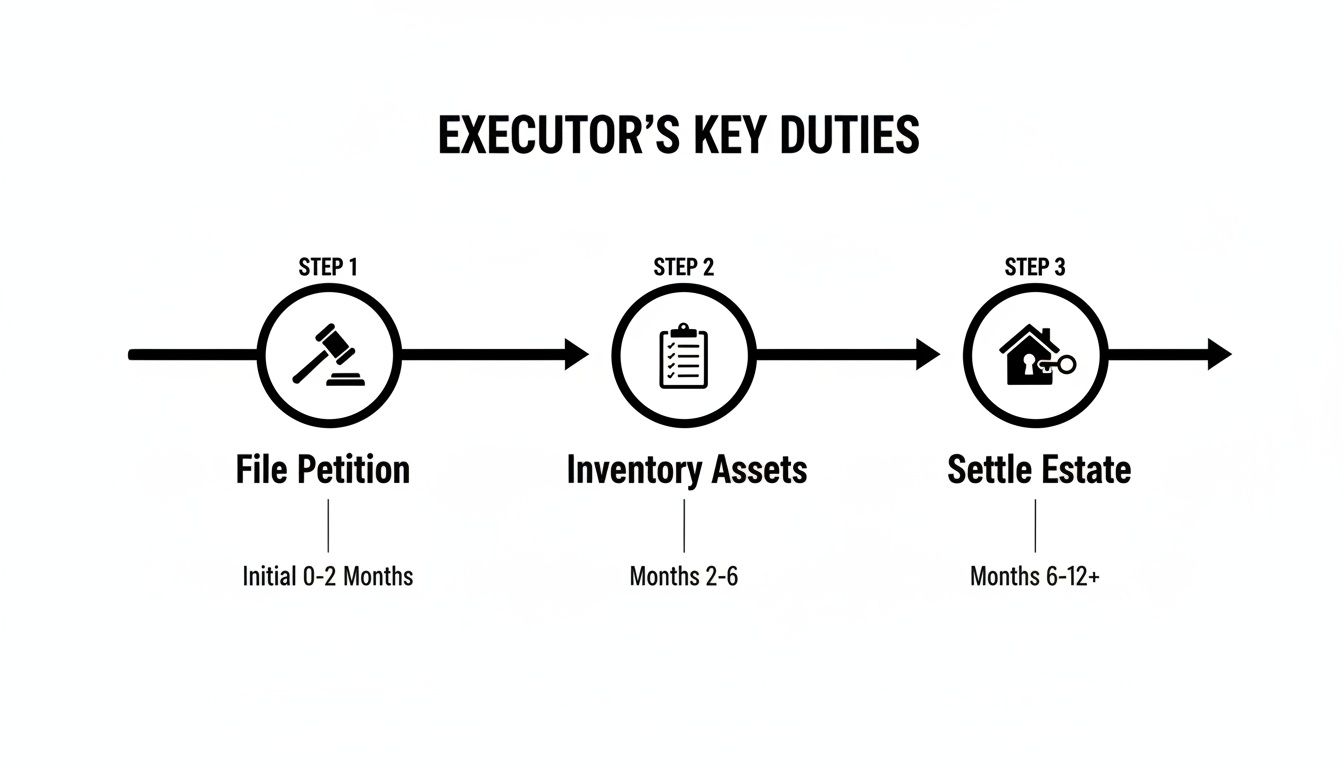
As you can see, the process moves in a sequence. Each stage unlocks the next, which is why acting efficiently right from the start is so important.
The Initial Steps: Opening the Estate
The clock officially starts ticking the moment you, as the executor or administrator, file the necessary documents with the Clerk of Superior Court. This happens in the county where the deceased person lived. The first phase is all about submitting the will (if there is one) and a petition to formally open the estate.
Once the court gives its stamp of approval on the will and your appointment, you'll receive a critical document called Letters Testamentary. If there's no will, it's called Letters of Administration. This piece of paper is the legal key that unlocks everything. Without it, you can't touch estate bank accounts, pay bills, or—most importantly—list or sell the property. Just getting these letters can take several weeks to a month, depending on how busy the court is.
The Creditor Notification Period: A Mandatory Pause
As soon as you have your letters in hand, your next job is to publish a "Notice to Creditors" in a local newspaper. This is the official announcement to anyone the deceased might have owed money to, letting them know they have a limited time to make a claim against the estate.
In North Carolina, this creditor claim period is a legally required 90-day waiting period. This is a hard stop in the process—it's completely non-negotiable. You can't start paying heirs or move to close the estate until this window has officially shut and all legitimate debts are on the table.
During these three months, you shouldn't just be sitting around. This is the time to tackle other critical tasks like inventorying assets, securing the property, and getting it appraised. It's also the perfect window to start exploring your options for the probate property sales process. You can actually market the home and even accept an offer, making it contingent on court approval. This one move can save you a ton of time later on.
Appraising and Managing Assets
While that 90-day clock is ticking for creditors, you're responsible for creating a detailed inventory of everything the estate owns, valued at the date of death. This list, which includes the house, bank accounts, cars, and personal items, has to be filed with the court, usually within three months of your appointment.
For the real estate, this means hiring a professional appraiser. Getting an accurate valuation is critical, not just for the court's records, but for proving you're doing your job right for the beneficiaries. All this time, the property is your responsibility. You're on the hook for keeping up with the mortgage, taxes, insurance, and utility bills—all of which are draining cash from the estate's accounts.
How a Swift Property Sale Changes the Timeline
The house is almost always the estate's most valuable asset, but it's also the most complicated. Selling a home the traditional way can easily add six months or more to your timeline, creating a massive bottleneck. You’re suddenly dealing with repairs, scheduling showings, haggling with buyers, and crossing your fingers that their loan doesn't fall through at the last minute.
This is where a direct cash sale completely changes the game.
By getting a guaranteed, as-is offer during the creditor waiting period, you set the estate up for a rapid closing. Once you have the green light from the court and the 90 days are up, you can often close the sale in just a couple of weeks. This flood of cash into the estate allows you to:
- Pay Debts Quickly: Settle up with all creditors and pay administrative fees without waiting.
- Stop the Financial Drain: Quit spending estate money on the mortgage, utilities, and endless upkeep for a vacant house.
- Simplify Distribution: Turning a house into cash makes it infinitely easier to divide fairly among the heirs.
By handling the probate property sale strategically, you can literally shave months off the settlement timeline, cutting down the stress and getting your duties done far more efficiently.
Selling As-Is Versus a Traditional Market Listing
As the executor, one of the biggest calls you’ll have to make is how to handle the property. You’re essentially standing at a crossroads with two very different paths ahead: listing it on the open market with an agent, or selling it directly "as-is" to a cash buyer.
This isn’t just a simple choice—it’s a decision that will shape the entire estate settlement process. It goes way beyond the final price, touching on the time, money, and stress involved for you and the heirs.
The Demands of a Traditional Real Estate Listing
Putting an inherited home on the market is like prepping a car for a classic auto show. It has to be pristine to get top dollar from retail buyers, and let's be honest, most inherited homes are anything but show-ready.
Going this route almost always means diving into a long, expensive checklist:
- Serious Repairs: You’re often looking at a laundry list of issues, from nagging leaky faucets to major headaches like a failing roof or an ancient HVAC system. This means finding contractors you can trust, managing the work, and fronting the cash for it all.
- Cosmetic Overhauls: To even compete, you’ll likely need to spend money on fresh paint, new flooring, and updated fixtures to catch the eye of modern buyers.
- Professional Staging: Most agents will push for staging, which means more coordination and another bill to pay just to help buyers imagine themselves in the space.
- The Parade of Showings: Get ready for a constant stream of strangers walking through the house, usually at the most inconvenient times.
This isn't just a drain on the estate's finances; it's a massive time suck. If you're an executor who's also grieving or lives out of town, juggling contractors and open houses from a distance can be an absolute nightmare.
A traditional sale is a bet. You’re betting your time and money against the hope of a reliable buyer. Even after you accept an offer, the whole deal can collapse weeks later if the buyer’s loan falls through or the inspection uncovers a new problem, throwing you right back to square one.
The Simplicity of an As-Is Cash Sale
Now, picture the other path. Selling a probate property "as-is" to a cash buyer is like taking the express lane. You get to bypass all the roadblocks and headaches of a traditional sale and focus on what matters: certainty, speed, and simplicity.
This approach is all about what you don’t have to do. When you start looking into selling your house as-is, you’ll find it’s a process built for the reality of an executor’s duties.
Here’s what that actually means:
- No Repairs, Period: The buyer takes the property exactly as it is, problems and all. You don’t have to fix a single thing or spend a dime cleaning it out.
- No Showings or Staging: Forget the endless parade. Usually, it's just one quick walkthrough for the buyer to see what they're working with. That’s it.
- No Commissions or Junk Fees: Selling directly to a cash buyer means you skip the 5-6% commission that goes to real estate agents. The price we agree on is what you walk away with.
- A Guaranteed Close: Cash buyers don’t need a bank’s permission. That means the risk of a deal falling apart over financing is gone. You get a firm closing date you can count on.
This no-nonsense process is a lifesaver in probate situations. The demand for these homes is real—national data shows existing-home sales jumped by 5.1% in December 2025 alone. Probate properties often make up 10-15% of all home sales in busy markets like ours around Fayetteville.
Here at DIL Group Home Buyers, we’ve helped over 150 families navigate this exact process, many of them out-of-state heirs who just needed a straightforward solution. For an executor, it means you can quickly turn the estate's main asset into cash, pay off any debts, and get the inheritance to the heirs without months of delays.
Weighing Your Options: As-Is Cash Sale vs. Market Listing
To make the right call, you need to see the two options side-by-side. Here’s a straightforward breakdown to help you compare what really matters when you're managing an estate.
| Consideration | Selling As-Is to a Cash Buyer | Listing with a Real Estate Agent |
|---|---|---|
| Speed to Close | Fast. Typically 7-14 days. | Slow. Often 60-90+ days, plus repair time. |
| Repairs & Prep | None. The house is sold in its current condition. | Extensive. Requires repairs, updates, cleaning, and staging. |
| Upfront Costs | Zero. No out-of-pocket expenses for you. | High. You pay for all repairs, staging, and utilities. |
| Commissions & Fees | None. No agent commissions or hidden closing fees. | Significant. Typically 5-6% of the sale price. |
| Certainty of Sale | High. No financing contingencies; cash offers are solid. | Moderate. Deals can fall through due to financing or inspections. |
| Convenience | Maximum. One walkthrough, minimal paperwork, no showings. | Low. Requires constant availability for showings and contractors. |
| Final Price | A fair cash price reflecting the home's "as-is" state. | Potentially higher top-line price, but reduced by costs. |
Choosing the right path depends entirely on your goals. If your priority is to settle the estate quickly, avoid personal financial risk, and minimize stress, an as-is cash sale offers a clear and reliable solution.
How a Cash Sale Cuts Through the Probate Red Tape
Let's be honest: juggling the legal duties of probate is already a huge undertaking. Throwing a traditional home sale on top of that? It can feel completely overwhelming. This is where a direct cash sale changes the game, offering a clean, straightforward path that simplifies your life.
Think of it this way: the normal real estate process is like a winding country road—full of potholes, unexpected detours, and no clear end in sight. A cash sale is the expressway. It's built for speed and certainty, getting you from Point A to Point B without all the hassle. It takes a process that could drag on for months and boils it down to a few simple steps.
From Complicated to Simple in Three Steps
Instead of losing sleep over repairs, agent showings, and endless back-and-forth negotiations, a cash sale follows a proven, efficient track. The entire process is designed to take the burden off your shoulders as the executor.
Here’s what that looks like:
- A Quick, No-Nonsense Chat: It all starts with a simple phone call. We'll talk through the property's situation, and there's zero pressure. Best of all, you don't have to travel, which is a huge relief if you're managing the estate from another city or state.
- A Fair, "As-Is" Cash Offer: We'll give you a transparent, all-cash offer for the house exactly as it is today. No hidden fees, no agent commissions. The number you see is the number you get. Period.
- You Pick the Closing Date: You're in control of the timeline. This flexibility is critical in a probate case, as it lets you line up the sale with the court's schedule. As soon as you have the green light to sell, we can close.
This approach immediately turns the property from a constant source of stress and expense into a liquid asset, ready to help you settle the estate’s debts and move forward.
When you opt for a cash sale, you’re not just selling a house—you’re choosing a solution. You get to bypass the financial drain and emotional toll of listing on the open market, letting you focus on your duties as executor.
Tackling the Problems Most Buyers Run From
Inherited properties are rarely in perfect, move-in-ready condition. They often come with baggage that would send a typical homebuyer running for the hills—things like a leaky roof, old liens, or even tenants who won't leave. A professional cash buyer is built to handle these headaches.
Even as global housing markets cool down, as noted in UBS's Global Real Estate Bubble Index 2025, specialized sales like probate properties are a constant. Here in North Carolina, our team at DIL Group has bought over 150 such properties, many from out-of-state owners dealing with messy situations in towns like Dunn and Parkton. In fact, these types of sales can make up as much as 20% of all "as-is" deals in our area. You can dig into the latest global real estate trends on UBS.com for more context.
Our experience means we know exactly how to buy properties with:
- Major Repair Needs: From foundation issues to a completely outdated kitchen, we’ve seen it all.
- Existing Liens or Mortgages: We work directly with the title company to clear all debts at closing.
- Problem Tenants: We can take over the property with the tenants still in place, handling the situation from there.
Working with a local specialist who knows communities like Fayetteville, Hope Mills, and Raeford gives you a proven, stress-free way to handle the estate’s biggest asset. To see just how simple it can be, you can learn how we buy houses for cash and close on your schedule.
A Few Common Questions About Probate Property Sales
When you're grieving a loss, the last thing you want to deal with is a mountain of legal paperwork and confusing questions. Selling a home through probate is a world most people never encounter until they're thrown into it, and it's full of unique rules and potential headaches. Getting clear, straight answers is the first step to taking back control.
We're going to tackle the biggest questions we hear from executors and heirs every day. Our goal is to break it all down in a practical way, cutting through the legal jargon to give you the information you need to make the right call for the estate.
Can I Sell a House Before Probate Is Finalized?
This is the big one, the question on every executor's mind. The short answer is no, you can’t officially close the sale before the court gives you the legal green light. But—and this is a big but—you can and absolutely should get the process started.
Think of it like getting pre-approved for a mortgage. You can't move in yet, but you can line up all your ducks in a row. For a probate sale, that means you can list the property, talk to buyers, and even sign a sales contract.
That contract will just have a simple contingency clause, making the sale conditional on the court's final approval. Taking this step can save you months. Instead of waiting for the paperwork and starting from scratch, you can have a buyer ready to go the moment you get your Letters Testamentary.
Do All Heirs Need to Agree to Sell the House?
Family dynamics can turn a straightforward process into a complicated mess. Whether you need every single heir to sign off depends on what the will says and North Carolina law.
If the will specifically gives the executor the "Power of Sale," you typically have the authority to sell the property without a vote from the beneficiaries. The will grants you this power so you can handle the estate's debts and assets efficiently.
But things change if there's no will (a situation called "intestacy") or if the will is silent on this point. In those cases, you’ll likely need to get a unanimous "yes" from all heirs or go back to the court and ask for permission to sell.
Disagreements between heirs are notorious for derailing traditional real estate deals. All it takes is one person holding out to bring everything to a grinding halt. A fast cash offer cuts through all that drama, turning a physical asset people fight over into simple, easy-to-divide cash. It helps everyone move on.
What if the Inherited House Has a Mortgage or Liens?
It’s pretty common for an inherited home to come with some financial baggage. Whether it’s an outstanding mortgage, unpaid property taxes, or other liens, all of it has to be paid off before the estate can be settled. This is a huge stressor, especially if the estate doesn't have the cash on hand to cover those debts.
This is where a cash sale is a lifesaver. You don't have to scramble to find thousands of dollars to clear these debts yourself. An experienced cash buyer like DIL Group works directly with a trusted title company to handle it all at closing.
Here's how simple it is:
- The title company finds any outstanding debts during the title search.
- At closing, the money from the sale is used to pay off the mortgage and any liens first.
- The rest of the money—the net proceeds—goes directly to the estate.
This takes a massive financial and administrative weight off your shoulders. The buyer gets a clean title, and you get a clean, hassle-free closing.
How Is the Price Determined in a Cash Sale?
In a typical home sale, the list price is often padded to leave room for negotiations, agent commissions, and repair requests. A cash offer is different. It’s a real, no-nonsense number based on the property as it sits today.
A fair cash offer comes down to a few key things:
- Current Condition: We buy the property "as-is," so you don't have to fix a single thing.
- Location: The neighborhood and what's happening in the local market play a huge role.
- Repair Costs: We estimate what it will cost us to handle all the necessary repairs and updates.
- Comparable Sales: We look at what similar, fully renovated homes are selling for in the area.
The offer we give you is the amount you walk away with. There are no surprise fees, no 5-6% agent commission, and no last-minute deductions for repairs. This total transparency lets you see the true value of a guaranteed, fast sale versus the gamble and hidden costs of the open market.
At DIL Group Buyers, we specialize in making probate property sales simple and stress-free. If you're an executor looking for a fast, fair, and reliable solution, contact us today for a no-obligation cash offer and close on your timeline. Learn more at https://dilgrouphomebuyers.com.
Pingback: Capital Gains Tax on House Sale: Your Complete Guide