
That gut-wrenching feeling hits you right away. Rent is late, your calls go to voicemail, and your texts are unanswered. You start to wonder: has my tenant just skipped town?
Figuring out if they've truly abandoned the property or are just temporarily off the grid is the first, and most critical, hurdle. In North Carolina, you can't just assume. The law looks for a clear pattern: unpaid rent, utilities cut off, and obvious signs that nobody's living there anymore.
What To Do When Your Tenant Disappears
Discovering what looks like an empty rental unit can send any landlord into a panic. It’s not just about the lost rent—it's a legal minefield. If you jump the gun and change the locks or start hauling their stuff to the curb, you could be facing a lawsuit for wrongful eviction.
So, take a deep breath. The first step isn't to reclaim your property; it's to gather proof. You need to move from a gut feeling to a documented case that proves the tenant has legally abandoned the unit.
Spotting the Real Signs of Abandonment
You need to look for concrete evidence that the tenant has moved out for good. One missed rent payment just doesn’t cut it. You’re building a case, and that means collecting multiple pieces of evidence that all point to the same conclusion.
This checklist can help you determine if your rental property is legally considered abandoned. Document everything you find—photos, dates, and notes are your best friends here.
Signs of Property Abandonment in North Carolina
| Indicator | What to Document | Why It Matters Legally |
|---|---|---|
| Total Radio Silence | Log all calls, emails, and texts sent. Note the dates and lack of response. | Establishes you made a good-faith effort to communicate. |
| Utilities Are Off | Contact the utility companies to confirm disconnection dates. Get it in writing if possible. | A tenant voluntarily cutting off power or water is a powerful sign they don't plan to return. |
| Mail Piling Up | Take photos of the overflowing mailbox or papers stacking up on the porch. | Shows the property isn't being tended to, a classic sign of vacancy. |
| Neighbors' Observations | Ask neighbors if they've seen the tenant. Did they see a moving truck? Note down who you spoke to and when. | Eyewitness accounts strengthen your case that the tenant has physically left. |
| The "Empty" Look | Peek through the windows. Do you see furniture? Or is it empty, with trash left behind? Document with photos. | Visual evidence of an empty or cleared-out unit is compelling proof. |
Remember to document every single indicator you find. This paper trail is what will protect you if your actions are ever questioned.
Key Takeaway: In North Carolina, the law provides a clear path. You can legally establish a "presumption of abandonment" 10 days after you post a notice of suspected abandonment both inside and outside the property. If the tenant doesn't respond in that window, you have a much stronger legal standing.
It's Not Just You, It's a National Issue
Dealing with an abandoned property might feel personal, but it’s a massive problem across the country. In the third quarter of 2024 alone, there were over 7,000 "zombie foreclosures" sitting empty in the U.S.
While that number is actually down 20% from last year, it shows just how fast a vacant property can become a financial and legal nightmare. Here in North Carolina, especially around areas like Fort Liberty with a high military population, sudden relocations (PCS) are common. A tenant can be gone overnight, leaving you with an empty house.
This is exactly why you need a game plan. Knowing your legal steps is one thing, but having an exit strategy—like selling quickly to a local cash buyer—can prevent a simple vacancy from turning into a long, expensive headache. You can read a full report on these national trends to see how it's impacting property owners everywhere. Being proactive is the only way to protect your investment.
Legally Handling a Tenant's Personal Belongings
So, you've legally established abandonment and changed the locks. Now what? You're probably looking at a unit full of someone else's life, and dealing with it isn't as simple as dragging everything to the curb.
North Carolina has specific laws for handling abandoned tenant property, and following them to the letter is the only way to protect yourself from getting sued down the road.
First thing's first: you need to create a meticulous inventory. Walk through the property and document every single item left behind. I can't stress this enough.
- Write it all down. Make a detailed list of every object, from the big stuff like couches and TVs down to the smaller personal effects.
- Photos, photos, photos. Visual evidence is your best friend here. Get wide shots of each room and then close-ups of anything that might be valuable.
- Stay objective. Your inventory should be factual. Instead of "ratty old recliner," write "brown vinyl recliner, tear on right armrest."
This detailed record is your proof that you acted professionally and diligently. If a tenant comes back months later claiming you tossed a priceless family heirloom, your documentation will be your shield.
This flowchart can give you a good visual of the initial steps to take when you think a tenant has bailed.
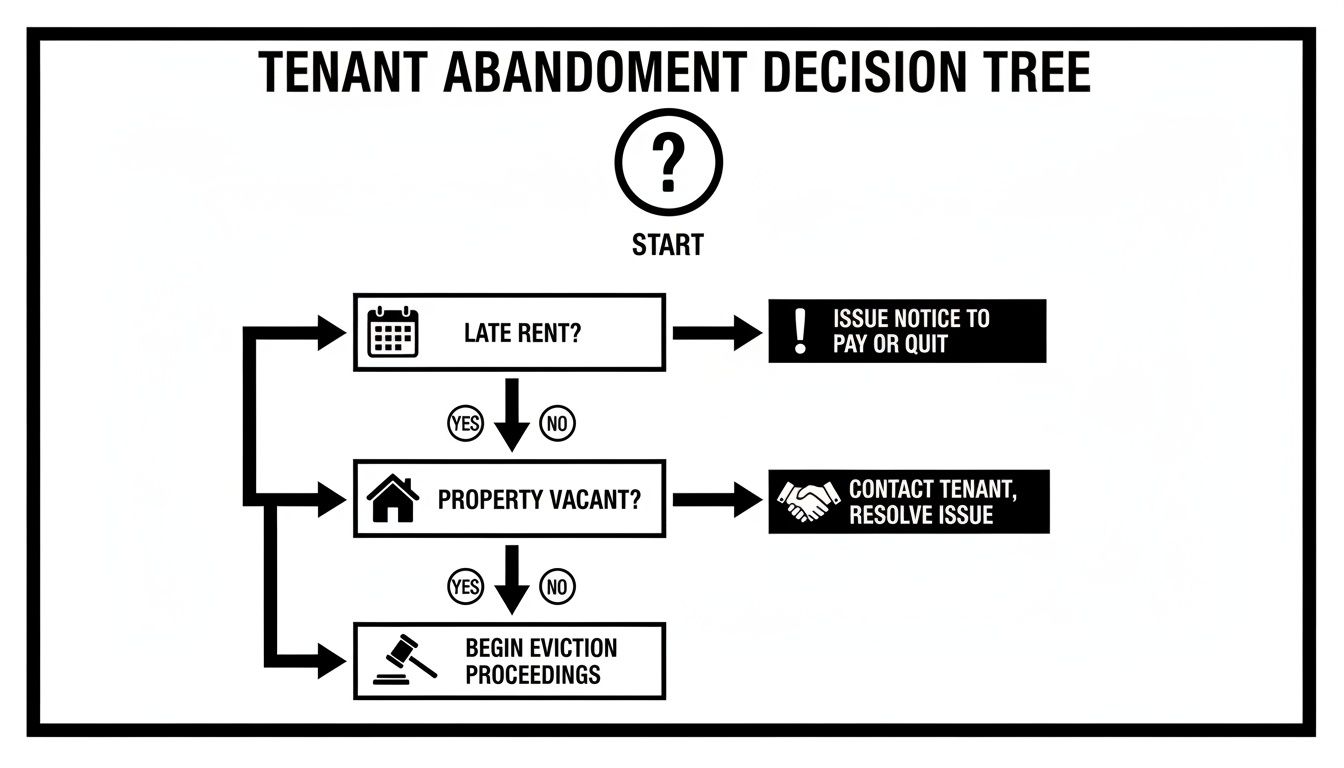
As you can see, the process always starts with clear signals—like the rent not showing up and the place looking empty—which sets you on the path of legal notices and, eventually, dealing with their stuff.
The Value of the Property Matters
North Carolina law gets very specific here, splitting abandoned belongings into two categories based on their estimated value. This number changes everything—it dictates how long you have to store the items and what you can do with them.
If the total estimated value of the property is less than $500, your life is a bit simpler. You're only required to hold onto everything for five days after you've legally regained possession of the unit.
But if the total value is $500 or more, the rules get stricter. You must securely store all the items for at least seven days before you can take any further action, like selling them. This is basically the law giving the tenant a final, reasonable chance to come get their more valuable things.
A common mistake I see landlords make is lowballing the value just to get the process over with faster. Don't do it. Always err on the side of caution and document how you came up with your valuation. A few quick searches for similar used items on Facebook Marketplace can go a long way in justifying your estimate if anyone ever questions it.
Storing the Tenant's Belongings
During that mandatory waiting period, you have to keep the tenant's property in a "place of safekeeping." That could mean leaving it secured inside the rental unit, moving it to a storage unit, or another safe spot. The key is that you must use reasonable care to protect the items from getting damaged or stolen.
The good news is you can charge the tenant for the reasonable costs of moving and storing their abandoned property. You can deduct these expenses from the security deposit or from the proceeds if you end up selling the items. Just be sure to keep every single receipt for movers or storage fees.
This whole process can get messy, especially if you've inherited a property and don't have all the backstory. For anyone navigating those kinds of complex situations, our guide on probate property sales in North Carolina can offer some much-needed clarity on managing an estate's assets, including rental homes.
How to Properly Notify Your Former Tenant
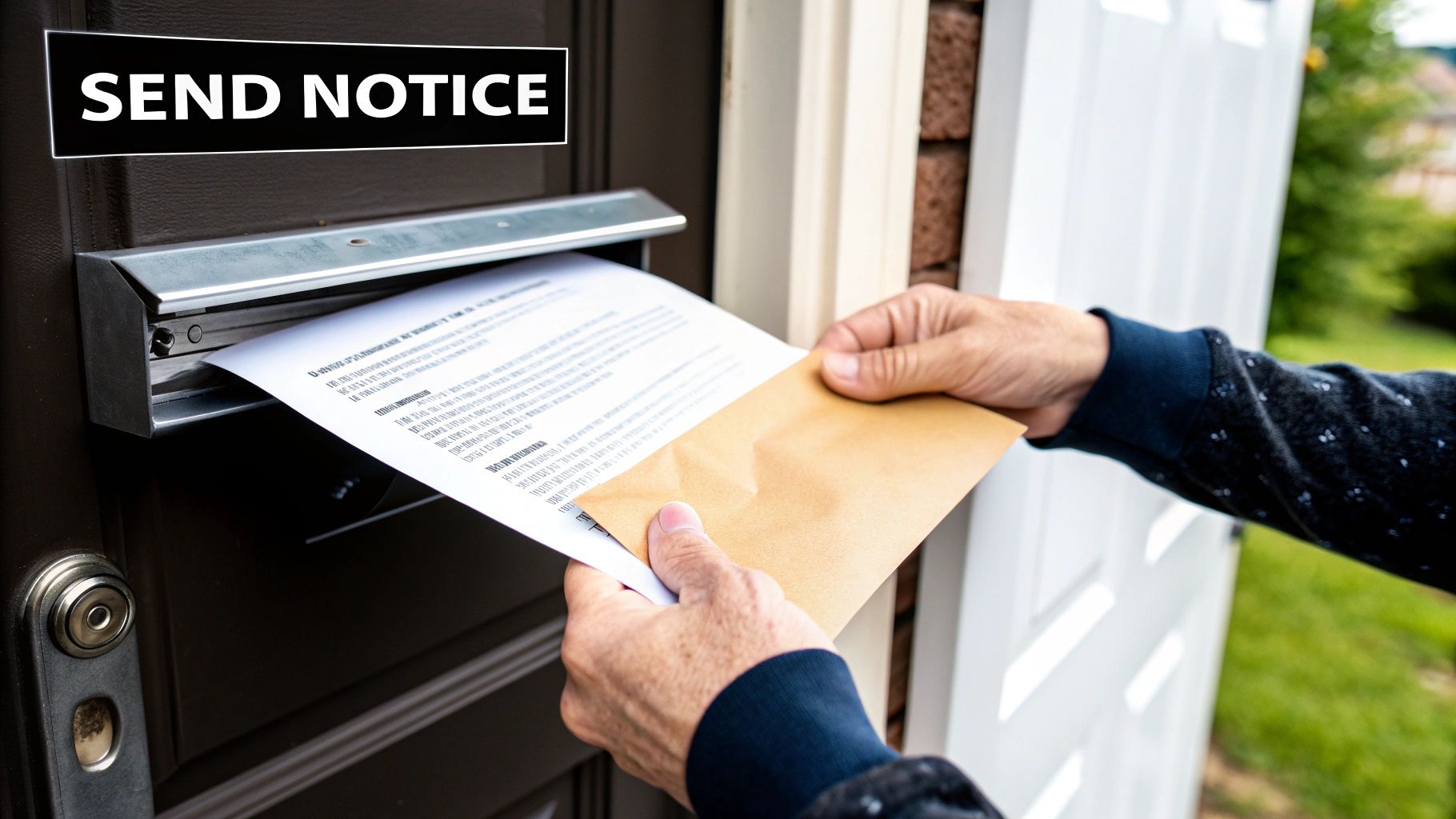
Alright, you've cataloged everything the tenant left behind. Now comes the most critical legal step you'll take in this entire process: sending the official notice. Getting this right is your shield against potential lawsuits down the road. North Carolina law is crystal clear on this, and there's absolutely no wiggle room.
The state requires you to send this notice by first-class mail to the tenant's last known address. Nine times out of ten, that’s going to be the address of the unit they just left. It might feel like you're mailing a letter to an empty box, but you have to do it. It's about fulfilling your legal duty, plain and simple.
What Your Notice Must Contain
Just dashing off a quick note saying, "You left stuff here," won't fly. To stay on the right side of the law, your written notice has to include some very specific information. Think of it as a formal paper trail that spells out the situation for everyone.
Your notice is legally required to include:
- A detailed description of the property. This is where that inventory you just made becomes invaluable. You don't have to list every fork and spoon, but all the significant items need to be clearly described.
- The location where the property is being stored. The tenant needs to know exactly where to go to get their things, whether they're still in the unit or you've moved them to a storage facility.
- Your plan to sell or dispose of the property. Be direct. State what will happen if they don't come get their belongings.
- The mandatory holding period. You must give them a firm deadline. This is either five days for property valued under $500 or seven days for property valued at $500 or more, starting from when you legally got the property back.
If you miss even one of these details, your notice could be considered invalid. That means you're back at square one and potentially liable for a longer period.
Real-World Scenario: Let's say you're a landlord in Fayetteville and your tenant was stationed at Fort Liberty. They got sudden PCS orders and just disappeared, leaving no forwarding address. You still have to mail that notice to the rental property address. The act of mailing it—and keeping the proof—is what shows you did your due diligence, even if you know the tenant won't physically receive it there.
Delivery and Documentation
I always tell landlords to send the notice in a way that gives you proof of mailing. While first-class mail is the minimum, using Certified Mail with a return receipt is a lifesaver. It creates a solid paper trail that proves when you sent the notice and that it was delivered (or at least that an attempt was made).
Keep copies of everything. The notice you sent, your detailed inventory list, and all your mailing receipts. These documents are your best defense if that tenant shows up six months from now claiming you illegally threw out their valuables. Your meticulous records prove you followed North Carolina law to the letter, protecting you and your investment from a huge headache.
What to Do With the Abandoned Property: Your Options
Once you’ve waited out the legal holding period, you can finally move forward and get your property back. North Carolina law lays out a few paths for dealing with what’s left behind, but honestly, each one comes with its own brand of headache.
You can hold a public or private sale for the items. But if you go this route, the law says you have to act in a “commercially reasonable manner.” What does that mean? It means you need to get fair market value for the stuff. No selling a brand-new flat-screen TV to your cousin for a buck.
After the sale, you can use the money to cover what you're owed:
- Back rent and any damages to the unit
- The actual costs of storing all their things
- Any expenses tied directly to holding the sale
Now, if there’s any cash left over after you’ve settled your debts, you can’t just pocket it. You are legally required to hold onto that surplus for the tenant for six months. If they don't claim it by then, that money goes to the county.
The Gritty Reality of a Rental Cleanout
Let's be real for a minute. Trying to organize a sale of a tenant's abandoned junk is almost always more trouble than it’s worth. The time you'll sink into sorting, pricing, and advertising everything—not to mention dealing with buyers—will likely cost you more than you’ll ever make back. The real goal here is to get your property rented again, not to become a part-time auctioneer.
This kind of frustration is a huge reason why so many landlords are just getting out of the game altogether. A recent study found that a shocking 163,000 privately rented properties vanished from major rental markets between 2019 and 2023 because owners decided to sell. They're just fed up with rising costs and the exact kind of tenant messes you're dealing with right now. You can read more about this landlord exodus to see how the market is shifting.
A Smarter, Faster Way Out: Instead of losing weeks, or even months, dealing with someone else's left-behind property, there's another path. You can sell the entire house—junk and all—to a local cash buyer like DIL Group. We handle the cleanout, the repairs, everything. You just walk away with cash.
This is a powerful option, especially for landlords with vacant properties in places like Spring Lake or Raeford. You skip the disposal nightmare, the costly repairs, and the realtor fees, turning a major headache into a clean, simple transaction.
Sell Your Problem Property and Skip the Hassle

After you've finally navigated the legal maze of abandoned tenant property, the last thing you want to face is the cleanout. It’s often the most exhausting part. You’re looking at hauling junk, patching walls, and getting the place ready for the market, which can feel like the final straw for a landlord who’s already been through the wringer.
Suddenly, you're not a landlord anymore; you're a project manager. It's a job you never signed up for.
This feeling of burnout isn't just a local problem. Australia's 2021 Census, for instance, found that a staggering 10.1% of all private homes were sitting empty—that's over a million properties. While not all were abandoned rentals, a good chunk were, reflecting the same frustrations North Carolina landlords see in places like Grays Creek and Parkton. You can read more about these international vacancy trends and see how they mirror what's happening right here.
Instead of pouring more time, money, and energy into a property that's become nothing but a headache, there’s a much simpler way out. For many worn-out landlords in the Fayetteville area, the best move is to just sell the house as-is and be done with it.
Who This Solution Is For
Selling a problem property directly to a cash buyer is the perfect exit strategy for landlords who are just over it. This approach works especially well for:
- Out-of-State Landlords who can't possibly manage a cleanout and renovation from hundreds of miles away.
- Military Families near Fort Liberty facing a sudden PCS and needing to offload a rental quickly, without any drama.
- Burned-Out Local Owners who have had enough of bad tenants, chasing rent, and the never-ending cycle of repairs.
- Owners of Inherited Properties that come with liens, years of deferred maintenance, and a house full of someone else's stuff.
This method cuts right through all the stress. No showings. No repairs. No agent commissions. No waiting around wondering if a buyer's financing will fall through. You just get a fair cash offer and the power to close on your schedule.
From Stress to Sold: A Hope Mills Story
We worked with a landlord in Hope Mills who was at his absolute wit's end after a messy eviction. He was left with a vacant rental filled with junk and was looking at thousands in repairs just to get it on the market. Instead of dealing with all that, he sold the property directly to us. He didn't have to lift a finger—no cleaning, no fixing—and had cash in his bank account in just a few weeks.
Your Direct Path to a Stress-Free Sale
The whole process is built for simplicity. You don't have to inventory the abandoned belongings, hire a junk removal crew, or get quotes from contractors. We buy houses in any condition, which means we take the entire problem off your hands—the leftover tenant property, the needed repairs, everything.
For landlords who are dreading those final, draining steps of dealing with a trashed rental, this is the clean break you've been looking for. If you're tired of the headaches, see how companies that buy houses for cash near me can offer a quick, reliable way out.
Questions We Hear All the Time About Abandoned Property
Dealing with the rules around abandoned tenant property can feel like walking through a minefield. You've got the general idea, but then a specific situation pops up that doesn't quite fit the manual. Let's tackle some of the most common questions we see from landlords in North Carolina when they're stuck in this exact spot.
What if the Tenant Shows Up After I’ve Already Sold Their Stuff?
This is the nightmare scenario for every landlord, but here’s the good news: if you've done everything by the book, you’re protected. North Carolina law gives you a shield from liability as long as you meticulously followed every single legal step.
What does that mean in practice? It means you have rock-solid proof. You need documentation showing you sent the correct notice, you patiently waited out the entire holding period, and you sold the items in a "commercially reasonable" way. Your detailed inventory list, the photos you took, and your certified mail receipts are your best friends here. They are your defense against any claims of wrongdoing.
Can I Actually Charge the Tenant for All This Trouble?
You bet. You aren't expected to eat the costs of a tenant leaving their junk behind. The law in North Carolina is clear: you can absolutely charge the tenant for the reasonable costs of moving and storing their property.
You can pull these funds from two main places:
- The tenant's security deposit. This is usually the quickest and easiest way to get your money back.
- The money from a public sale. If you sell the abandoned items, you can pay yourself back from the proceeds before worrying about what to do with any leftover cash.
Just make sure you keep detailed receipts for everything—the movers, the storage unit, any other real expenses. You'll need them to justify every penny you deduct.
A Quick Tip from Experience: Don't get greedy with the costs. The law uses the word "reasonable" for a reason. Stick to what you actually paid and have receipts for. Inflating your expenses is a surefire way to end up in a dispute.
What Am I Supposed to Do With Obvious Trash?
This is where you can use a little common sense. The law is designed to protect items that have some value. It does not require you to pay for a storage unit to hold bags of garbage, rotting food, or things that are clearly trash. You can usually get rid of that stuff right away.
But—and this is important—a little caution goes a long way. To stop a tenant from coming back later and claiming you threw out a priceless heirloom, take a quick picture of the trash before you haul it to the curb. It takes two seconds. That photo creates a visual record proving your decision was a sensible one and can shut down a baseless claim before it even starts.
What if the Tenant Abandoned a Car?
Stop right there. A vehicle is a whole different ballgame. It is not covered by the standard landlord-tenant laws for abandoned property. Instead, it falls under the rules of the North Carolina Division of Motor Vehicles (DMV).
You can't just sell it, junk it, or claim it as your own. You are legally required to report the abandoned vehicle to local law enforcement or the DMV. They have a specific process for notifying the registered owner and any lienholders, and they will be the ones to have the vehicle towed. Trying to handle an abandoned car yourself can land you in serious legal hot water.
Similarly, if you're dealing with a more complex situation like an inherited property where ownership isn't clear, you might find some useful insights in our guide on inheritance tax implications in North Carolina.
Getting through these tricky situations is often the last step before you can finally move on. But if you'd rather just skip the headache entirely, DIL Group Home Buyers can buy your property as-is, abandoned items and all. Give us a call today for a no-obligation cash offer and turn that problem property into a simple, done-and-dusted sale. https://dilgrouphomebuyers.com