
When a loved one passes away without a will, their property doesn't just get locked up or handed over to the state. Instead, North Carolina intestate succession laws take over.
Think of it as the state's default plan, a pre-written will that decides who gets what based on a strict family hierarchy.
Your Guide to NC Intestate Succession
This isn't some penalty for not having a will. It’s a legal framework the state uses to distribute property the way it assumes most people would want—taking care of their closest family first. The official rules are laid out in the North Carolina Intestate Succession Act, specifically Chapter 29 of the General Statutes.
For many families right here in Fayetteville and Cumberland County, these laws are just legal jargon until they’re suddenly dealing with an inherited house and a confusing process. The rules are rigid, and the results can be a real shock, especially when it comes to splitting assets between a spouse and kids.
Key Takeaway: "Intestacy" is the legal term for dying without a valid will. The state’s rules then kick in to divide the property, and this plan might be completely different from what your loved one actually wanted.
Who Gets What: A Quick Overview
Knowing the basics helps you see what’s coming. The division of property depends entirely on which family members are still living when someone (the "decedent") passes away. And the shares aren't always what you'd expect.
Here’s a common mistake people make: assuming the surviving spouse gets everything. In North Carolina, that only happens if the deceased has no living children, grandchildren, or parents. If there are kids in the picture, the spouse's share gets cut down. This is a critical point that catches a lot of families by surprise.
To make it simple, we've put together a quick guide covering the most common situations we see with inherited property.
Quick Guide to NC Intestate Succession Shares
This table breaks down how an estate gets divided among surviving family members in North Carolina. It’s a fast way to understand the most common scenarios.
| If the Deceased Leaves… | The Surviving Spouse's Share of the Estate | The Children's or Parents' Share of the Estate |
|---|---|---|
| A Spouse and No Children or Parents | 100% of all property | Nothing |
| A Spouse and One Child | The first $60,000 of personal property, plus 1/2 of the remaining estate | The other 1/2 of the remaining estate |
| A Spouse and Two or More Children | The first $60,000 of personal property, plus 1/3 of the remaining estate | The other 2/3 of the remaining estate, divided equally |
| A Spouse and Parents (but no children) | The first $100,000 of personal property, plus 1/2 of the remaining estate | The other 1/2 of the remaining estate, divided equally |
As you can see, things get complicated fast. If you've suddenly become a co-owner of a property with other relatives, understanding these rules is the first step. It gives you the power to make smart decisions about what to do next with the inherited house.
The Legal Order of Heirs in North Carolina
When someone passes away without a will in North Carolina, the law doesn't just divide their property at random. There’s a strict, predetermined pecking order known as intestate succession. Think of it like a waterfall—assets flow down a specific path from one level of family to the next, stopping as soon as they find a living heir. The law always prioritizes the closest relatives first.
At the very top of this hierarchy are the surviving spouse and children. But here’s the catch that surprises most families: their shares are almost never a simple 50/50 split. How the estate gets divided depends entirely on the family structure, a detail that often leads to major confusion and unexpected outcomes.
The Spouse and Children's Share
The most common situation we see involves a surviving spouse and children. It's a huge misconception that the spouse automatically inherits everything. In North Carolina, that's rarely true if children are in the picture. The law forces a split, and the formula changes based on how many children there are.
- Spouse and One Child: The surviving spouse gets the first $60,000 of personal property. After that, whatever is left—both personal property and real estate—is split down the middle. The spouse gets one-half, and the child gets the other half.
- Spouse and Two or More Children: The spouse still gets the first $60,000 of personal property. But their share of the rest of the estate drops to just one-third. The children get the remaining two-thirds, divided equally among them.
This can create some real problems. Imagine a Fayetteville family with two kids who assumed their mom would get the house and all their dad's savings. Instead, she gets only a portion, and the children suddenly become co-owners of the family home and other assets. This makes any financial decision, like selling the property, much more complicated.
This flowchart shows the basic path of inheritance in North Carolina.
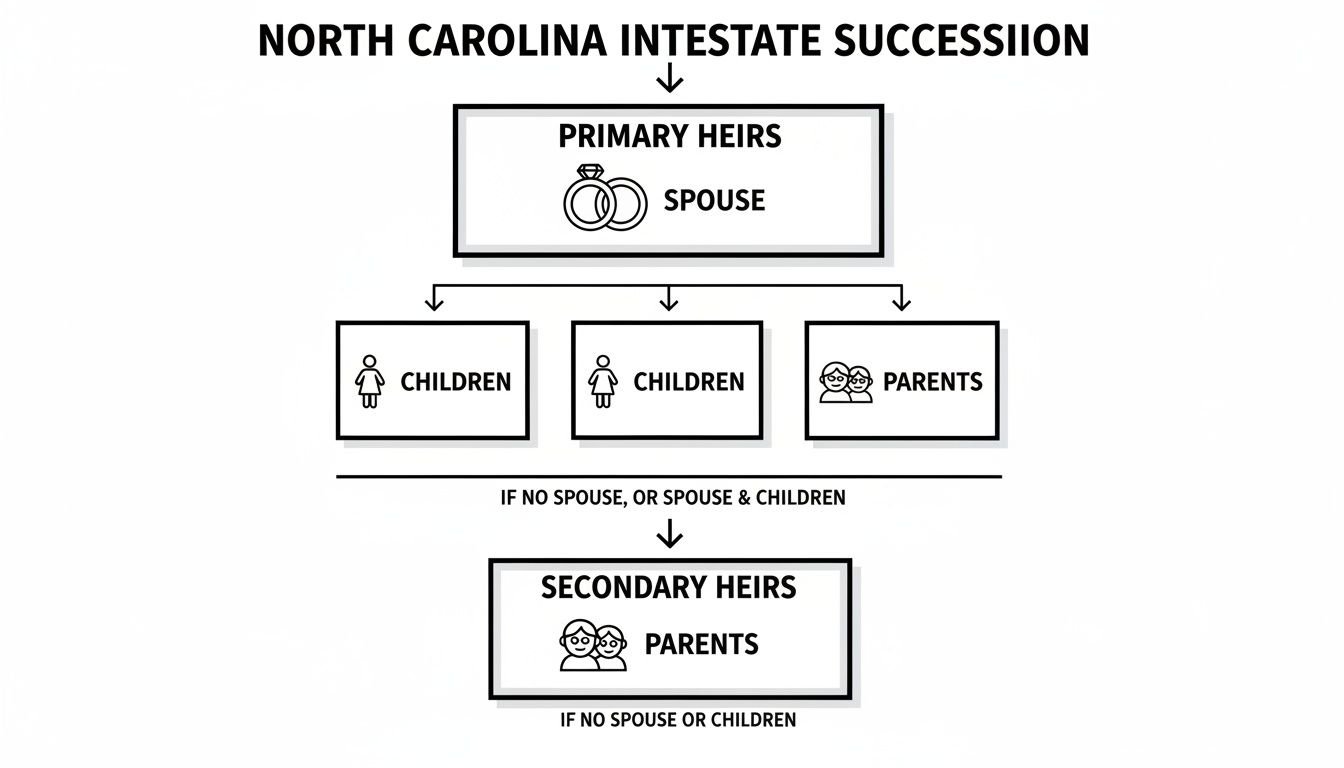
As you can see, the moment children enter the equation, the spouse's share changes dramatically, and other relatives like parents get pushed further down the line.
When Parents or Siblings Inherit
So, what happens if there are no kids or grandkids? The waterfall of assets flows to the next level: the parents of the person who passed away. This scenario also has a specific formula for splitting the estate with the surviving spouse.
If a spouse and the deceased’s parents are the only survivors, the spouse is entitled to the first $100,000 of personal property, plus one-half of the remaining balance of the estate. The surviving parent or parents inherit the other half.
Only when there is no surviving spouse, no children, and no parents do assets flow down to the deceased’s siblings and then to any nieces or nephews. If the search for relatives comes up empty, the estate "escheats"—meaning it goes directly to the state of North Carolina.
The rules for North Carolina intestate succession can blindside families. This is especially true when a spouse and two or more children are left behind. That spouse only inherits the first $60,000 of personal property plus a one-third share of the rest. This formula, laid out in N.C. Gen. Stat. § 29-14, applies to everything, including real estate like a family home in Spring Lake. You can learn more about these complex inheritance formulas and their legal basis.
Who Is Legally Excluded from Inheriting
It's just as important to know who gets left out. Intestate succession is built strictly on legal and blood relationships recognized by the state. Without a will, certain people have zero inheritance rights, no matter how close they were to the deceased.
Legally Excluded Individuals:
- Unmarried Partners: It doesn't matter how long you were together. An unmarried partner is not considered an heir and inherits nothing.
- Stepchildren: Unless they were legally adopted by the deceased, stepchildren have no legal claim to the estate.
- Foster Children: Like stepchildren, foster children are not considered legal heirs under these laws.
- Close Friends or Other Non-Relatives: The law doesn't recognize even the closest bonds with non-relatives.
This rigid structure is exactly why having a will is so critical. A will is your chance to override the state's default plan and make sure your assets go to the people you choose—whether that's a loyal partner, a beloved stepchild, or a lifelong friend. Without one, their exclusion is final.
Navigating the Intestate Probate Process
When someone passes away without a will, the family can't just divide up the property themselves. Instead, the estate has to go through a formal, court-supervised process called probate. Think of probate as the official rulebook the court uses to settle someone’s financial life. It’s how the system makes sure all debts are paid and what’s left goes to the right people under North Carolina's intestate succession laws.
The whole thing kicks off when a potential heir files paperwork with the local Clerk of Superior Court. For folks in our area, that means heading to the Cumberland County Clerk of Superior Court. Since there's no will to name an executor, the court appoints an administrator to take charge of the estate. This is usually a close family member who is now legally on the hook for handling everything that comes next.
The administrator's first big job is to create a complete list of everything the deceased owned—the house, bank accounts, cars, and even personal items. After everything is accounted for, the administrator has to track down creditors and use the estate's money to pay off all outstanding bills and final taxes. Only when every single debt is cleared can the remaining assets finally be distributed to the heirs.
Formal Probate vs. Simpler Alternatives
The good news is that not every estate has to endure the full, often lengthy and expensive, formal probate process. North Carolina law provides a couple of shortcuts for smaller estates, which can be a huge relief for grieving families. The main alternative is called Collection by Affidavit, sometimes known as a small estate affidavit.
This streamlined process is an option if the total value of the deceased’s personal property (everything except real estate), minus any debts on it, comes in at $20,000 or less. That number bumps up to $30,000 if the surviving spouse is the only heir. It allows the administrator to collect and distribute assets without all the court supervision that formal probate requires.
- Formal Probate: This is the full-blown court process for larger estates. It means more oversight, more detailed accounting, and a much longer timeline.
- Collection by Affidavit: A quicker, simpler path for small estates that fall under the state's value limits. It cuts down on the paperwork and court hearings significantly.
Which path you take boils down to the total value of the estate. It's critical for the administrator to get this calculation right. A mistake here can cause legal headaches and big delays.
Key Insight: The probate timeline is a major factor for heirs. While a simple Collection by Affidavit might wrap up in a few months, formal intestate probate often takes a year or more, especially if there are property disputes or difficulties locating assets.
The Timeline and Necessary Paperwork
To get probate started, you have to file a few key documents with the Clerk of Court. Having your ducks in a row from the beginning can make a world of difference. The person wanting to be administrator must file an application to get the process rolling and receive their official appointment from the court.
To get started at the Cumberland County Clerk of Superior Court, you'll typically need to bring:
- Application for Letters of Administration: This is the formal request to be appointed as the estate's administrator.
- Original Death Certificate: The official document proving the death.
- Preliminary Inventory: An initial list of the known assets and your best estimate of their value.
- Bond: This is basically an insurance policy that protects the heirs and creditors if the administrator makes a mistake or mishandles funds.
The probate timeline itself can be a real waiting game. You might want to read our guide on how long probate takes in North Carolina to get a better feel for what to expect. Delays are common, often popping up due to creditor claims, arguments between heirs, or the challenges of selling a house. For families dealing with an inherited property, this long wait can add a ton of financial and emotional stress, particularly if the house needs upkeep or has problems of its own.
How Inherited Real Estate Is Handled

When someone passes away in North Carolina without a will, the law splits their belongings into two piles. You’ve got personal property—cash, cars, furniture, you name it. Then you have real property, which is the land and the house itself, whether it's a family home in Hope Mills or a plot of land out in Raeford.
This split is a huge deal under North Carolina intestate succession. While an administrator is appointed to sort out the personal stuff, real estate plays by a different set of rules.
The moment the owner dies, the title to their real estate instantly and automatically passes to their heirs. This happens by operation of law. Probate simply confirms who the new owners are, but the transfer itself is immediate. It’s a point that trips a lot of people up, and it has some serious consequences.
Becoming Tenants in Common
When several heirs inherit a property, they don’t get to draw lines on a floor plan. Instead, the law makes them "tenants in common." This is a legal term you absolutely need to understand if you're in this boat.
Think of it this way: two siblings inherit their mom’s house in Fayetteville. They now each own an undivided 50% interest in the entire property. One can’t lock the other out, and both are on the hook for all the bills.
This setup can get complicated fast:
- Your Own Share: Each heir owns a distinct slice of the property. You can sell your share, take out a loan against it, or leave it to your own kids.
- Shared Headaches: Everyone is responsible for the mortgage, property taxes, insurance, and repairs. If one person doesn’t pay, the others have to cover for them or risk losing the house.
- No King of the Castle: One heir can’t just decide to sell the whole property. But here’s the kicker: any single heir can go to court and force a sale through a "partition proceeding."
This is where families get into trouble. What happens when one sibling wants to sell, another wants to rent it out, and a third needs a place to live? These disagreements are practically guaranteed, especially when everyone has different financial needs and lives in different places.
The Absentee Owner's Dilemma
Things get even trickier when you inherit a house you don't live near. Suddenly, you're an out-of-state owner of a property in Fayetteville that you never planned on having. Under North Carolina's intestate laws (found in Chapter 29 of the General Statutes), the state has a strict formula. For instance, if the person left a spouse and one child, the spouse gets the first $60,000 in personal property and half of everything else. The child gets the rest.
This happens all the time, leaving families saddled with a property that might have liens, need a new roof, or have other hidden problems.
For an out-of-state heir, a vacant house isn't just an empty building—it's a financial liability.
You’re now on the hook for securing the property, managing maintenance from hundreds of miles away, and trying to get on the same page with other heirs who are probably just as stressed as you are.
The problems pile up quick. Who’s going to mow the lawn? Who’s checking for burst pipes or squatters? These are the real-world headaches that make managing an inherited house a nightmare, pushing many to look for a quick and simple way out. If you're in this situation, understanding your options for a probate property sale is the most important thing you can do right now.
A Practical Solution for Your Inherited House

Wading through the rules of North Carolina intestate succession is a tough road. The probate process seems to drag on forever, surprise repair bills pop up, and the stress of looking after an empty house is more than most people bargain for. When you throw multiple heirs into the mix, even simple decisions can turn into complicated arguments.
What if you could just skip all that? There’s a way to sidestep the headaches and get you and your family to the finish line without months of waiting and wondering.
Selling your inherited house directly to a local cash buyer like DIL Group Home Buyers is that straightforward path. We specialize in buying properties caught up in probate, giving heirs a clean, fast way out when they need it most.
How a Cash Sale Solves Intestate Problems
Think about it: what if you could resolve every single problem tied to an inherited property in one simple transaction? A cash sale takes all the legal knots and financial burdens of intestate succession and turns them into a simple payout.
Here’s how it cuts through the red tape:
- No Repairs Needed. We buy every house “as-is.” That means you don’t spend a penny on a leaky roof, an outdated kitchen, or anything else. We take care of all that after we buy it.
- No Realtor Commissions. You’re selling straight to us. There are no agents involved, so there are no hefty commission fees eating into your inheritance.
- No Hidden Fees or Closing Costs. The cash offer we give you is the cash you get. We cover all the standard closing costs ourselves. No surprises.
- A Guaranteed, Fast Closing. Traditional home sales can fall apart at the last minute. Our cash offers are solid. You tell us when you want to close—often in just a few weeks, not months.
Selling for cash means you can settle the estate, pay off any lingering debts, and get the money into the hands of all the heirs. It ends the arguments over the property’s future and lets everyone move on.
A Real-World Example in Fayetteville
We recently worked with a family that found themselves in this exact spot. Three siblings inherited their dad's house in Fayetteville, but he hadn't left a will. Two of them lived out of state, and none had the time or extra cash to deal with the home, which needed a lot of work.
They were staring down a long probate process and already disagreeing on what to do. One wanted to fix it up and rent it out, another wanted to list it with an agent, and the third just wanted it all to be over.
Instead of letting the house sit empty and collect bills, they gave us a call. We gave them a fair, no-obligation cash offer in about a day. They accepted, and we closed on a date that worked for them. Just like that, the deal was done.
They completely avoided months of stress, repair costs, and the threat of legal fees from a forced partition sale. They got their cash, settled the estate, and finally got the closure they needed during a tough time.
Common Questions About NC Intestate Succession
Once you get a handle on the basics of North Carolina’s intestate laws, a whole new set of questions usually pops up. These laws are black and white, which can create some really confusing and tough situations for families. We hear these questions all the time, so let's walk through some clear answers to help you navigate the practical side of an inheritance in Cumberland County.
Getting the details right is everything, especially when a house is part of the estate. One small misunderstanding can stall the whole process and create a lot of financial stress.
What Happens If a Child Is Born After the Parent Dies?
It’s a situation most people never think about, but the law has a plan for it. A child who was conceived before a parent passed away but born after is called a posthumous child.
The law is simple and fair here: a posthumous child has the exact same inheritance rights as any child born during the parent's lifetime. They are treated as if they were already born, and the estate is divided to give them their full, equal share.
Do Stepchildren or Foster Children Inherit Anything Without a Will?
This is a really tough one, and it often leads to a lot of heartache. When there's no will, the answer is a hard no. Intestate succession is built strictly on biological and legal family ties.
Stepchildren and foster children, no matter how close the bond was, have no automatic inheritance rights. The law gives priority only to biological children and children who were legally adopted by the person who passed away.
If you want to leave something to a stepchild or foster child, you must name them as a beneficiary in a will. Without that legal document, they are left with no legal claim to the estate.
What About Children Born Outside of Marriage?
This used to be a very tangled area of the law, but recent updates have made things much clearer. A child born to unwed parents absolutely can inherit from their father's estate, but only if paternity has been legally established.
This can happen in a few different ways:
- Court Action: Paternity was already determined in a court case, like for child support.
- Legal Legitimation: The father went through a formal court process to make the child a legal heir.
- Paternity Acknowledgment: The father signed a formal, written document acknowledging he is the parent. For deaths happening on or after December 1, 2025, being named on the birth certificate through an affidavit of parentage is often enough, which simplifies things greatly.
This is a huge improvement, as it protects children from being accidentally cut out of an inheritance just because their parents never married or missed a small filing deadline.
How Are Debts and Taxes Handled in an Intestate Estate?
Here’s the golden rule of any estate settlement: debts get paid first. Before any heir gets a dime or the keys to a house, the estate has to pay off all the deceased's financial obligations.
The administrator appointed by the court is in charge of this. Their job is to:
- Find and officially notify all known creditors.
- Pay off all legitimate debts, like credit card balances, medical bills, and outstanding loans.
- File the final income tax returns and pay any taxes owed by the deceased or the estate.
- Pay for the administrative costs of the probate process itself.
Only when all those bills are settled can the remaining property and money be given to the heirs. It's also important to know if inheritance tax is a factor, which you can learn about in our guide on whether North Carolina has an inheritance tax.
What If No Living Relatives Can Be Found?
This is rare, but it does happen. The law casts a wide net for potential heirs, going from the immediate family all the way out to aunts, uncles, and distant cousins. The administrator has to make a serious effort to find any living relatives.
But if that search turns up empty and there are no legal heirs to be found, the estate "escheats" to the state.
Escheat: This is just a legal term for when property reverts back to the government. In this case, the assets are turned over to the state of North Carolina and usually go toward the public education fund.
The intestate rules, found in Chapter 29 of the state statutes, try to balance the rights of all potential family members. For instance, the spousal allowance—the amount a surviving spouse gets before other assets are split with children—is now standardized at $60,000 in most common scenarios. If no spouse or relatives can be located, the estate escheats, but court data shows this happens in less than 0.5% of cases each year. You can dig deeper into the official rules by reviewing the North Carolina General Statutes.
Trying to manage an inherited property on top of grieving a loved one is incredibly difficult. If you're dealing with an intestate estate in Fayetteville, Hope Mills, or nearby and just want to be done with the long, stressful probate process, DIL Group Buyers can help. We give you a simple, guaranteed cash offer for the house, letting you sell it "as-is" with no repairs, commissions, or closing costs. Contact us today to get a fair offer and close on your schedule. https://dilgrouphomebuyers.com