
When you’re tasked with selling a hoarder house, the situation can feel impossible. But you have two clear paths forward: the long, expensive traditional route or a fast, simple 'as-is' sale to a cash buyer. The right choice really comes down to what you have more of—time and money, or the need for speed and certainty.
Facing the Reality of a Hoarder House Sale
First, know that you aren't alone in this. It’s a situation far more common than people think, and feeling overwhelmed is completely normal. Hoarding disorder actually impacts 2% to 6% of the U.S. population. That means millions of families are dealing with the exact same clutter and hazards you might be looking at right now.
Here in North Carolina, we see it all the time in communities across Cumberland County, from Fayetteville to Hope Mills. Properties get buried under years of accumulation, which scares off typical buyers and can slash a home's value by tens of thousands of dollars. It’s a real challenge, but one you can absolutely overcome.
Your Two Paths Forward
At the end of the day, you have to choose one of two strategies. Each comes with its own timeline, costs, and amount of work you'll have to put in.
To make it easier to see the difference, here’s a quick comparison of your two main options.
Two Paths for Selling a Hoarder House
| Factor | Traditional Sale (Cleanout First) | As-Is Cash Sale (No Cleanout) |
|---|---|---|
| Timeline | 3-9+ months | 7-30 days |
| Upfront Cost | $5,000 – $25,000+ for cleanout, repairs, commissions | $0 |
| Your Effort | Extremely high (managing cleanout, repairs, showings) | Minimal (a few phone calls and signing papers) |
| Certainty | Low (sale can fall through, timeline is unpredictable) | High (guaranteed closing date and price) |
| Final Price | Potentially higher, but eaten into by costs and fees | Lower, but it's a net number with no deductions |
As you can see, the path you choose has a massive impact on your time, money, and stress levels. There's no single "right" answer—it's about what's right for your specific situation.
Here's a breakdown of what each path looks like in the real world:
The Traditional Sale: This is the "fix it up" route. You’ll have to coordinate a massive cleanout, deep clean the entire house, pay for all the necessary repairs, and then list it with a real estate agent. It demands a huge investment of your time and cash upfront, all in the hopes of getting the highest possible price on the open market.
The 'As-Is' Cash Sale: This is the "walk away" route. You sell the house exactly as it is, junk and all, directly to a cash home buyer like us. No cleaning. No repairs. No agent commissions. You trade a potentially lower price for a guaranteed sale that is fast and completely hassle-free.
This decision boils down to whether you want to invest your own resources or just be done with the property. This flowchart lays it out perfectly.
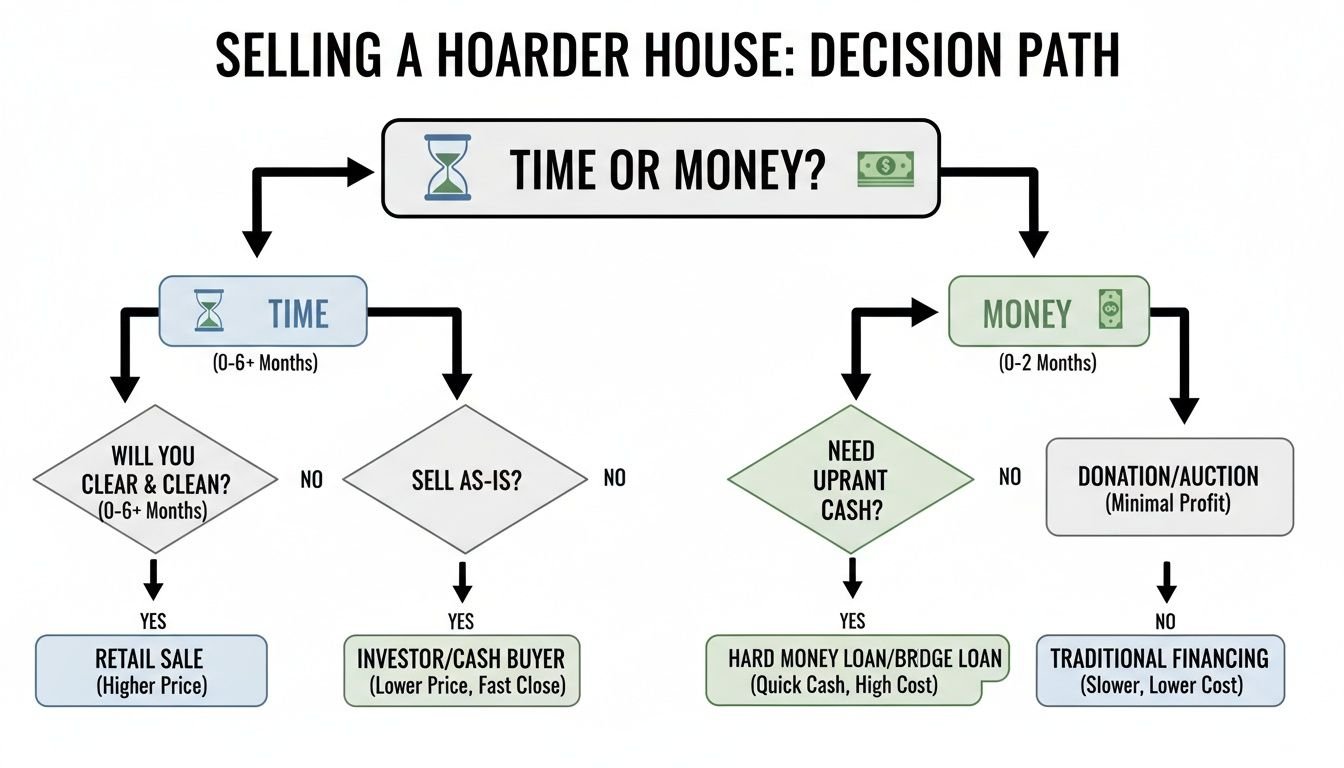
Whether you inherited a home packed with a relative’s belongings or you're a military family with a sudden PCS move, figuring out which route to take is your first step. Keep in mind that the clutter often hides bigger issues. Our guide on selling a house with code violations is a good resource, since these problems pop up all the time in hoarding situations.
Getting Real About the Property's Condition
Before you can even think about selling a hoarder house, you have to get a clear, honest picture of what you're up against. Walking into the property can be a shock to the system, but you need to push past the initial chaos and put on your investigator hat.
This isn’t about judging the clutter. It's about getting the facts on the building underneath it all. This is how you turn that overwhelming feeling into a solid plan.
Safety First. Always.
I can't stress this enough: never walk into a hoarder house unprepared. These environments are genuinely dangerous, and your health has to be the number one priority. The clutter itself can shift and fall, but the real threats are often the ones you can't see.
Before you even open the door, get your safety gear together. This is not optional.
- Protective Gear: At a minimum, you need an N95 or P100 respirator mask. This protects your lungs from mold spores, dust, and bacteria floating in the air. Also, grab heavy-duty gloves, solid closed-toe boots, and wear long sleeves to guard against cuts and contact with who-knows-what.
- Ventilation: If it's safe to do so, crack open some windows and doors for at least 30 minutes before you start your walkthrough. Stale, contaminated air is a major risk.
- Lighting: Don't count on the power being on or reliable. Bring a powerful flashlight or a headlamp to see into dark corners, closets, and basements where nasty surprises tend to hide.
- A Buddy System: Never go in alone. Bring someone with you for safety and to be a second set of eyes. It's also smart to tell another person where you're going and when to expect a call saying you're done.
This isn't just friendly advice. The risk of injury from unstable structures, biohazards, or pest-borne diseases is very real. You have to protect yourself.
Look Past the Piles to the Real Problems
Once you're safely inside, your job is to see through the clutter to the house itself. You're hunting for the big red flags that kill a property's value and structural health.
Focus on these key areas:
- Foundation and Walls: Are there big, visible cracks in the foundation or walls? Do any walls look like they're bowing inward or outward? These are signs of serious, expensive structural damage.
- Floors and Ceilings: Look for sagging. A dipping ceiling or a spongy floor can mean water damage from above or simply that the sheer weight of the junk has compromised the home's frame. Be incredibly careful where you step.
- Roof and Water Intrusion: Water stains on the ceiling are a dead giveaway for a leaky roof. A leak almost always leads to hidden mold and rotted wood, which are huge costs to fix.
- Major Systems (HVAC, Electrical, Plumbing): Try to get a look at the furnace, electrical panel, and any visible pipes. Do you see chewed or frayed wiring? Signs of leaks? Often, these systems are ancient and don't meet modern safety codes, meaning a full replacement is on the table.
Spotting Biohazards and Pests
Hoarding situations create a perfect breeding ground for things that can make a house uninhabitable without professional help. You need to know what you're dealing with, especially if you plan to sell the house as-is to a cash buyer who will bake these cleanup costs into their offer.
Keep an eye out for these common hazards:
- Mold: Look for visible black, green, or white patches. Even if you can't see it, a strong musty or damp smell is a huge red flag that mold is hiding in the walls.
- Pest Infestations: Droppings, chewed-up materials, and nests are clear evidence of rodents. Cockroach and bed bug infestations are also common and require a professional exterminator.
- Waste and Ammonia: In severe cases, you may find animal or even human waste. This creates dangerous bacteria and high ammonia levels that require a specialized biohazard crew to handle safely.
Your Phone is Your Best Friend: Document Everything
Take way more photos than you think you need. These pictures aren't for Zillow; they're your private record of the home's true condition.
Get wide shots of every room to capture the sheer volume of stuff. Then, zoom in on every single problem you find—every crack, stain, pile of droppings, and damaged area.
This visual evidence is gold. It will be your go-to resource when you start calculating costs or when you need to explain the situation to a professional home buyer. It gives them a clear, objective view of the property without anyone having to make multiple trips into a hazardous site. This documentation is your reality check.
Calculating the True Cost of Your Options

When you're figuring out how to sell a hoarder house, the final sale price isn't the whole story. Not even close. What really matters is the net profit—the cash that actually ends up in your bank account after every single expense is paid.
Let's get down to brass tacks and look at the real numbers for your two main paths.
Going the traditional route means you're signing up for a massive restoration project before a single buyer walks through the door. This path demands a huge upfront cash investment and a ton of your personal time. Selling "as-is" to a cash buyer, on the other hand, is all about avoiding those costs and the headaches that come with them.
Itemizing the Cleanout Path Expenses
If you decide to clean, repair, and list the property yourself, you’re not just tidying up. The costs can be genuinely shocking and have a nasty habit of spiraling way beyond what you first expected.
Let’s use a hypothetical 1,500-square-foot house right here in Fayetteville to see just how fast this adds up.
Hoarding Cleanup Services
This is your first, and often biggest, bill. You absolutely need specialized hoarding cleanup crews for safety and efficiency. Their rates usually run from $1.50 to $2.50 per square foot—and that’s just for the labor to sort and bag everything. Hauling and disposal are extra.
For our Fayetteville example, a 1,500 sq. ft. home would cost $2,250 to $3,750 just for the crew to bag the contents. This is your starting point. The worse the hoard, the higher the cost.
Dumpster Rentals and Hauling Fees
You're going to need several big dumpsters. A single 40-yard dumpster can run $500 to $800 to rent, and a severe hoarder house can easily fill three, four, or even more.
- 3 Dumpsters x $650 (average) = $1,950
Pest Control and Biohazard Remediation
Pest infestations are practically a given. A full home fumigation isn't cheap, often running $1,000 to $3,000. And if there are biohazards like animal waste, mold, or human fluids, you’ll need a specialized biohazard team. Expect to pay them an additional $2,000 to $5,000, sometimes much more.
Uncovering Hidden Repair Costs
Once the clutter is finally gone, you get to see what it was hiding. This is where the budget can truly explode. These aren't minor cosmetic touch-ups. We're talking about major system failures and structural problems that have to be fixed to pass a bank inspection for a buyer's mortgage.
Common repairs we see in hoarder houses include:
- Full HVAC Replacement: If the system is ancient, damaged, or clogged with contaminants. Cost: $7,000 – $15,000
- Electrical Rewiring: Frayed wires from pests and overloaded, outdated panels are a serious fire hazard. Cost: $5,000 – $12,000
- Plumbing Repairs or Repiping: Hidden leaks cause rot, and old pipes might need to be completely replaced. Cost: $4,000 – $10,000
- Drywall and Flooring Replacement: Stains, deep-set odors, and water damage often mean you have to gut rooms to the studs. Cost: $8,000 – $20,000+
Hoarding situations affect 2-6% of Americans, and they can absolutely tank a property's value. Here in Cumberland County, we frequently work with families who've inherited a property and are suddenly facing these overwhelming costs. You can find more detailed statistics on hoarded property sales and see the impact for yourself.
The 'Sell As-Is' Financial Advantage
Now, let's compare all that to selling your house to a cash home buyer. This path has one simple, powerful financial benefit: $0 upfront cost to you.
A cash buyer’s offer is a net figure. We do the math for you. We calculate the home’s After-Repair Value (ARV) and then subtract all those costs for cleanup, hauling, and repairs we just went over. We take on the entire financial risk and logistical nightmare. You just walk away.
| Expense Category | Traditional Sale (Your Cost) | 'As-Is' Cash Sale (Buyer's Cost) |
|---|---|---|
| Hoarding Cleanup | $2,250 – $3,750 | $0 |
| Dumpster/Hauling | $1,950+ | $0 |
| Pest Control | $1,000 – $3,000 | $0 |
| Major Repairs | $24,000 – $57,000+ | $0 |
| Realtor Commissions (6%) | $9,000 (on a $150k sale) | $0 |
| Total Upfront Cost for You | $38,200 – $74,700+ | $0 |
Yes, a cash offer will be lower than what a fully renovated home might sell for. But you walk away with a check in your hand without spending a dime or a single minute on the cleanup. For many people, avoiding tens of thousands in out-of-pocket costs and months of stress makes selling as-is the smartest financial move.
Know the Legal Side of Selling a Hoarder House in NC

Selling a property with a ton of problems comes with a few legal questions. Don't worry, it's not as scary as it sounds. When you sell a hoarder house, you just need to be smart about your legal duties, especially when it comes to telling a buyer what’s wrong with the place.
Here in North Carolina, the law gives you a choice. You can fill out a Residential Property Disclosure Statement, which is a long form where you list every problem you know about. Or, you can check the "No Representation" box.
Checking "No Representation" means you’re selling the house "as-is" and not making any promises about its condition. A lot of people think this is the easy button, but it won't save you if you deliberately hide a major problem. Being straight with people is always the best move.
Disclose, Disclose, Disclose
Telling a buyer everything you know, even the bad stuff, builds trust. More importantly, it protects you from getting sued down the road. Even if you're selling "as-is," be upfront. If the roof leaks, the foundation is cracked, or the HVAC is shot, just say so.
This is especially true if the house is in such bad shape it could be condemned. You can learn more about what happens when a house is condemned here. Being totally transparent lets a buyer know exactly what they’re getting into and slashes your liability after the sale is done.
Selling a house 'as-is' doesn't give you a free pass to lie. You are still legally required to tell a buyer about any major hidden problems you know of, especially if they are a health or safety risk.
Common Legal Headaches with Hoarder Houses
Beyond the basic disclosures, hoarder houses often have a mess of legal issues that can stop a regular sale in its tracks. If you inherited the property, you might be just now discovering these problems.
We see these all the time:
- Property Liens: These are legal claims against the house for unpaid bills. It could be from unpaid property taxes, a contractor who never got paid (a mechanic's lien), or even a court judgment.
- Cumberland County Code Violations: A hoarder property can rack up a long list of citations from the city. Think overgrown yards, structural dangers, or being labeled an unsafe dwelling. These violations come with fines that have to be paid.
- Title Problems on Inherited Homes: When a house is passed down, the ownership record (the title) isn't always clean. Other heirs might have a claim, or the paperwork was never filed correctly. This creates a "clouded title" and you can't sell the house until it's fixed.
You have to sort all this out before you can sell to a traditional buyer. That process can take months and cost a small fortune in legal fees.
How a Cash Buyer Makes the Legal Stuff Disappear
This is where a real, professional cash home buyer becomes your best friend. Instead of leaving you to drown in that legal mess, we take it all on as part of the deal. It’s a huge weight off your shoulders, especially if you’re trying to manage this from out of state.
Our experienced team handles everything:
- We work directly with a closing attorney to get all the sale documents ready. No guesswork for you.
- Our legal pros dig in to research and fix any title issues. We clear the liens, settle the code violations, and sort out ownership disputes so the title is clean.
- We buy the house knowing full well about all its problems and legal baggage. The entire burden becomes ours, not yours.
Working with an experienced cash buyer like us means you skip months of legal drama and expense. You don't have to hire an attorney to fight liens or spend your days at the courthouse dealing with violations. We handle it all, so you can walk away cleanly with cash in your pocket.
Working with a Cash Home Buyer

If the thought of managing a massive cleanout and repair project is just too much, selling to a cash home buyer is your most direct path forward. This option was practically designed for situations like this. It gets rid of the biggest headaches so you can close this chapter and move on.
For most folks, selling a hoarder house "as-is" to a cash buyer is the simplest, cleanest way to handle it. The whole process is fast and transparent. You make one phone call, and we take care of the rest.
This route is a lifeline for people in tough spots. We’ve seen U.S. foreclosure filings rise as the economy puts more pressure on families. If you're a homeowner in areas like Dunn, Parkton, or Stedman and you’re facing a job loss or bankruptcy, listing a hoarder house on the open market is a gamble that rarely pays off. A cash sale gives you a definite solution, right now. You can see more data on how economic strain impacts homeowners to understand why this is a real concern for so many.
What Our Process Actually Looks Like
Working with a professional cash home buyer is refreshingly straightforward. Forget about showings, open houses, and getting the house "market-ready." It all starts with a single, confidential phone call.
When you reach out, we’ll ask a few basic questions. Don't worry if you don't have all the answers, but this info helps us get started:
- The property address
- Your connection to the home (are you the owner, an heir?)
- Any big problems you know about (like a leaky roof or foundation issues)
- When you’d ideally like to sell by
Next, we schedule a quick walkthrough. This isn’t a formal inspection where we nitpick everything. We’re just there to see the layout and the home’s overall structure so we can make you our best, most accurate offer. We have seen it all, and our team is there to evaluate the property, not the possessions inside it.
A good cash buyer will never pressure you or make you feel judged. Our job is to offer a real solution, and that begins with treating you with respect and understanding from start to finish.
The 4 Big Advantages of a Cash Sale
Selling a hoarder house to an investor gives you four key advantages that you just can't get with a traditional sale. It’s about more than just speed—it’s about giving you complete peace of mind.
- No Cleaning or Repairs Needed. This is the number one reason people call us. You take what you want and leave the rest. Trash, old furniture, junk… it all becomes our problem to deal with after the sale.
- A Guaranteed Cash Offer. Within 24-48 hours of our walkthrough, you'll have a firm, no-obligation cash offer. This isn't some ballpark guess. It’s the guaranteed price you'll get at closing.
- Zero Commissions or Hidden Fees. A typical sale can cost you 6% in realtor commissions alone, not to mention other fees. With us, you pay zero commissions, and we usually cover all the closing costs. The offer you accept is the money you walk away with.
- You Set the Timeline. Need to close in seven days to stop a foreclosure? We can make that happen. Need a few weeks to sort through family items? That’s fine, too. You pick the closing date that works for you.
These four pillars offer an immediate exit from a stressful, overwhelming situation. Whether you're dealing with an urgent military PCS from Fayetteville or settling an inherited estate from out of state, this is your clear path to a final resolution. To see exactly how we work, our guide on what a cash home buyer does breaks it all down for you.
Common Questions About Selling a Hoarder House in NC
You've seen the options, but you still have questions. That's completely expected. Selling a hoarder house is a big deal, and concerns about money, time, and the sheer effort involved are top of mind for everyone in this situation.
We get these questions all the time from homeowners right here in North Carolina. Let's get you the straight answers you need to move forward with confidence.
Will I Get a Fair Price If I Sell My Hoarder House As-Is?
This is always the first question, and for good reason. You want a fair deal. When you sell a hoarder house "as-is" for cash, the definition of a "fair" price is different from what you see on Zillow.
A cash offer is based on the home's market value after we factor in the massive costs we have to take on. We're talking thousands for the hoarding cleanup, multiple dumpsters, major repairs, and all the holding costs. We also absorb 100% of the risk for what we might find buried under all the stuff.
Your cash offer is your net profit. It’s the final number, paid directly to you.
A traditional sale might list for a higher price, but that number gets eaten up fast by:
- 6% in Realtor commissions
- Cleanup and junk hauling fees
- Thousands (or tens of thousands) in repairs
- Months of ongoing mortgage, tax, and insurance payments
The cash offer cuts through all that. It's the price for speed, certainty, and walking away without spending another dime. It's an immediate solution that puts cash in your pocket, period.
Do I Have to Clean Out Personal Items Before Selling?
Here’s the part that brings the most relief: NO. When you sell to a cash buyer like us, you only take what you want to keep. Just grab the sentimental items, photos, or anything of value to you.
Leave everything else. The old furniture, trash, old clothes, years of clutter—it all becomes our problem to deal with. We handle the entire cleanout ourselves, after you’ve been paid and have moved on.
This is a game-changer. You don't have to lift a finger or spend a single weekend sorting through painful memories. For anyone inheriting a property and feeling completely overwhelmed, this benefit is priceless.
It's especially crucial for out-of-state owners who have no realistic way to manage a massive cleanout from hundreds of miles away.
How Fast Can I Realistically Sell a Hoarder House for Cash?
Speed is the name of the game. A cash sale is designed for efficiency, giving you a clear, predictable path from start to finish.
Here’s what our timeline looks like:
- Phone Call & Walkthrough: Give us a call, and we can usually schedule a quick property visit within 24 hours. This isn't a nit-picky inspection; it's just a fast assessment.
- Get Your Offer: We'll have a firm, no-obligation cash offer in your hands within 24-48 hours of seeing the house.
- Closing: You accept? We can close the deal in as little as 7-14 days. Need more time to figure things out? No problem. You pick the closing date that works for you.
Compare that to the 3-6+ months it takes to clean, repair, list, and finally close a traditional sale. If you're facing foreclosure or an urgent PCS, that speed isn't just a convenience—it's a lifeline.
What if the House Has Code Violations or Liens on It?
This is another huge source of stress, but it's a situation we handle all the time. It’s actually very common for hoarder properties to have financial or legal strings attached.
As experienced investors, we specialize in buying homes with these exact problems. We’re not scared off by:
- City or county code violations
- Unpaid property tax liens
- Mechanic's liens
- HOA liens and fines
- Clouded titles or inheritance issues
Instead of you having to untangle that legal mess, our team takes it on. We work directly with attorneys and title companies to resolve the liens and clear up any violations as part of the closing process.
You get to sell the property and walk away completely free from all that baggage. You can finally close this chapter and move on.
If you're ready to bypass the stress, cost, and uncertainty of a traditional sale, DIL Group Home Buyers is here to help. We buy houses in any condition across Cumberland County and surrounding areas, providing a guaranteed cash offer so you can move forward with confidence. Get your no-obligation cash offer today.