
So, you've decided to sell your rental property, but there's a catch: you have a tenant. This is a common fork in the road for landlords, and it introduces a whole new set of legal and practical hurdles to the selling process.
You're not just selling a building; you're selling a home someone is currently living in. This means you have a critical decision to make right from the start.
The Landlord's Crossroads: Selling a Tenanted Property
Selling a house is already a major project. But when you add a tenant to the mix, especially here in North Carolina, the complexity level skyrockets. Whether you're a local landlord in Fayetteville or managing the property from another state, figuring out your strategy is the absolute first step.
Let's be honest, the traditional real estate market loves vacant, perfectly staged homes. Buyers want to walk in and picture their own couch in the living room, which is tough to do when they’re stepping around someone else’s life. The sales data backs this up.
How a Tenant Impacts Your Sale
Having a tenant automatically shrinks your pool of potential buyers. Most people shopping for a home are looking for a primary residence they can move into right away. A property with an active lease? That's an immediate deal-breaker for them.
This leaves you marketing almost exclusively to other investors who are open to inheriting a tenancy.
Just look at the numbers. Data from early 2020 showed that tenant-occupied properties had an estimated 40% failure rate on the market. That's nearly double the rate for homes sold by the owner living in them. It’s not impossible to sell, but you absolutely have to be smart about it.
Your entire selling experience will hinge on how you approach this. A cooperative tenant who keeps the place clean and allows showings can be a huge plus. A difficult one, on the other hand, can actively sabotage your sale and scare off serious buyers.
To help you get your bearings, let's break down the three main paths you can take. Each one comes with its own set of trade-offs between profit, speed, and overall hassle.
Your Three Options for Selling a Tenant-Occupied Home
This table gives you a quick snapshot of the strategies landlords typically use. Consider it a starting point to figure out which path aligns with your goals.
| Strategy | Best For | Primary Challenge |
|---|---|---|
| Sell with Tenant in Place | Landlords who want to keep rental income flowing and aren't in a rush to sell. | Attracting a much smaller pool of buyers (mostly other investors) and coordinating showings. |
| Negotiate Tenant's Departure | Sellers aiming for top dollar on the traditional market by presenting a vacant home. | Requires a financial payout ("cash for keys") and the tenant's willing cooperation. |
| Sell Directly to a Cash Buyer | Landlords who prioritize speed, certainty, and avoiding all tenant-related hassles. | The offer may be less than top market value, but the sale is "as-is" and guaranteed. |
Choosing the right option really comes down to what you value most. Are you chasing the highest possible price, or is a fast, guaranteed, stress-free closing more important?
There’s no single right answer, but understanding the pros and cons of each path is the key to a successful sale. And remember, complications like what to do with a tenant's belongings if they leave unexpectedly can add another layer to this. If you find yourself in that situation, our guide on handling abandoned tenant property in North Carolina can be a real lifesaver.
Know the Law: North Carolina Tenant Rights and Your Lease
Before you even think about putting a "For Sale" sign in the yard, you've got to get your legal ducks in a row. Selling a house with a tenant isn't just a simple property sale; it's a legal dance governed by North Carolina's landlord-tenant laws. One wrong step here can land you in a world of hurt with costly delays and ugly disputes.
Let's start with the single most important rule you need to understand: the lease survives the sale. That lease agreement is a binding contract tied to the property, not to you as the owner. When you sell, the new owner steps into your shoes as the landlord and inherits that lease, terms and all.
How Your Lease Type Shapes the Sale
The kind of lease you have with your tenant is going to dictate your entire game plan. In North Carolina, it usually boils down to one of two types, and they couldn't be more different when it's time to sell.
- Fixed-Term Leases: This is your typical one-year lease. If your tenant is in the middle of a fixed term, you can't just kick them out because you want to sell. The new owner must honor that lease until the last day. This is a big deal because it often shrinks your pool of potential buyers to investors who are cool with inheriting a tenant.
- Month-to-Month Tenancies: Here’s where you have a bit more wiggle room. If your tenant is on a month-to-month agreement, you can end the tenancy without giving a specific reason. But you still have to give proper written notice. In North Carolina, the law requires a minimum of seven days' notice before the end of the rental period (which is usually the end of the month).
Always, always go back and read your specific lease agreement. If you promised your tenant 30 or 60 days' notice in the contract, that's what you're legally stuck with. The terms in your lease will always override the state's minimums if they offer the tenant more protection.
The Bottom Line: You cannot evict a tenant in North Carolina just to sell your house. The desire to sell isn't considered a legal "just cause" for breaking a fixed-term lease. You either have to wait for the lease to expire, convince the tenant to accept a buyout, or sell to a buyer who will take on the lease.
Getting In the Door: Notice for Showings and Inspections
Remember, your tenants have a legal right to "quiet enjoyment" of their home. That means you can't just waltz in with a real estate agent and a parade of strangers whenever you feel like it.
While North Carolina law doesn't nail down a specific number of hours like some states do, it does require you to provide "reasonable notice."
In the real world, everyone takes this to mean a minimum of 24 hours written notice. This note should be crystal clear about why you need to enter (a showing, an inspection, photos, etc.) and when you plan to be there.
Trying to strong-arm your way in without proper notice is a fast track to a hostile relationship and potential legal trouble. The smart move is to work with your tenant. Try to set up a predictable schedule for showings—maybe Tuesdays and Saturdays, for example. This makes life easier for everyone and goes a long way toward getting their cooperation. A little proactive communication is your best friend when selling a house with a tenant inside.
Choosing Your Path to a Successful Sale
Once you have a solid handle on your legal responsibilities, it’s time to pick a game plan. Selling a property with tenants isn't a one-size-fits-all deal; your strategy depends on your goals, how fast you need to sell, and how hands-on you want to be.
The path you choose will define everything that comes next, from the type of buyer you attract to how quickly you can get to the closing table.
There are really three ways to approach this. Let's break them down so you can figure out which one makes the most sense for your situation.
Option 1: Keep the Tenant and Sell to an Investor
Honestly, the most direct route is often just selling the property with your tenant still living there. What might seem like a hurdle can actually be your biggest selling point.
Think about it from another investor's perspective: a good, paying tenant is gold. It means instant cash flow from the day they take over, with none of the hassle of finding and vetting someone new. This is the perfect play if you want to keep that rent money coming in during the sale and you're not in a huge rush.
This is more common than you might think. Recent data shows that about three-quarters of buy-to-let sales happened with tenants already in place, simply passing from one landlord to another. What’s really interesting is that in half of those deals, the tenants chose to stay even when rents went up. They were more worried about finding another place in a tough market. You can read more about this trend over on the Buy Association website.
Of course, the type of lease you have matters. This quick guide breaks down the difference between a fixed-term and a month-to-month lease when you're selling.
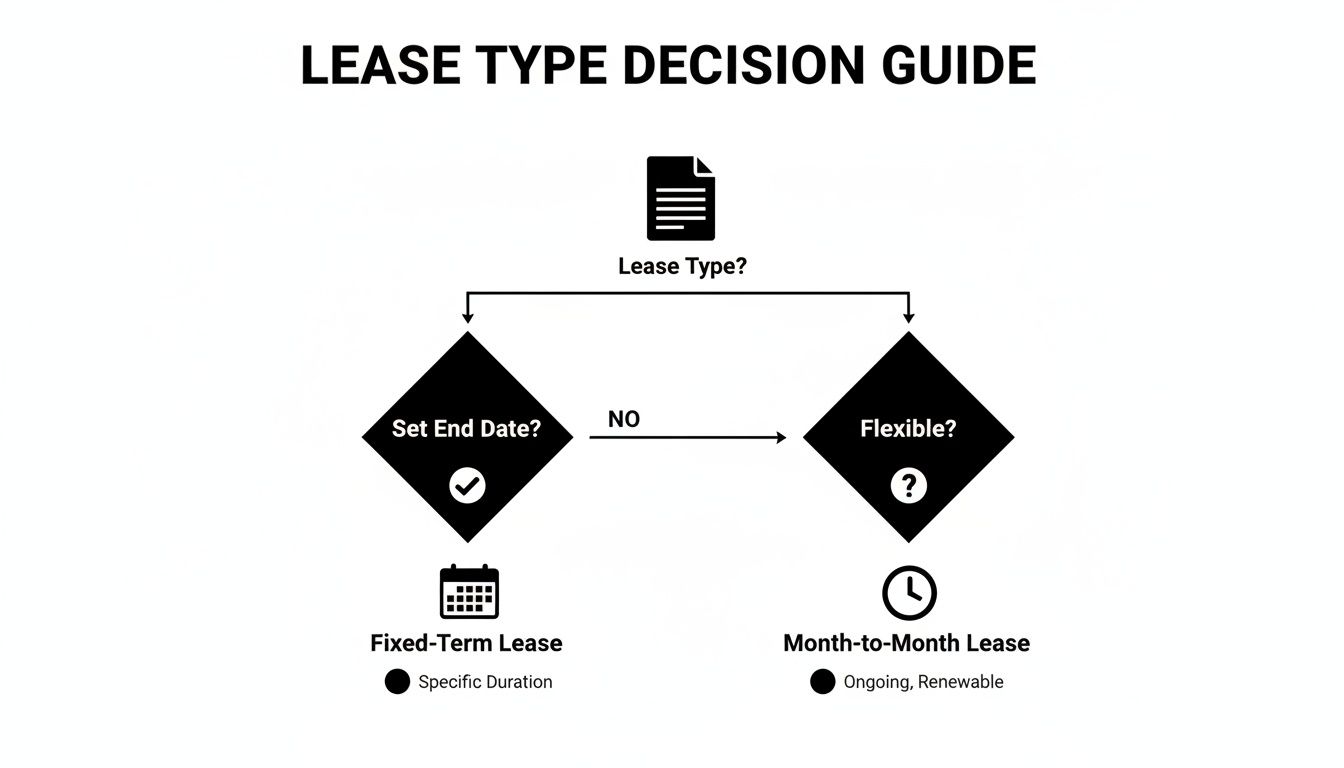
As you can see, a fixed-term lease locks the new owner into the existing agreement, which offers stability but less flexibility.
Option 2: Negotiate a Tenant Buyout
What if you want to sell on the open market to a regular homebuyer? To do that, you'll need the property to be empty. This is where a "cash for keys" agreement, or tenant buyout, comes in.
It's exactly what it sounds like: you offer your tenant a financial incentive to end their lease early and move out peacefully.
A well-handled "cash for keys" deal is a true win-win. Your tenant gets cash to help with their move, and you get a vacant property you can properly clean, stage, and show to anyone, which will almost always get you a better price.
The buyout amount is up for negotiation, but a fair offer usually covers these bases:
- Their full security deposit back (assuming no damage, of course).
- Enough to cover the first month's rent and a new security deposit elsewhere.
- Help with the actual moving costs.
Make sure you get this agreement in writing. It needs to be signed by everyone and clearly spell out the move-out date and the exact terms of the deal.
Option 3: Sell Directly to a Cash Home Buyer
For landlords who just want this done—fast, simple, and with zero drama—selling to a cash home buyer is hands-down the best option. You sidestep the entire traditional real estate market and all its headaches.
Companies like ours buy properties "as-is." That means you don't lift a finger. No repairs, no cleaning, no staging. Even better, we handle the tenant situation for you. We buy the property with the tenant and their lease still in place and take over all the landlord duties from day one. You can learn more about what an as-is home sale entails in our guide.
This is the perfect exit strategy if you want to avoid tough negotiations with your tenant, skip the endless showings, and eliminate the risk of a buyer's financing falling through. You get a guaranteed sale on your schedule and walk away free and clear with cash in your pocket.
How to Get Your Tenant on Your Side During a Sale

Let's be blunt: the single biggest thing that can make or break your sale is the person living in the house. A happy, cooperative tenant can make the whole process a breeze. An angry, resentful one? They can absolutely sabotage showings and chase away perfectly good buyers.
Getting your tenant to work with you isn't about getting lucky. It's about smart, respectful communication from day one.
Remember, their entire world is being shaken up. They're suddenly facing the stress of a new, unknown landlord, the possibility of a rent hike, or the nightmare of having to pack up and find a new place to live. The very first step is to simply acknowledge that.
Kicking Off the Conversation the Right Way
How you deliver the news will set the tone for everything that comes next. Don't just send a cold, formal letter or spring it on them in a quick phone call. This needs to be a real conversation, and you need to give them as much of a heads-up as you possibly can.
Start by explaining why you've decided to sell. Then, immediately reassure them about their rights under their current lease agreement. Make it crystal clear that you value them and want to figure out a way to make this as smooth as possible for everyone involved.
Key Takeaway: Stop thinking of your tenant as an obstacle and start treating them like a partner. A little empathy and a lot of honesty will go a long way. When people feel respected and included, they're far more likely to help you out.
Using Incentives to Encourage Cooperation
Being nice is a great start, but let’s be real—money talks. Asking someone to keep their home constantly "show-ready" and deal with strangers walking through is a huge pain. Offering some kind of compensation for that hassle isn't just a nice gesture; it's a savvy business move.
I strongly recommend putting a simple cooperation agreement in writing. This just lays out what you expect from them (and what they can expect from you), including any incentives.
Here are a few incentives that I've seen work wonders:
- A Break on Rent: Knocking $100-$200 off their monthly rent while the house is for sale is a powerful motivator.
- Pay-Per-Showing: Offer a small, flat bonus—say, $25—for every single showing that happens. It directly rewards them for their time and flexibility.
- Hire a Cleaner: Paying for a professional cleaning service once or twice a month takes a massive burden off their shoulders and ensures the place always looks its best.
- A Glowing Reference: Promise to write them a fantastic landlord reference that will help them land their next rental home. It costs you nothing but can be incredibly valuable to them.
Think of it this way: spending a little bit of money now protects the massive value of your property. A clean, accessible, and welcoming house will always sell faster and for more money. These small costs are a smart investment in your final payout.
The Cash Offer Advantage for Landlords

Let’s be honest. For a lot of landlords, the thought of putting a tenant-occupied house on the traditional market is a complete non-starter. Juggling showings, trying to get your tenant to cooperate, and then holding your breath hoping a buyer’s loan goes through… it’s like taking on a stressful second job you never wanted.
This is exactly why selling directly to a cash home buyer is such a powerful alternative. It's a path built for speed and certainty, cutting out all the unpredictable parts of selling a rental. When you work with a cash buyer, you get to skip the public market entirely. That means no showings, no open houses, no interruptions. Period.
Sell Completely As Is—No Questions Asked
One of the single biggest reasons landlords choose this route is the ability to sell the property in its exact current condition. You don’t have to ask your tenant to leave so you can renovate. You don't have to spend a single dime on repairs. We are professional investors, and we buy properties understanding exactly what we're getting into.
What "as-is" really means for you:
- No Repairs Needed: Got a leaky roof or a kitchen straight out of the 90s? We don't care. You won't be asked to fix a thing.
- No Cleaning Required: We handle all the cleanup after the sale. You are completely off the hook for any prep work.
- No Tenant Disruption: Your tenant can continue living their life without contractors, deep-cleaning crews, or strangers traipsing through their home.
This is a game-changer, especially if you're an out-of-state owner or you’re dealing with a property that has a long list of deferred maintenance.
A Guaranteed Offer and a Timeline That Works for You
Unlike the retail market where offers crumble because of financing problems, a cash offer is a sure thing. Once you accept our offer, you can consider that property sold. That alone removes a massive amount of stress from the equation.
You also get total control over the closing date. Need to sell in seven days to deal with a financial crunch? We can do that. Prefer to close in a month to line up with your tenant's lease ending? That works, too. This kind of flexibility is priceless when you're managing a complex situation.
The real power of a cash offer is simple: it replaces all the "what ifs" with a guarantee. You get a firm closing date, a set price, and a process with zero tenant negotiations, zero realtor commissions, and zero repair costs.
The demand from investors for tenant-occupied properties is incredibly strong. Some data even shows that half of all investment properties are resold within just two years of a tenant moving in, which points to a very active market for these kinds of deals. Investors are always looking for properties with good tenants already in place.
For landlords here in Fayetteville—especially military families getting a sudden PCS or anyone stuck with an uncooperative tenant—this path is a lifeline. It provides a clean, straightforward exit without months of headaches. If this sounds like the simple solution you’ve been looking for, you can learn more about our simple process to sell your home for cash and get a no-obligation offer today.
Got Questions? We’ve Got Answers.
Even when you have a solid plan, selling a house with tenants can throw you some curveballs. Let's tackle the most common "what if" scenarios we hear from landlords right here in Cumberland County and across North Carolina.
Getting these details straight before you start saves a ton of headaches and keeps you out of legal trouble.
Can I Kick Out My Tenant Just to Sell the Place?
Short answer: No. This is a big one, and a lot of landlords get it wrong.
In North Carolina, wanting to sell your property is not a legal reason to break a fixed-term lease. That lease is a rock-solid contract. It simply transfers to the new owner, and they have to honor it until the term is up.
Now, if your tenant is on a month-to-month agreement, you have more wiggle room. You can end the lease without giving a specific reason, but you absolutely must provide proper written notice. The state law says a minimum of seven days before the end of the rental period, but double-check your lease—it might require a longer notice period.
Do My Tenants Have to Let People In for Showings?
Yes, but you can't just barge in whenever you feel like it.
Tenants are required to give you reasonable access for showings. The key word there is reasonable. North Carolina law demands you provide reasonable notice, which everyone in the business agrees means at least 24 hours.
Here’s a pro tip: work with your tenant to set up a predictable schedule. Maybe it's Tuesdays and Thursdays from 4-6 PM, and Saturdays from 10 AM to noon. This makes them part of the solution, not a roadblock. Constant, surprise interruptions are the fastest way to turn a good tenant into a very uncooperative one.
What Happens to the Security Deposit When I Sell?
When you close the deal, the security deposit isn't yours to keep. You have two clear legal duties:
- Hand Over the Funds: You must transfer the entire security deposit to the new owner.
- Tell the Tenant: You are required to notify your tenant in writing that the deposit has been moved. Make sure you give them the new owner's name and address.
Once you’ve done that, your hands are clean. The new owner is now legally on the hook for managing and returning that deposit according to state law.
A "cash for keys" deal is a real, enforceable contract—if you do it right. Get it in writing, and make sure both you and the tenant sign it. It needs to spell out the exact payout amount, the move-out date, and the condition the property should be in. This simple piece of paper protects everyone involved.
Tired of the what-ifs and the legal hoops? If you want a guaranteed, no-stress way to sell your house without uprooting your tenant, DIL Group Home Buyers is your answer. We buy houses "as-is" with tenants already in them. We’ll give you a fair cash offer and close on your timeline. Get your no-obligation offer today at https://dilgrouphomebuyers.com.